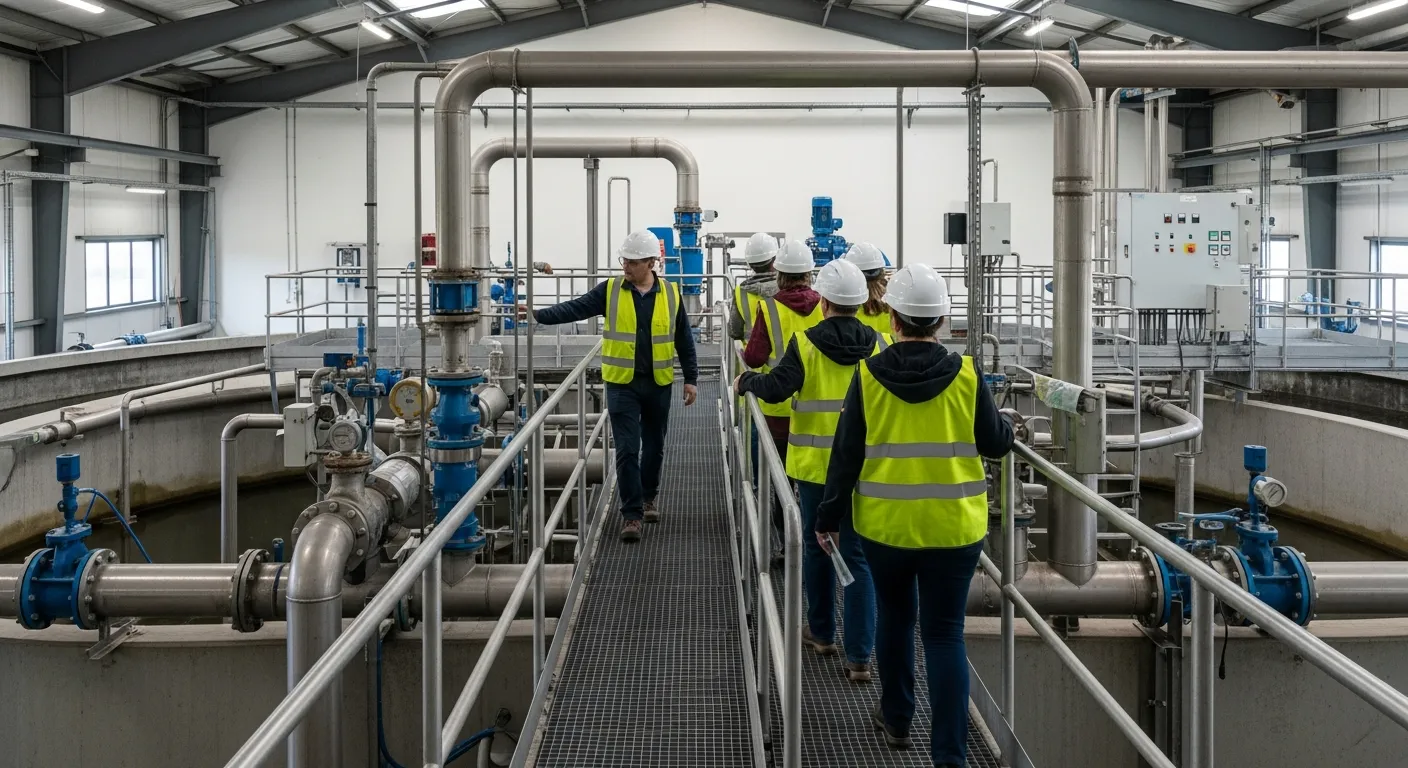
Niagara Region Water-Wastewater Services is hosting free tours of the Niagara Falls Water Treatment Plant on March 26, 2026, to celebrate World Water Day. While the facility specifically serves Niagara Falls, Thorold, and Niagara-on-the-Lake, the event offers Niagara residents a rare look at the technology used to make local water safe for homes and businesses.
Because all municipal drinking water in the region is treated by the Niagara Region—including water for the City of Port Colborne which is sourced from the Welland Canal—this tour explains the complex journey from source to tap. A professional operator will lead the group through the Niagara Falls plant located at 3599 Macklem St. in the Chippawa area to show how water is filtered and cleaned. Although Port Colborne residents receive their water from a separate plant that supplies the local Fielden Avenue Reservoir and Barrick Road Water Tower, the regional treatment process involves similar phases, from the initial intake to the final cleaning process.
People interested in attending must register by email at [email protected] before the deadline on Tuesday, March 24, 2026. Because the tour involves walking through a working facility, all visitors must be at least 14 years old, sign a waiver, and wear closed-toe shoes. Participants must also be able to walk up and down stairs throughout the afternoon visit, which begins at 2:00 PM.
According to the Niagara Region, its six treatment facilities provide 155 million litres of water daily to about 460,000 people across 11 different municipalities. This year, the United Nations has set the theme for the global water event as “Water and Gender: Where water flows, equality grows,” focusing on how water access affects equality.
These public tours are offered twice a year, once in March and again in November, to help residents understand the infrastructure that is usually hidden from view. Staff from the regional department note that because most water infrastructure is located inside plants or underground, these events are one of the few ways the public can see how the system operates. A virtual tour of the Grimsby Water Treatment Plant is also available online for residents who cannot attend in person.