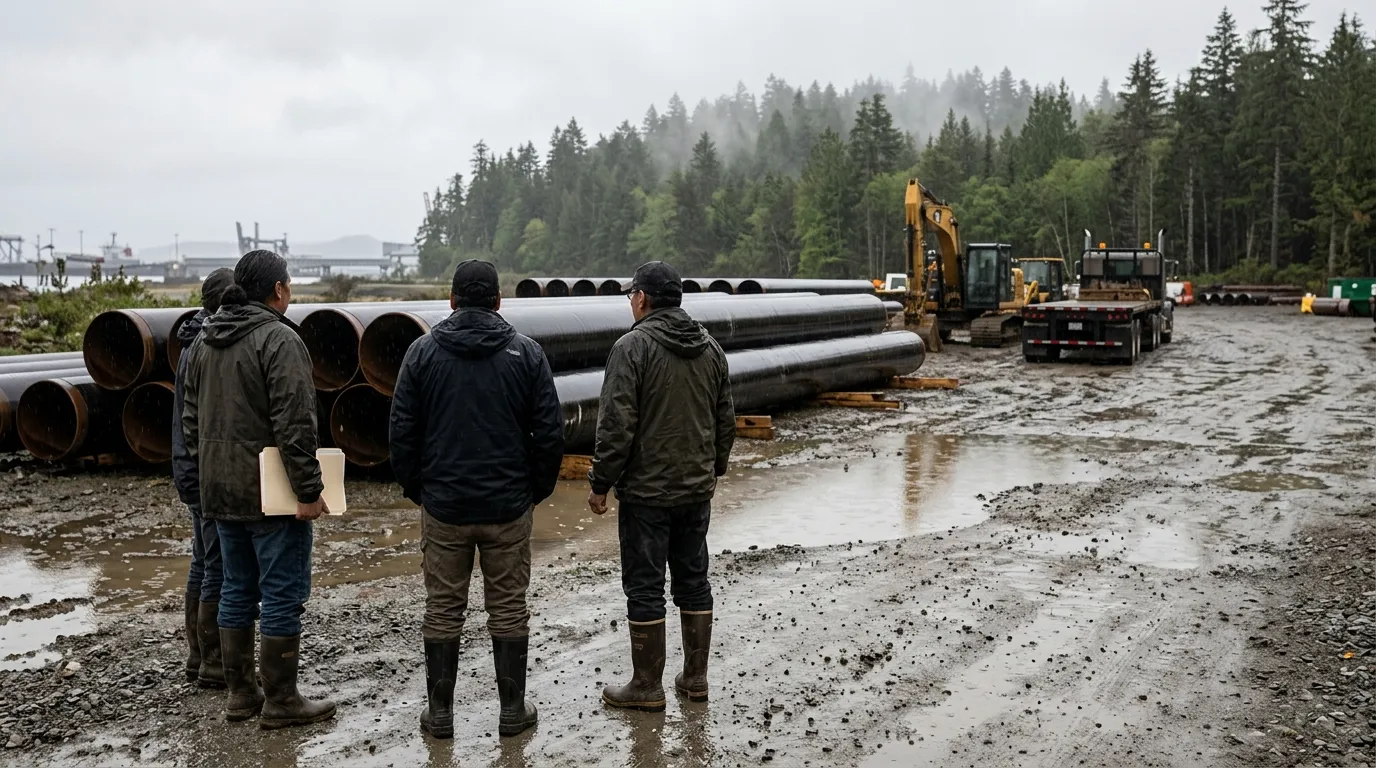
Two members of the Nisga’a Nation have filed a lawsuit in the British Columbia Supreme Court over a major natural gas pipeline project near Prince Rupert, British Columbia. Cecil Mercer and Stephen Nyce claim the Nisga’a Lisims Government did not properly talk to community members before entering a business deal with a private energy company. The legal action, filed on March 13, 2026, focuses on the Prince Rupert Gas Transmission Project and the financial risks it might bring to the community.
The Nisga’a government joined with Western LNG to buy the pipeline project from TC Energy in June 2024. While the pipeline is owned equally by the Nation and the company, the lawsuit points out that the related natural gas export terminal is entirely owned by the American firm. The people filing the lawsuit argue this setup puts too much financial pressure on the Nisga’a people.
According to the court documents, the estimated cost of building the pipeline has jumped from $5 billion in 2014 to as much as $12 billion today. The plaintiffs are concerned that as the world moves toward renewable energy, the demand for natural gas will drop. They worry this could leave the community with expensive infrastructure that is no longer useful.
The British Columbia government and the federal government have both approved the project, calling it an important part of the country’s economy. However, the project is facing other legal hurdles from the Lax Kw’alaams Band and the Metlakatla First Nation. These groups have asked the courts to review the project because they believe it could harm their traditional lands and rights.
None of the organizations named in the lawsuit, including the energy companies and the provincial government, have filed a formal response in court yet. This legal case follows a period of tension where some community members set up roadblocks in 2024 to stop construction vehicles. The court will now decide if the government followed the rules set out in the Nisga’a treaty regarding how they must consult their people on big projects.