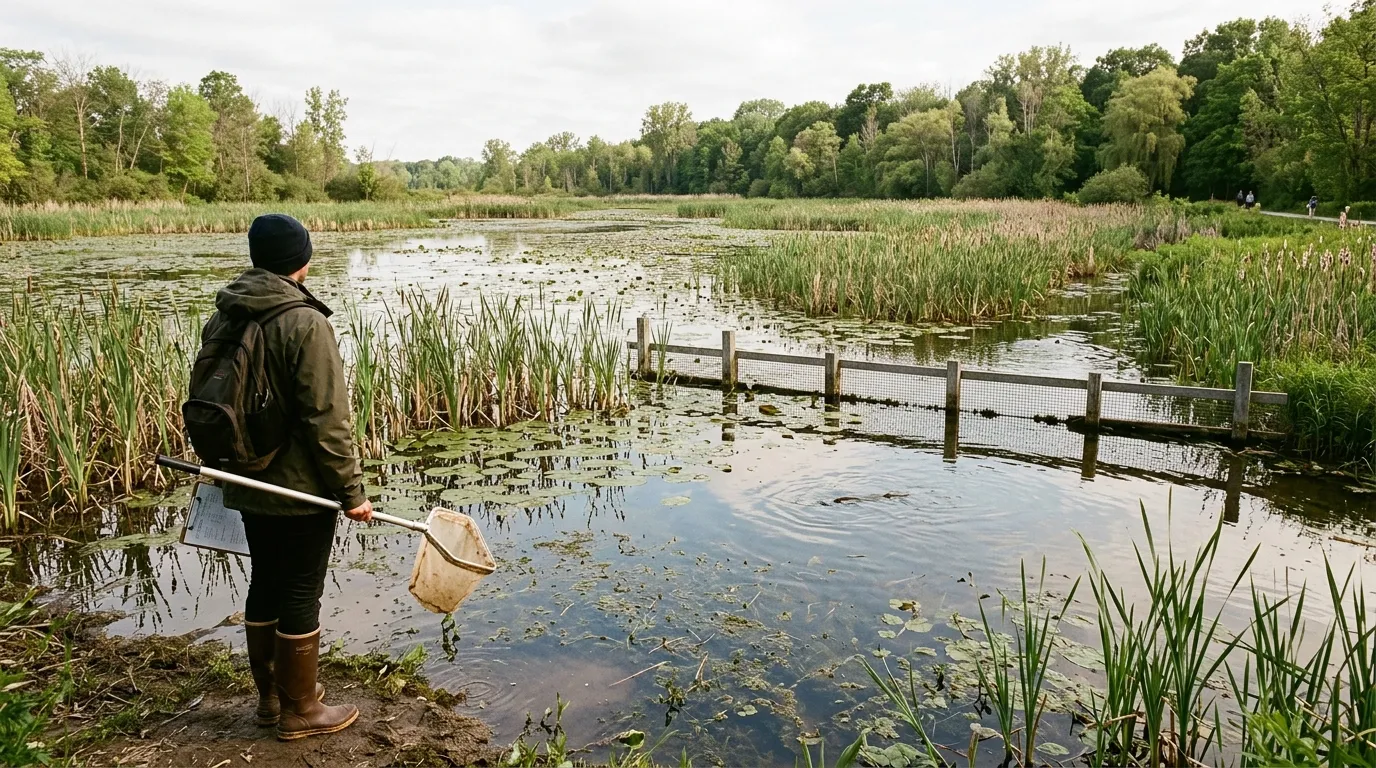
Native fish are making a comeback in Burlington wetlands, marking a significant environmental milestone for the area. According to the Royal Botanical Gardens, recent monitoring results show that the native White Sucker has become the most common fish recorded at the Cootes Paradise fish barrier, officially overtaking invasive species like carp and goldfish for the first time.
The 2025 results, released in March 2026, highlight some of the most positive changes observed since the organization began tracking fish migration 31 years ago. In addition to the shift in fish populations, aquatic plants grew across the entire expanse of Cootes Paradise for the first time since the 1930s. While algae blooms caused by summer heat eventually covered these plants, experts believe this growth is a promising step toward long-term recovery.
Tys Theijsmeijer, the senior director of ecosystem stewardship programs and policy at the gardens, noted that the area is currently functioning like a wetland for the first time in generations. He described the current state of Cootes Paradise as being more marsh-like than at any point since the 1940s.
Despite these improvements, environmental challenges remain due to water quality issues. While nearby Grindstone Marsh, which stopped receiving major sewage discharges in 2011, now hosts a healthy population of native sunfish, Cootes Paradise continues to be impacted by both treated and untreated sewage. Chedoke Creek remains the most polluted tributary in western Lake Ontario, with high phosphorus levels still a major concern for local cleanup efforts.
The fishway itself, originally built in 1996 as a barrier to keep invasive carp out of the marsh, has been instrumental in the recovery by excluding more than 95 per cent of common carp. Ongoing collaboration between local organizations and the City of Hamilton continues to focus on reducing sewage overflows to ensure these wetlands can continue to thrive.