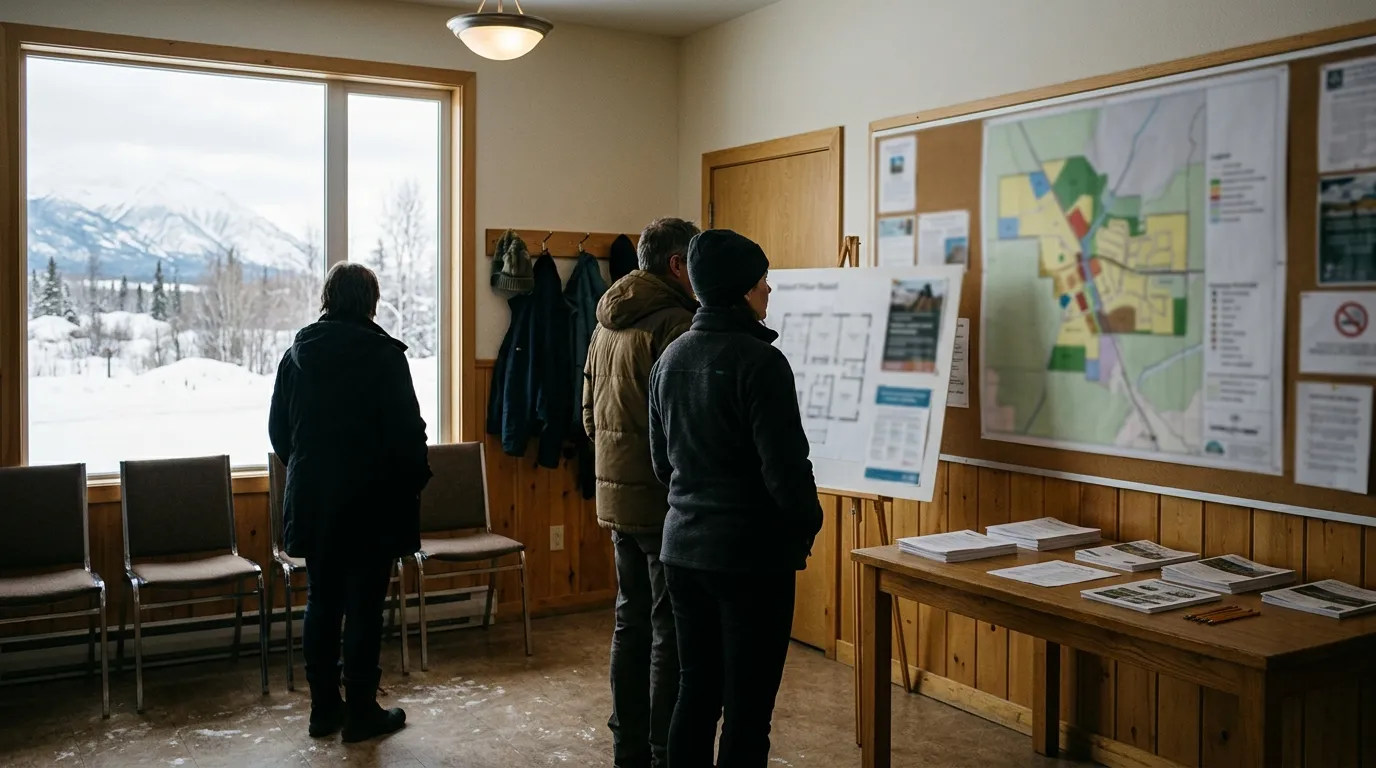
The Village of Haines Junction is inviting residents to a public open house on April 16, 2026, to review plans for future residential development and potential changes to local zoning rules. The event, which runs from 4 p.m. to 6 p.m., provides a venue for community members to learn about upcoming housing projects and share their feedback with local officials.
This session is part of an ongoing effort to address housing shortages in the community. Data from the government shows that the population could grow by 600 residents between 2022 and 2040, creating a need for approximately 334 new dwelling units. A 2025 housing assessment, prepared by CitySpaces Consulting, further identified a local need for more rental options and a greater variety of housing types.
To help meet these demands, the village is working with the Canada Mortgage and Housing Corporation through the Housing Accelerator Fund. The municipality received over $1.2 million in 2024 to support initiatives aimed at speeding up housing construction, including a review of zoning bylaws to allow for higher density and more “missing middle” housing—such as townhomes and duplexes.
Recent developments have already added to the local inventory, including the Government of Yukon finishing 44 serviced lots at the Mountain Ridge and Dhäl Ghą̄y subdivision in September 2025. However, some residents, including local advocate Jeannine St Marie, have raised concerns about whether new housing developments remain affordable for those already living in the area.
Bruce Tomlin, who was mayor at the time of the 2024 funding announcement, stated that the partnership with the federal housing fund is aimed at removing barriers to development and increasing the supply of affordable homes. The upcoming open house will allow residents to engage with these planning processes as the village continues to manage land use and growth, alongside ongoing planning by the Champagne and Aishihik First Nations.