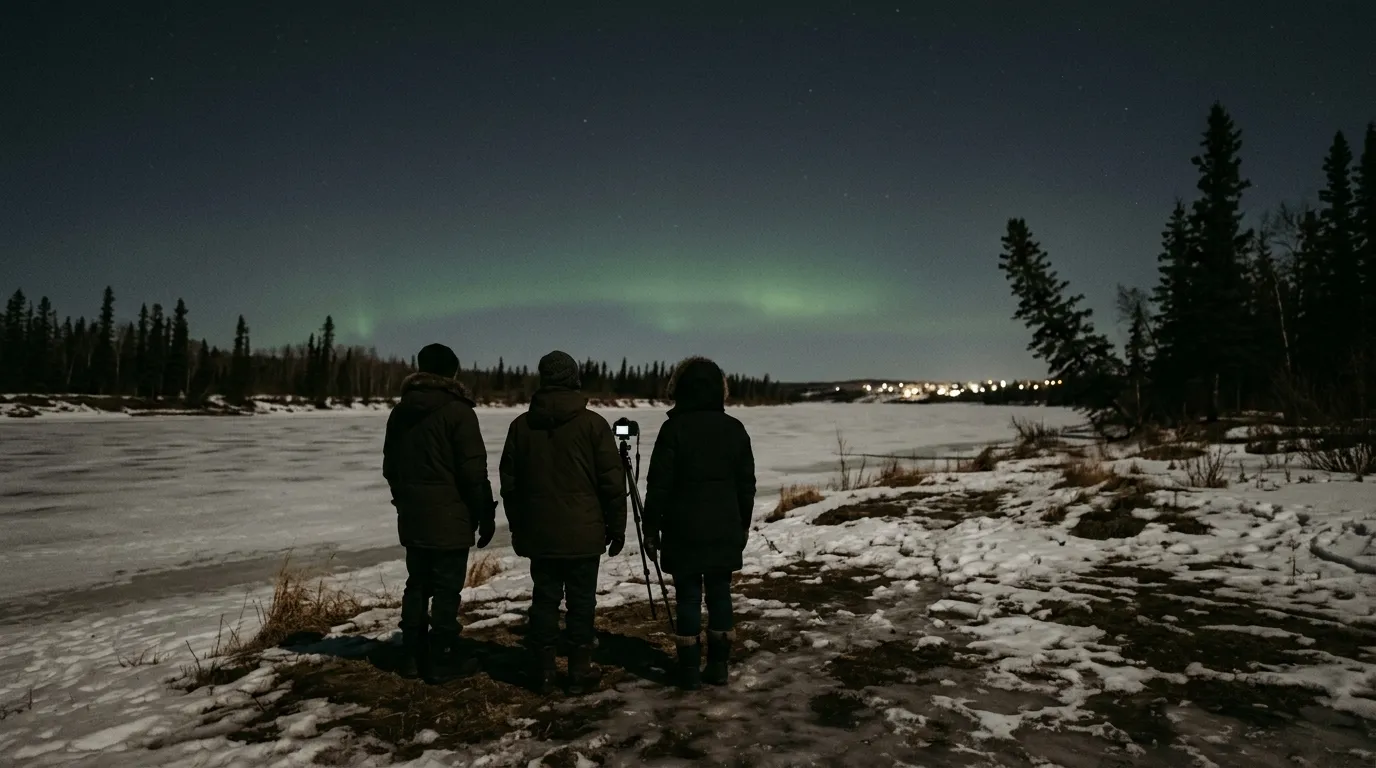
Residents in Hay River can expect quiet conditions for northern lights viewing throughout the week of April 3, 2026, as the region experiences a lull in geomagnetic activity.
According to the NOAA Space Weather Prediction Center, current data shows minimal activity, with no significant warnings reported on the radio blackout, solar radiation, or geomagnetic storm scales. These forecasts are generated using the OVATION model, which predicts aurora intensity by analyzing solar wind data from a observation point located about 1.6 million kilometres from Earth.
Hay River sits at 66.8 degrees magnetic latitude, placing it well within the auroral zone where the northern lights are typically a common sight during clear, dark nights. While the current outlook remains quiet, the region is nearing the end of its traditional aurora viewing season, which runs from late August through April. Residents who enjoy night-sky viewing should note that the return of the midnight sun around mid-April will effectively prevent further viewing opportunities until the end of the summer.
Although the sun is currently in a declining phase of Solar Cycle 25—the 11-year cycle that reached its peak in late 2024—solar activity is expected to remain relatively high throughout 2026. Because conditions can shift quickly, those interested in catching a display before the season ends can monitor updates through the Astronomy North society. This non-profit organization provides community-specific forecasts for Hay River by combining regional analysis with data from federal agencies.
For those planning to head out, the best viewing hours remain between 10 p.m. and 2 a.m. Residents can also find additional resources through the Town of Hay River tourism portal.