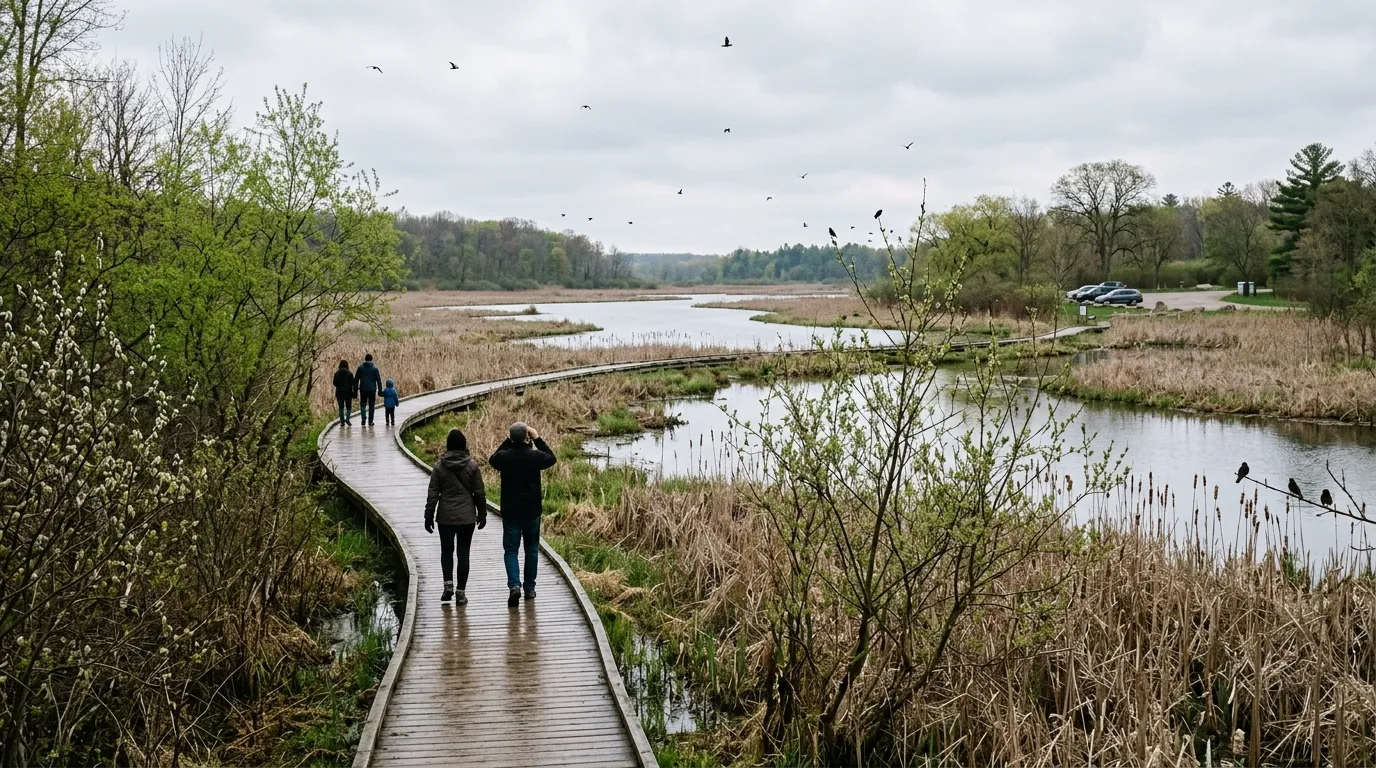
The Royal Botanical Gardens has opened its spring trail season, offering visitors more than 27 kilometres of paths to explore across its sanctuaries in Burlington and Hamilton. The April update highlights the return of migratory birds and spawning fish as the region moves into the warmer months.
A major focus of the spring season is the Cootes Paradise Nature Reserve. Established in 1927, this 600-hectare area is a significant stopover for birds along the Central and Mississippi Flyways. Because of its ecological importance, the marsh is designated as a nationally Important Bird Area where more than 300 bird species can be spotted each year. Currently, visitors using binoculars at the Marshwalk Boardwalk can view a nesting pair of Bald Eagles in the Hopkins Woods Special Protection Area.
Life beneath the water is also active. The Cootes Paradise Fishway, a protective barrier installed in 1997, is now in full operation for the spring spawning season. The barrier allows native species like perch, pike, and trout to move between Hamilton Harbour and the marsh to spawn, while preventing invasive Common Carp from entering. During April, the Fishway operates on weekdays at 8 a.m. and 2:30 p.m., with additional weekend sessions on Friday, April 3, and Sundays, April 12 and 26, at 10 a.m. and 2 p.m.
For those planning a visit, the Rock Chapel parking lot has reopened for the 2026 season. The organization has noted that an accessibility project is planned for later this year to relocate this lot about 100 metres west to improve safety and ease of access for all hikers.