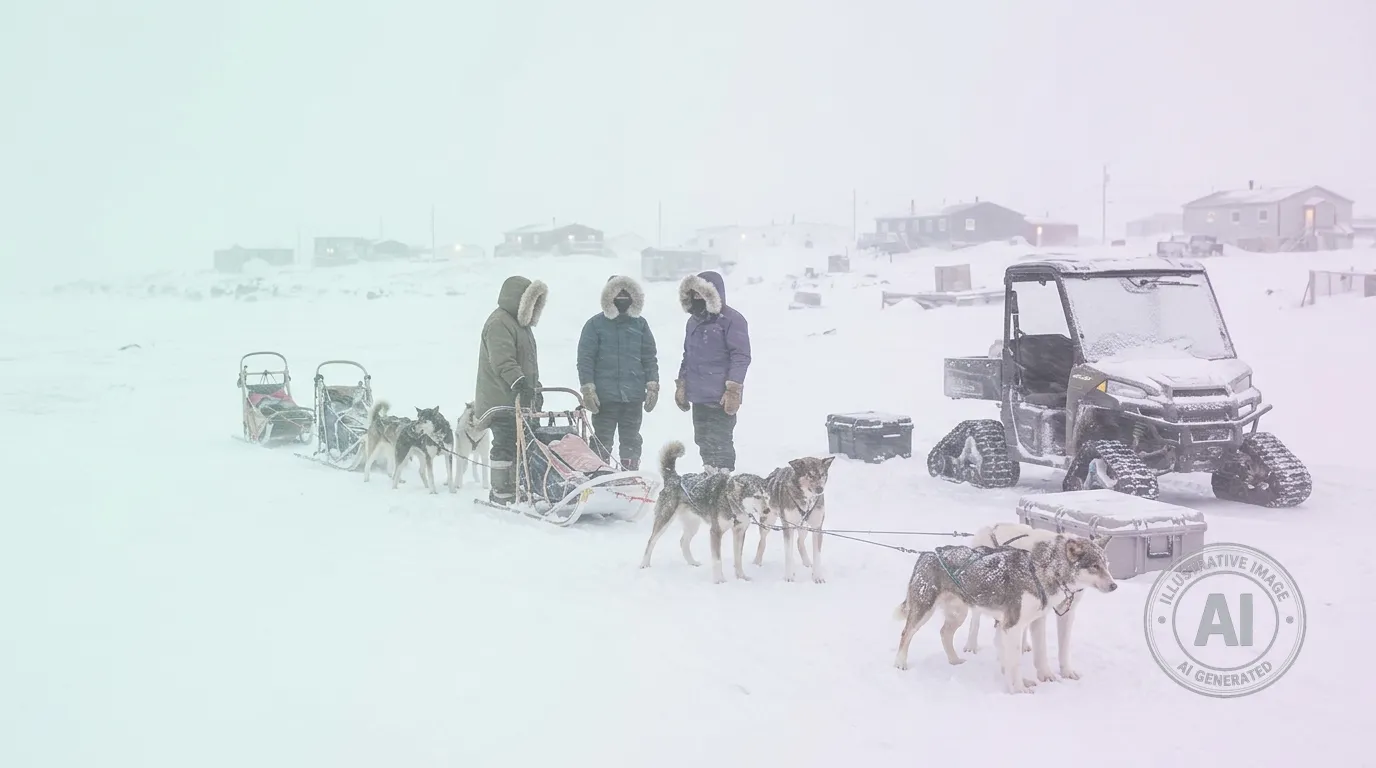
Severe whiteout conditions in Igloolik, Nunavut, have created significant disruptions this week, halting both a major cultural sporting event and important scientific research. The wintry weather, which brought temperatures down to -25 C and near-zero visibility, has forced changes to the Qikiqtani Inuit Association-sponsored Nunavut Quest dogsled race and left a prominent polar bear researcher unable to travel.
The 500-kilometre dogsled race, which features nine mushers travelling from Igloolik to Pond Inlet, was originally set to begin on April 7, 2026. However, organizers with the Nunavut Quest Race Committee were forced to postpone the start due to dangerous weather, with the race finally getting underway on April 9. Mushers have continued to face winter-like conditions and strong winds that have impacted the daily travel schedule.
At the same time, the severe weather has grounded Dr. Andrew E. Derocher, a professor at the University of Alberta who is currently in Igloolik. Dr. Derocher, who has spent over 40 years studying polar bears, was prepared to deploy for spring field research in the Western Hudson Bay area. This work is critical for monitoring the population, which has seen estimates decline from 842 in 2016 to approximately 618 in 2021.
Spring research conducted by groups such as Polar Bears International involves using helicopters to locate bears in order to take measurements, collect samples, and attach satellite ear tags. With the area currently experiencing persistent winter conditions and heavy snowfall, experts note that such weather shifts are a constant reality for those living and working in the hamlet of Igloolik, an island community in the Foxe Basin.