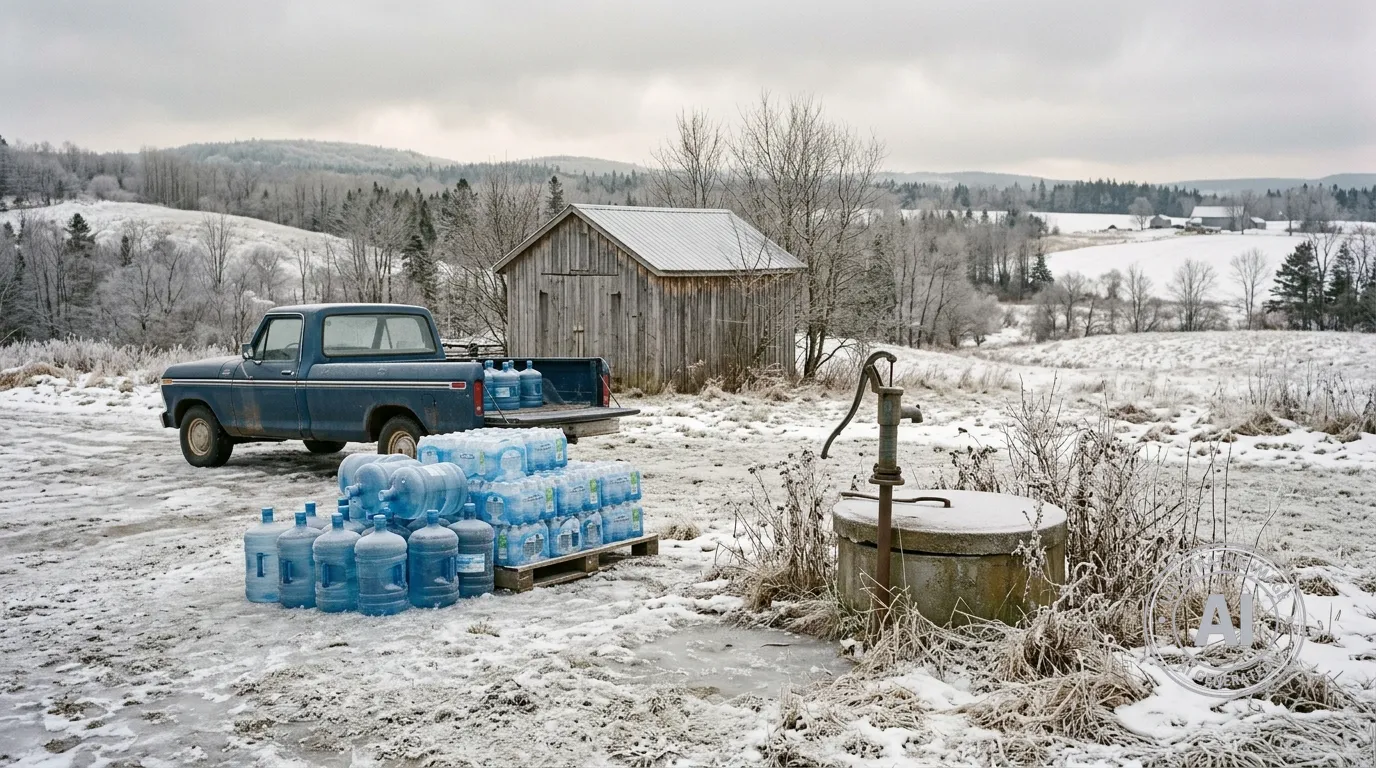
A recent survey by the Regional Emergency Management Organization reveals that 23 residents in Antigonish County had their private wells go completely dry during the drought of 2025. The survey, which gathered responses from 68 households, highlights the significant impact that last year’s severe dry spell had on the community, with some residents facing water shortages for as long as 14 weeks.
Most of the impacted wells were shallow, measuring less than 20 feet deep. These types of wells are particularly vulnerable to drought because they draw from aquifers near the surface that rely directly on regular rainfall to stay replenished. During the height of the drought, the Municipality of the County of Antigonish stepped in to support those affected by distributing over 2,220 cases of bottled water through a program funded by the province.
While that program provided necessary help at the time, future financial support for similar emergency water distributions remains uncertain. This concern is heightened as the provincial government did not include the local organization in a round of emergency readiness grants announced in November 2025 that supported seven other regions across Nova Scotia.
Even with the arrival of winter weather, some residents continue to report challenges with their water supply. Blaise MacDonald, the regional emergency management coordinator, noted that groundwater levels have been slow to recover from last year’s conditions. He added that some residents who did not experience issues during the summer are now beginning to report problems with their wells, suggesting that the impacts of the 2025 drought may still be felt in 2026.