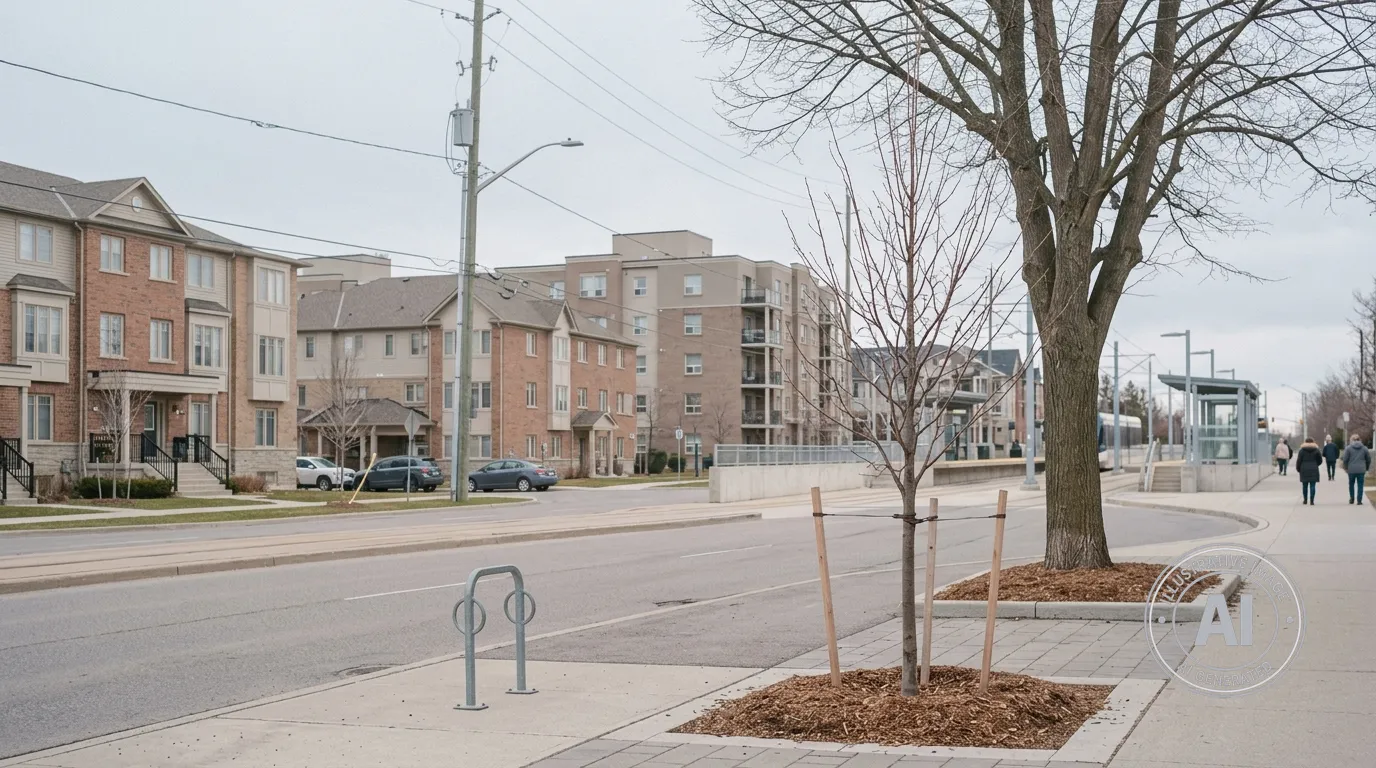
Waterloo City Council approved two major initiatives on April 13, 2026, aimed at managing the city’s green space and addressing local housing needs. Officials introduced a draft plan to protect and expand the urban forest, while also moving forward with a zoning change in the Sugarbush South neighbourhood to allow for more housing options near transit and schools.
The city’s draft Urban Forest Management Strategy is now open for public feedback. The strategy sets a goal to maintain the current 32.5 per cent tree canopy until 2050 and increase it to 35 per cent by 2070. The plan includes 38 specific actions for the first five years, such as planting 1,250 trees annually on public lands and 3,750 on private lands. It also proposes the creation of a new Heritage Tree bylaw and a green standard for future building projects. Residents can provide their input on the strategy through Engage Waterloo.
To address a shortage of housing, council approved the redesignation of the Sugarbush South neighbourhood for higher density development. This change allows for missing middle housing, including townhouses and buildings ranging from four to eight storeys. The area was chosen because of its location near two ION light rail stations and three post-secondary institutions: the University of Waterloo, Wilfrid Laurier University, and Conestoga College.
The city currently faces challenges meeting its housing targets, with construction occurring at a pace that necessitates further action to reach the goal of 16,000 new units by 2031. The new zoning, supported by the federal Housing Accelerator Fund which provided $22 million to the city for various housing initiatives, creates specific residential zones that permit up to 450 bedrooms per hectare.