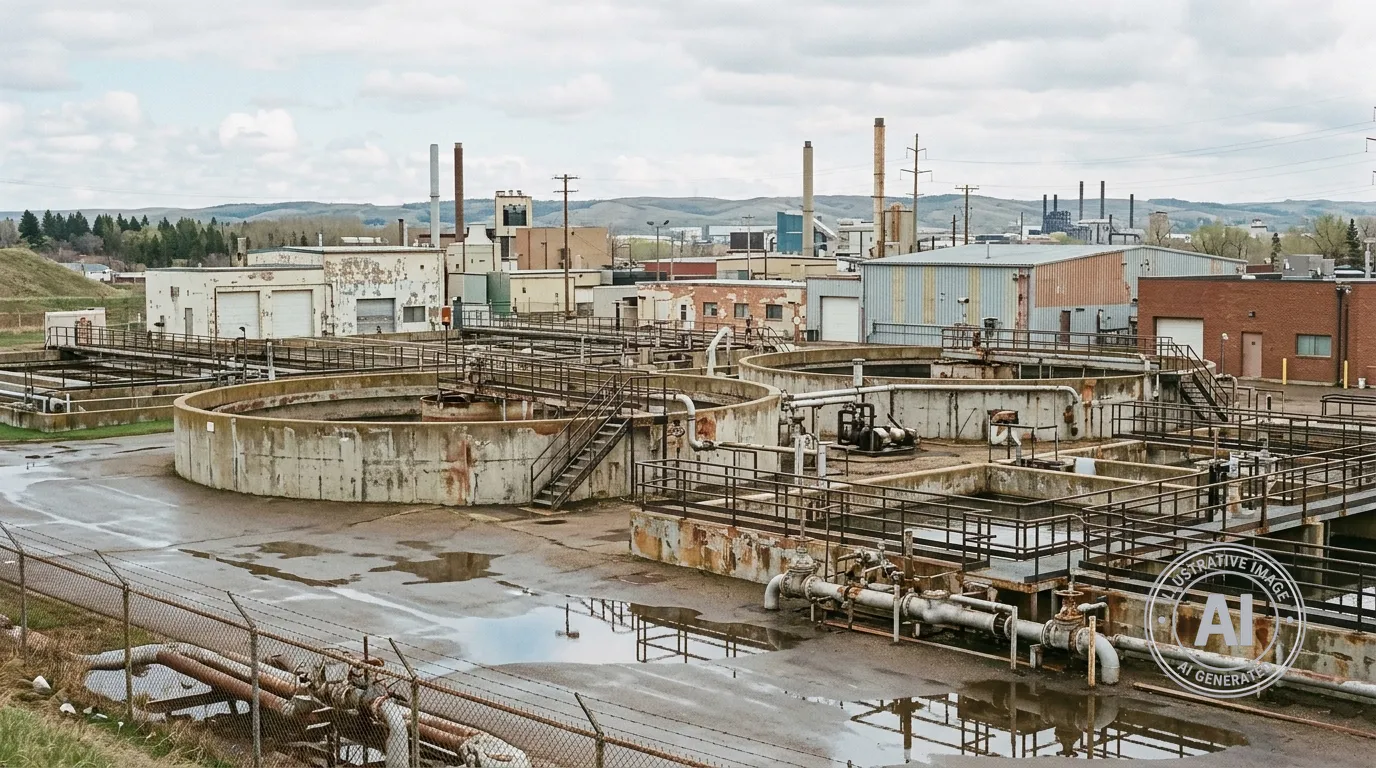
The City of Lethbridge is facing a significant infrastructure challenge as officials estimate it will cost between $250 million and $350 million to overhaul the aging wastewater treatment plant. During an April 16, 2026, meeting, the Community Issues Committee was warned that the facility is struggling to keep up with industrial growth, risking potential provincial orders to halt all new development in the city if capacity is not addressed.
The current treatment plant was last expanded in 1989, and much of its equipment is now at or past the end of its expected life. While the plant has a design capacity of 50 million litres per day, Director of Infrastructure Services Joel Sanchez explained that it effectively operates at only about 40 million litres. This is because high-strength wastewater from local industrial growth slows down the treatment process, requiring the plant to work harder to process the material before it can be safely released into the river.
Key parts of the facility, such as the electrical building and the ultraviolet disinfection tank, are currently in poor or very poor condition, with no backup systems in place should they fail. City officials noted that a first phase of upgrades would aim to increase the plant’s capacity to 60 million litres per day while addressing these critical redundancy issues. Such an expansion would likely take three to five years to complete.
The city is now preparing for difficult financial decisions to fund these repairs, which represent one of the largest capital costs in the history of the municipality. The Get Involved Lethbridge website notes that funding options, including how this project might impact utility rates, will be presented at a workshop on May 13, 2026. This discussion will be part of the upcoming 2027-2036 capital improvement planning process.