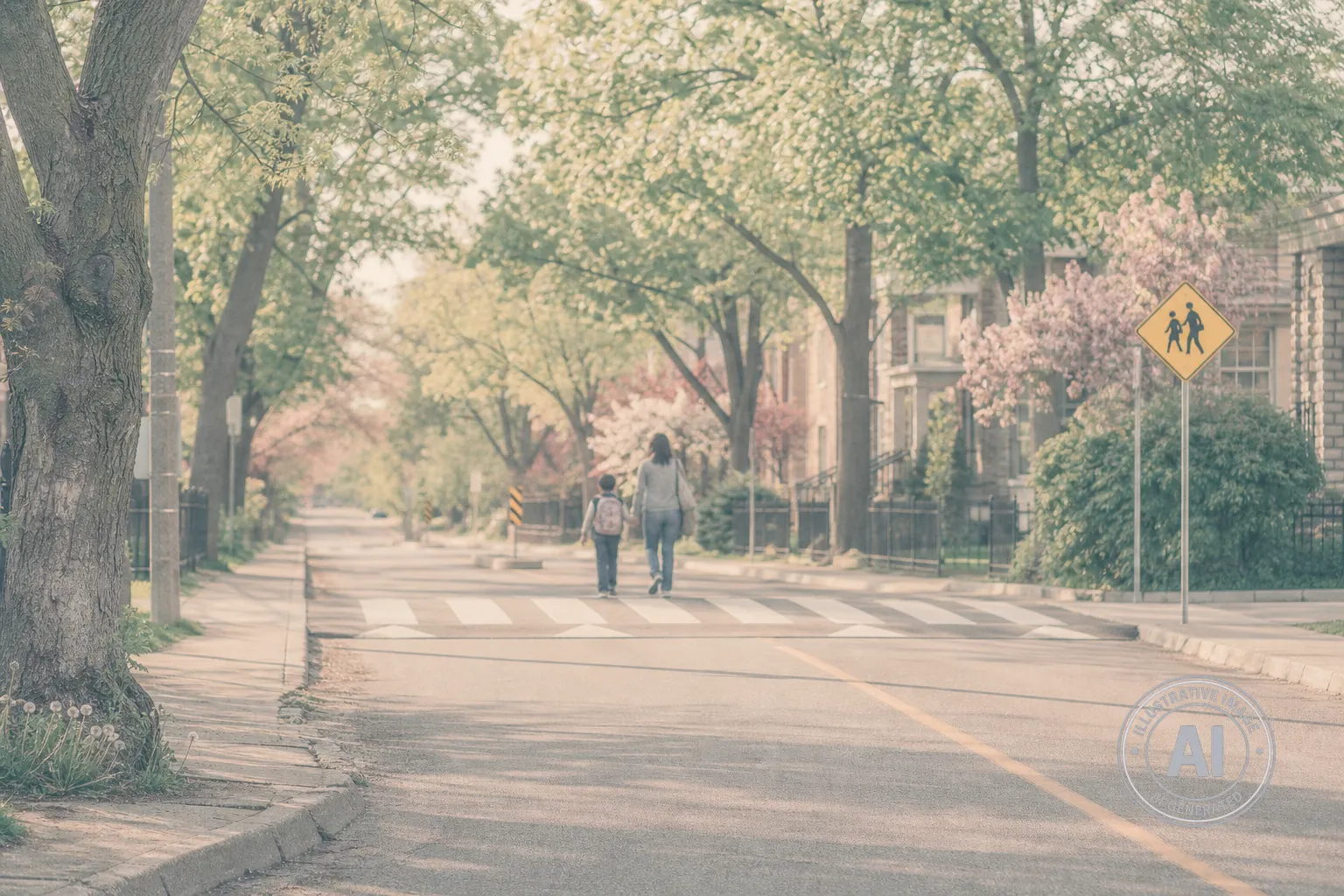
The City of Guelph is moving forward with new road safety improvements near local schools as part of its ongoing effort to eliminate serious injuries and fatalities on city streets. Following the adoption of the Vision Zero strategy in 2025, the city is installing new infrastructure and traffic-calming measures to better protect pedestrians and students.
To help residents cross busy streets safely, the city is installing new pedestrian crossovers at two locations this year: the intersection of Paisley Road at Rosewood Avenue and Goldie Avenue, and the intersection of Meyer Drive at Laverne Avenue. Additionally, Guelph has doubled its number of leading pedestrian intervals—which allow people to begin crossing the street before vehicle traffic moves—bringing the total to 23 locations across the community.
These projects are part of a larger push to improve safety following a provincial change that banned automated speed enforcement cameras in November 2025. In response to the removal of those mobile cameras, the Ontario government established the Road Safety Initiatives Fund, providing Guelph with $676,904 to implement traffic-calming measures, such as raised crosswalks, flex posts, or curb extensions, in up to 33 community safety zones. The city may also be eligible for an additional $2,700,198 from the province for these efforts.
The city has also expanded its network of community safety zones to 66 locations, covering more than 52 kilometres of road. These zones now include public parks, institutional areas, and spaces for seniors, such as the Evergreen Seniors Community Centre. Since 2025, speed limits have been permanently lowered to 30 km/h or 40 km/h on roads that pass by public, Catholic, and elementary schools.
Beyond school-focused projects, Guelph continues to use red light cameras to deter dangerous driving. Since 2021, the city’s six red light cameras have contributed to nearly $40 million in community cost savings by helping to reduce traffic-related injuries, hospitalizations, and lost productivity. City officials noted that these data-driven investments are essential for addressing high-risk areas identified after recent road fatalities.