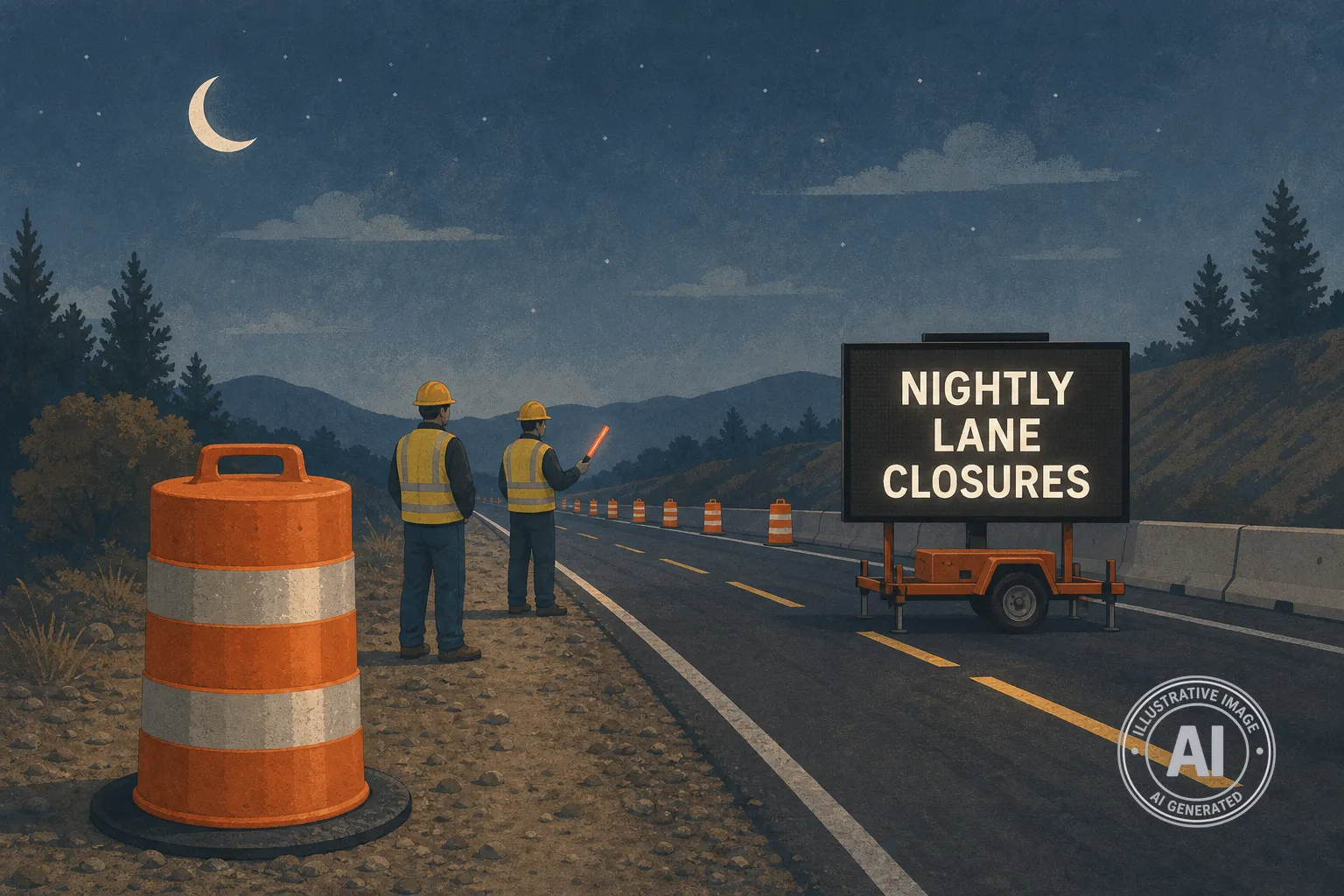
Drivers in the Niagara region should be aware of ongoing maintenance work on Highway 58 that is causing nightly lane closures throughout May 2026. The Ministry of Transportation of Ontario is conducting these repairs in Thorold between Thorold Stone Road / Davis Road and Pine Street.
The work began on May 12 and is set to continue until 6 a.m. on May 22, 2026. During this period, one alternating lane will be closed each night from 8 p.m. until 6 a.m. to allow crews to complete the necessary roadwork. This project is part of a broader provincial investment, with the Ontario government dedicating approximately $4.3 billion toward highway and bridge repairs across the province between April 2025 and March 2026.
Highway 58 serves as a vital north-south corridor for the area, connecting Port Colborne and Welland. The route passes through a key junction at Forks Road, which serves as the boundary line between the two cities. The highway currently operates as two separate segments totaling 15.5 kilometres, following a 1997 shift in maintenance responsibilities for the central portion through Welland to the Regional Municipality of Niagara.
Residents who travel through the corridor regularly may recall previous construction projects in the area. In June 2021, bridge work near the Port Colborne and Welland border caused significant traffic shifts, as thousands of vehicles sought detours on local roads like Phillips Road to bypass the construction site.
For the most up-to-date information on road conditions and potential delays, travelers are encouraged to check Ontario 511 before heading out.