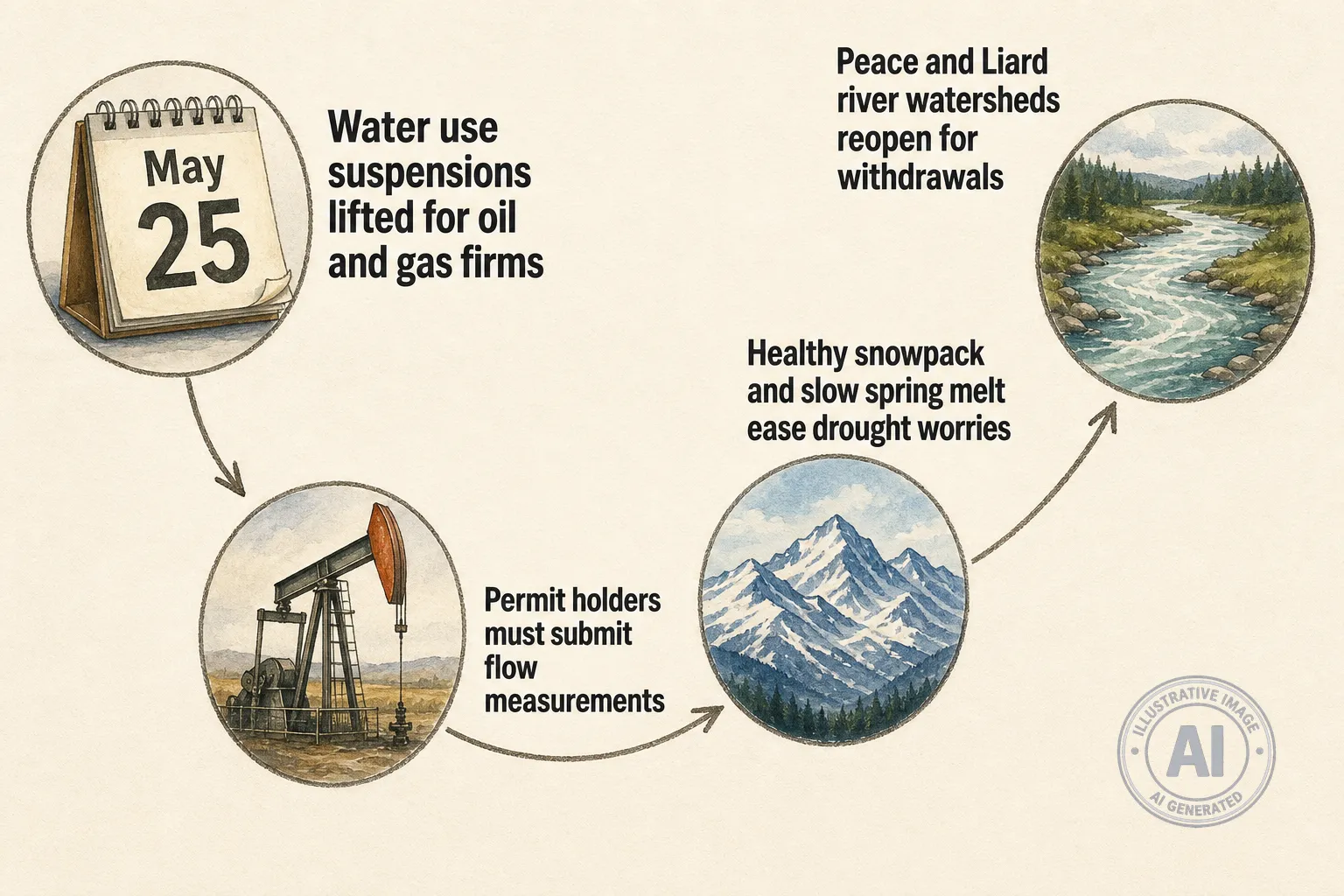
The BC Energy Regulator has lifted water use restrictions for oil and gas companies in the Peace River and Liard River watersheds near Dawson Creek, effective May 25, 2026. The decision comes as a healthy snowpack and a slower spring melt have eased immediate drought worries in Northeast B.C.
Permit holders who want to start taking water again must first send in site-specific details, including flow measurements taken by a qualified person using accepted hydrometric methods. This step helps the regulator confirm there is enough water in local streams before any new withdrawals begin.
Water suspensions in the region have become a familiar cycle. The regulator first put limits in place back in 2019, with renewed orders in 2022, 2023, and through 2024 as drought seasons stretched on. The oil and gas industry depends heavily on fresh water for fracking. In 2024 alone, companies used more than nine million cubic metres, an amount equal to what roughly 111,530 Canadians use at home in a year.
While industry rules are now loosening, residents of Dawson Creek are still facing their own water worries. As of late October 2025, the city had only about 180 days of stored water left. Its main source, the Kiskatinaw River, has dropped to record lows, pushing the city to explore a 52-kilometre pipeline from the Peace River that could cost $100 million.
The regulator’s latest move is tied directly to this year’s favourable mountain snowpack and the gradual melt, which have improved conditions in the watersheds. It does not remove the need for companies to follow permit rules under the Water Sustainability Act. Each application to resume water use will be reviewed with current stream data before approval.