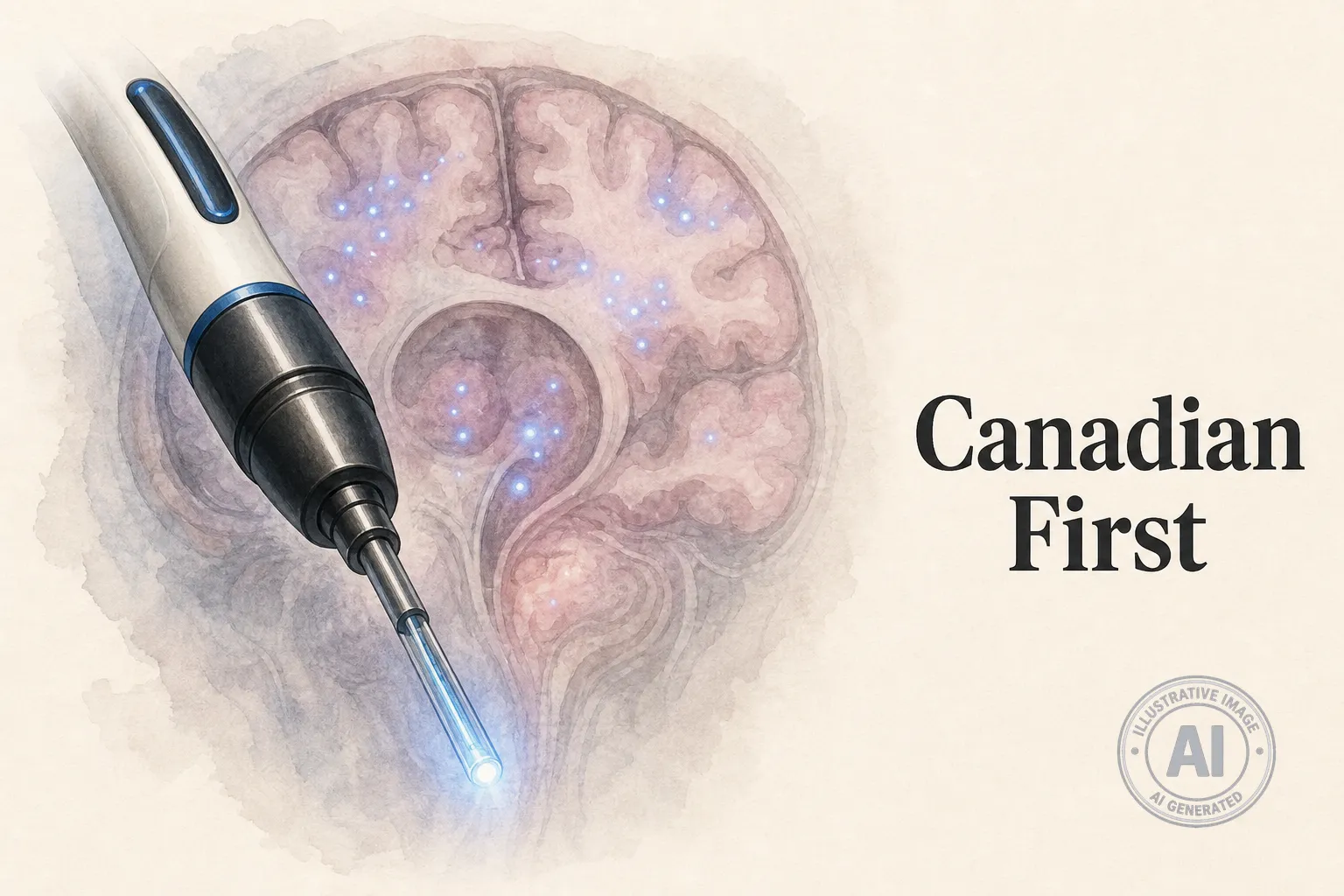
Neurosurgeons at Kingston Health Sciences Centre (KHSC) in Kingston, Ontario, achieved a Canadian first on June 15, 2026, using a handheld imaging device to see brain tumour cells in real time during surgery on 66-year-old Rick Savoie. This technology allowed them to remove a glioblastoma tumour completely while protecting his ability to speak.
The device, called ZEISS Convivo, acts like a microscope in the operating room. It uses fluorescence and advanced optics to show cancer cells that look normal to the naked eye. Surgeons Dr. Jamie Purzner and Dr. Teresa Purzner could then decide on the spot how much tissue to remove, instead of waiting for lab results.
Savoie was diagnosed with glioblastoma in September 2024 after speech and memory problems sent him to the emergency department. Glioblastoma is the most aggressive brain cancer, with only about 5% of patients surviving five years. This was his fourth surgery. He could not have an awake craniotomy, a common method to map brain function, making the procedure more complex. “Without this option, it would have been the end of the road,” Savoie said. “This surgery has given me more time with my family and I am so lucky.”
The surgery achieved a gross total resection, meaning no tumour was left behind, while preserving his language function. Being able to see cells at the microscopic level in real time was key to that outcome.
The procedure builds on KHSC’s Integrative Brain Tumor Program, led by Dr. Teresa Purzner. The program has already increased the number of patients getting surgery within provincial targets by more than 40% and cut radiation therapy delays by 40%. Dr. James Purzner is an assistant professor and Dr. Teresa Purzner is an associate professor at Queen’s University; both trained at the University of Toronto and did graduate work at Stanford University.