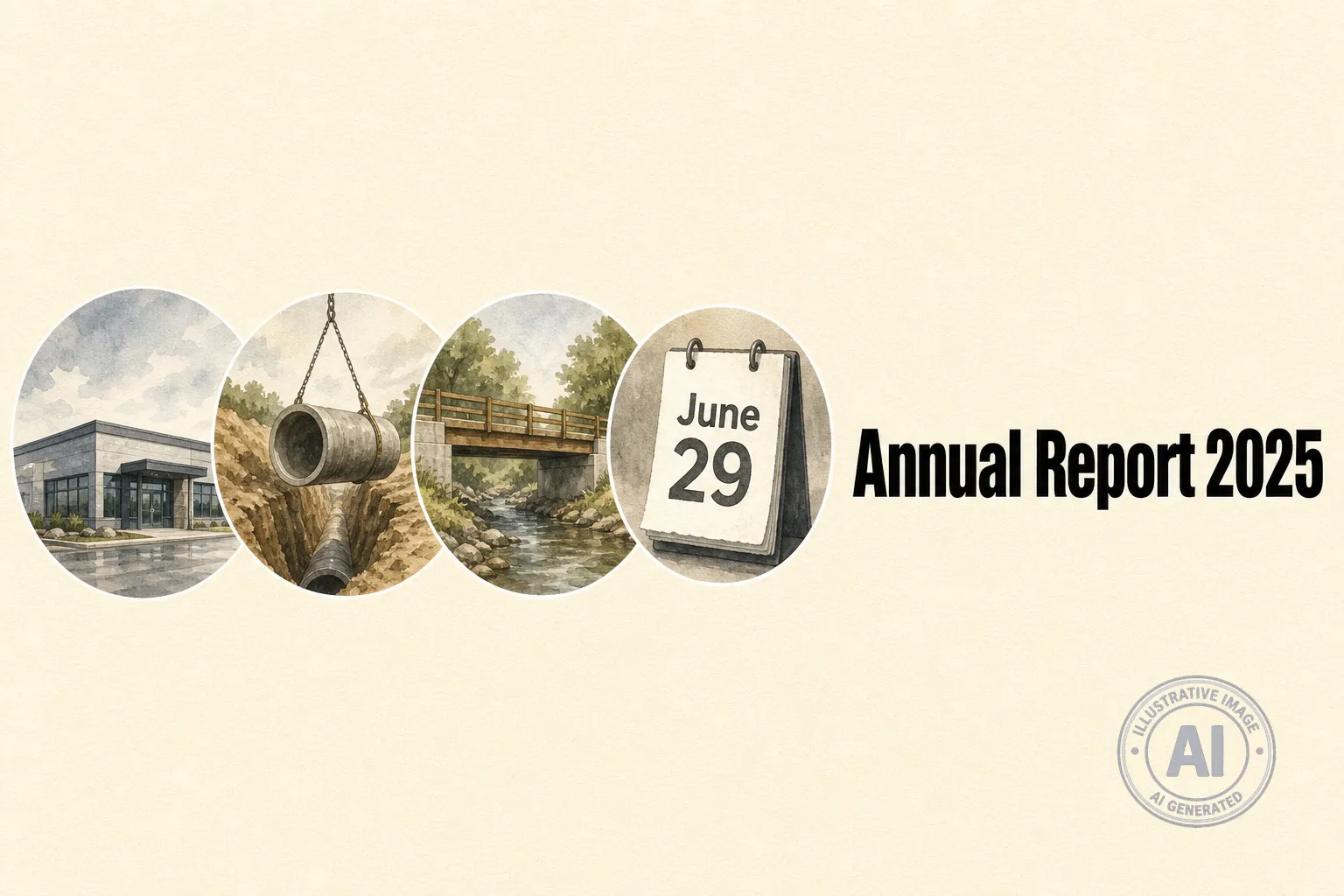
Prince Rupert residents can get a first-hand look at the city’s progress on major infrastructure projects and ask questions at the Annual Public Meeting on Monday, June 29, 2026. The meeting starts at 7:00 p.m. in Council Chambers at 424 3rd Avenue West.
The gathering follows the release of the 2025 Annual Report earlier this month. The report outlines a year of big-ticket improvements, including the opening of a new RCMP detachment, a tax deal with the port, and the start of work on dozens of community projects funded by a $250-million provincial program.
A highlight is the new RCMP detachment at the corner of McBride and Third Avenue East, which opened on April 29, 2025. The city built it for about $23.5 million, coming in under its $25-million budget.
Another key piece is the recent 10-year agreement on Payments in Lieu of Taxes between the City of Prince Rupert, the District of Port Edward, and the Prince Rupert Port Authority. Mayor Herb Pond called the deal a source of stability that lets the city keep its focus on fixing aging infrastructure and being a welcoming host community.
The report also details progress on the Big Infrastructure Gap, or BIG Project, which is replacing 26 kilometres of old water and sewer lines. That work is backed by $77.2 million from the federal government and $65 million from the Province of British Columbia.
Through the Northwest BC Resource Benefits Alliance, a group of 21 local governments that secured a five-year, $250-million provincial funding deal in 2024, Prince Rupert is tackling more than a dozen projects this year. They include the ongoing rehabilitation of the 2nd Avenue Bridge, relocating Public Works, building a wetland wastewater treatment system on Park Avenue, and resurfacing Mariners Park Playground.
The 2025 report also lists other steps forward: hiring a Peace Officer for community safety, completing a Climate Action Plan, creating an Indigenous Cultural Safety Program, updating zoning to match provincial housing rules, and extending downtown development incentives to 2029.