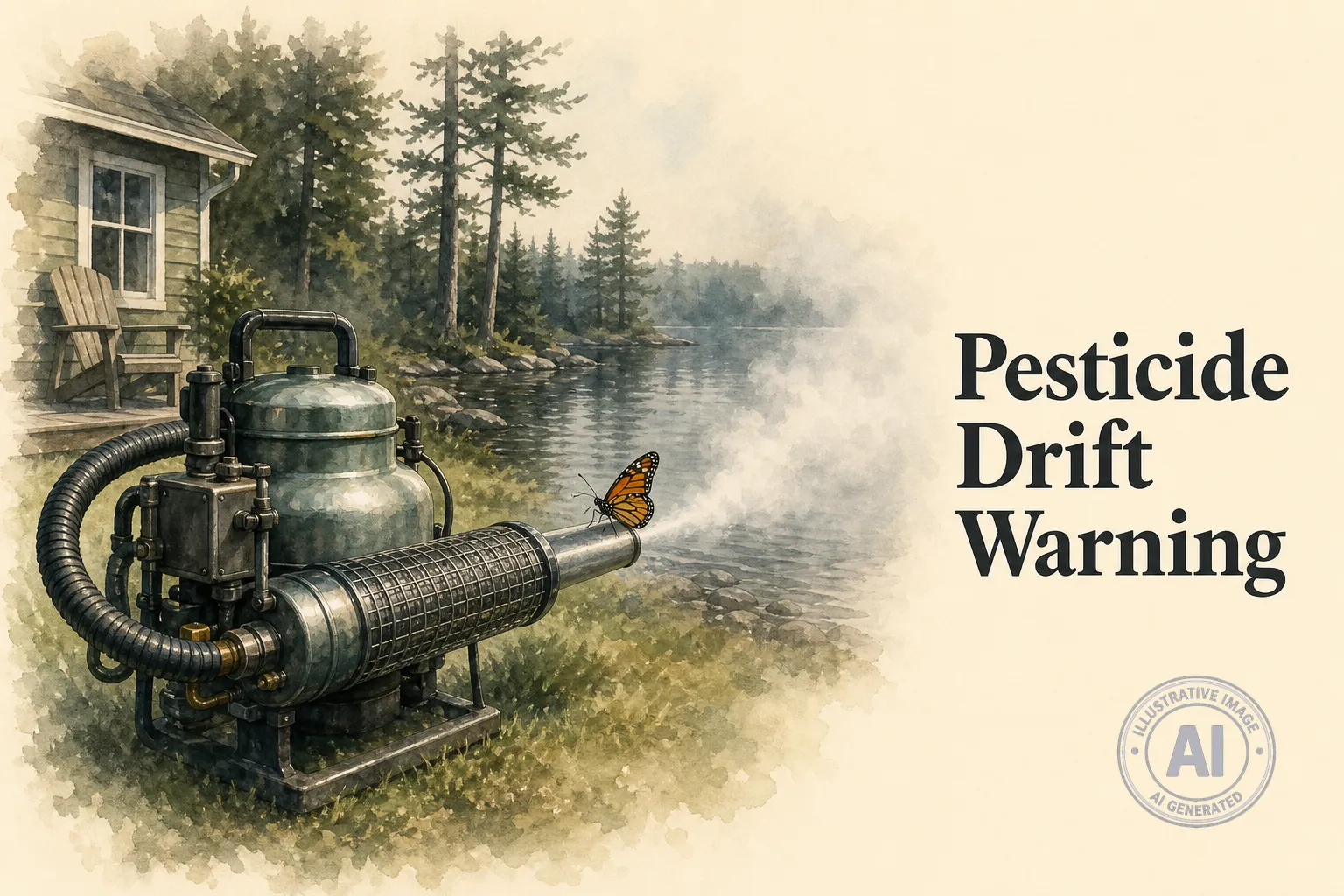
A common practice in Muskoka backyards is putting local wildlife and water quality in jeopardy, according to the Muskoka Watershed Council. In a June 20 blog post, contributor Chris Brew warns that permethrin-based mosquito fogging—though popular across the region—poses a serious threat to birds, bees, aquatic life and even household cats.
Brew holds a PhD in science education and participated in Health Canada’s 2018 re-evaluation of permethrin, challenging the environmental risk assessment. She points to research showing that on a calm day, the pesticide can drift more than 20 metres from where it is applied. On a moderately windy day, that distance can reach 120 metres, carrying the chemical into neighbouring properties and natural habitats.
Permethrin is highly toxic to cats, which lack the enzyme needed to break it down. Exposure can cause tremors, seizures and, in severe cases, death. Health Canada’s own Pest Management Regulatory Agency acknowledges that permethrin ‘may pose a risk to aquatic organisms, bees, beneficial insects and birds,’ and has mandated a 10-metre vegetative buffer strip near water bodies. Still, the pesticide continues to be widely used by companies that serve the Bracebridge area.
The watershed is already under pressure: the council’s 2023 Report Card found 48 species at risk in the region, up two from 2018. Brew argues that safer alternatives exist. She recommends Bti mosquito dunks, which kill larvae without harming other wildlife, along with personal repellents and removing standing water where mosquitoes breed.
Multiple commercial fogging services operate locally, but the watershed council hopes residents will reconsider routine spraying. The blog post is part of the ongoing ‘Nurturing Our Watersheds’ series, edited by retired aquatic ecologist Dr. Peter Sale.