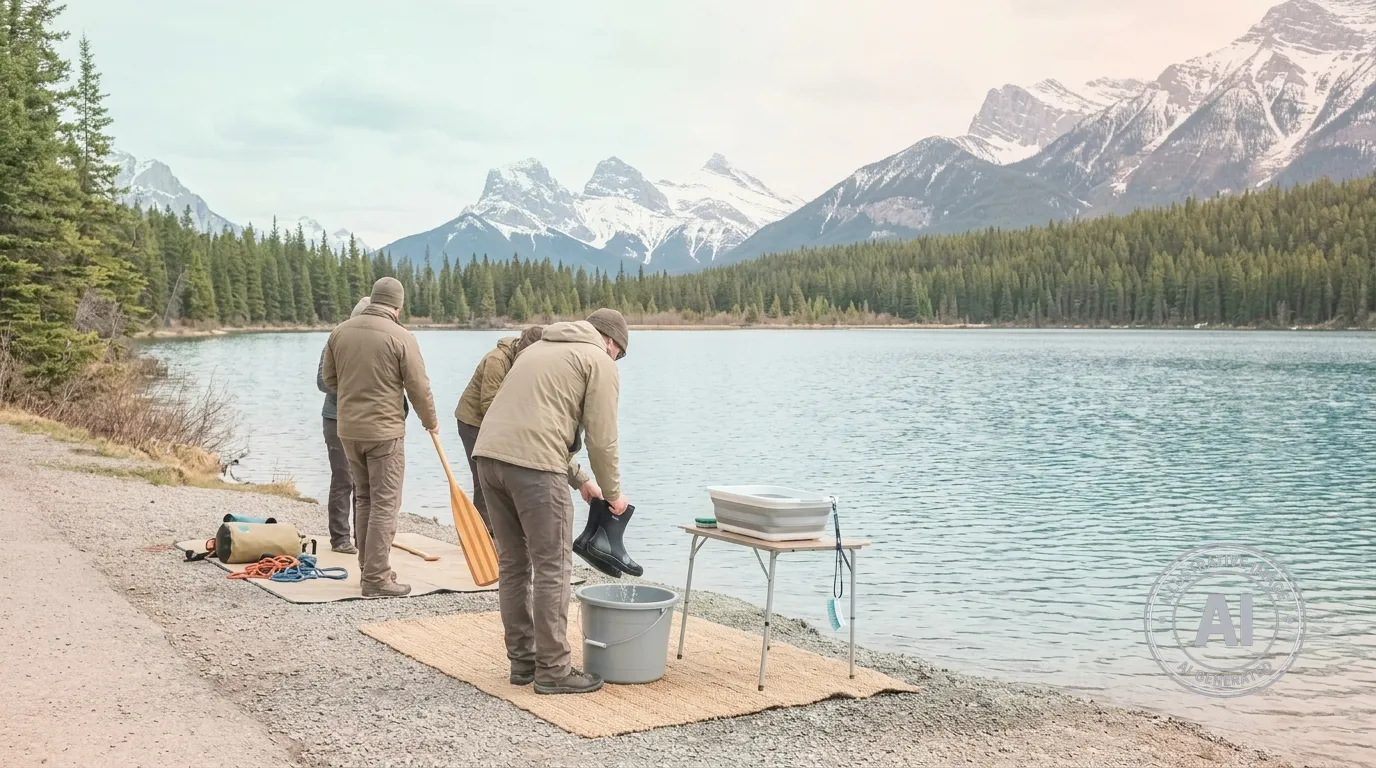
Parks Canada has introduced a new three-zone system to manage water activities across Banff National Park in Alberta. Effective April 15, 2026, the changes aim to stop the spread of aquatic invasive species, including the parasite that causes whirling disease, which can kill up to 90 per cent of young trout, whitefish, and salmon.
The restrictions follow the 2025 detection of whirling disease at Lake Louise. According to François Masse, a superintendent for the agency, the disease was likely introduced to the water by mud or water on recreational gear rather than by the natural movement of fish.
Under the new system, waterways are divided into three categories. The Water Recreation Zone includes 20 popular sites such as Lake Louise, Johnson Lake, and Two Jack Lake, where paddling, fishing, and snorkeling are allowed with a self-certification permit. The Water Preservation Zone covers most other areas, where activities like paddling, floating, scuba diving, and fishing with waders are prohibited. Lake Minnewanka falls under a Special Tactics Zone, which permits motorized boating with an inspection permit but forbids paddling and fishing with waders.
All visitors must follow strict cleaning protocols before entering any water. Equipment must be cleaned, drained, and dried for at least 48 hours if it was last used in Alberta, British Columbia, or the territories. For gear last used elsewhere, a 30-day drying period is required. Violators can face fines of up to $25,000 under the Canada National Parks Act.