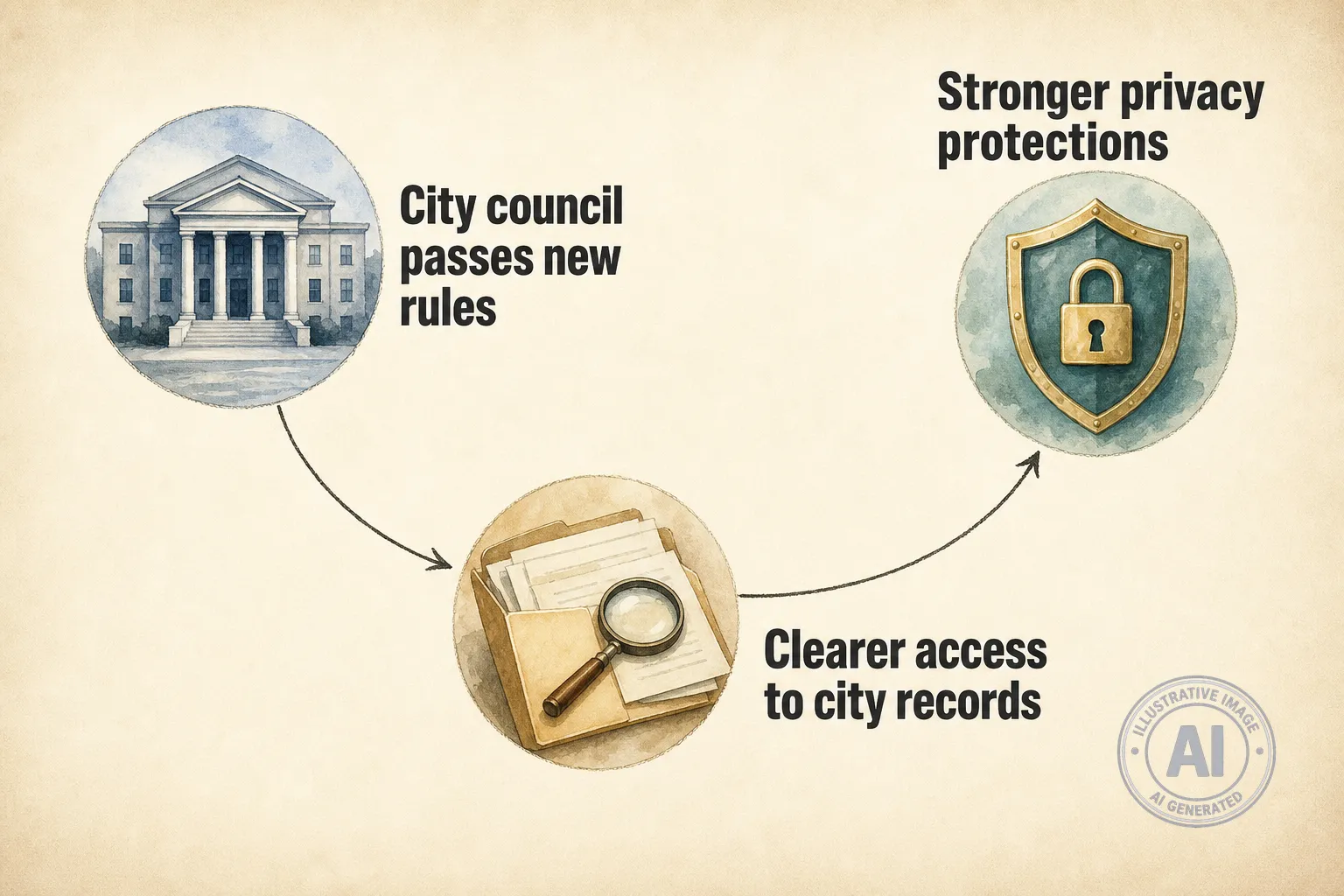
Beaumont City Council adopted two new measures on May 26, 2026, giving residents clearer rights to access city records and stronger protections for their personal information. The changes, passed in a single council session, bring the city in line with updated Alberta privacy laws.
The Access to Information Bylaw formally puts the Chief Administrative Officer in charge of record requests, taking over from the city clerk. It also sets new fees for those requests, matching the maximum allowed under provincial rules.
In a companion move, council approved a Privacy Management and Access to Information Policy. It requires the city to name a Privacy Officer who answers to the Chief Administrative Officer, trains staff every three years, and runs privacy checks on new programs. Residents can expect better safeguards and a clear process to fix errors in their data.
These steps follow a major provincial overhaul. On June 11, 2025, Alberta scrapped its old Freedom of Information law and split it into two acts: the Access to Information Act and the Protection of Privacy Act. The new laws demand that local governments like Beaumont tighten how they handle information. Beaumont is among several municipalities updating their rules; Strathmore passed a similar bylaw in early April.
For residents, the bottom line is straightforward: the rules make it easier to see what the city knows, and they set firm boundaries on how personal details are used. Mayor Lisa Vanderkwaak and council approved the changes without delay, signalling that privacy and openness are front-burner priorities.