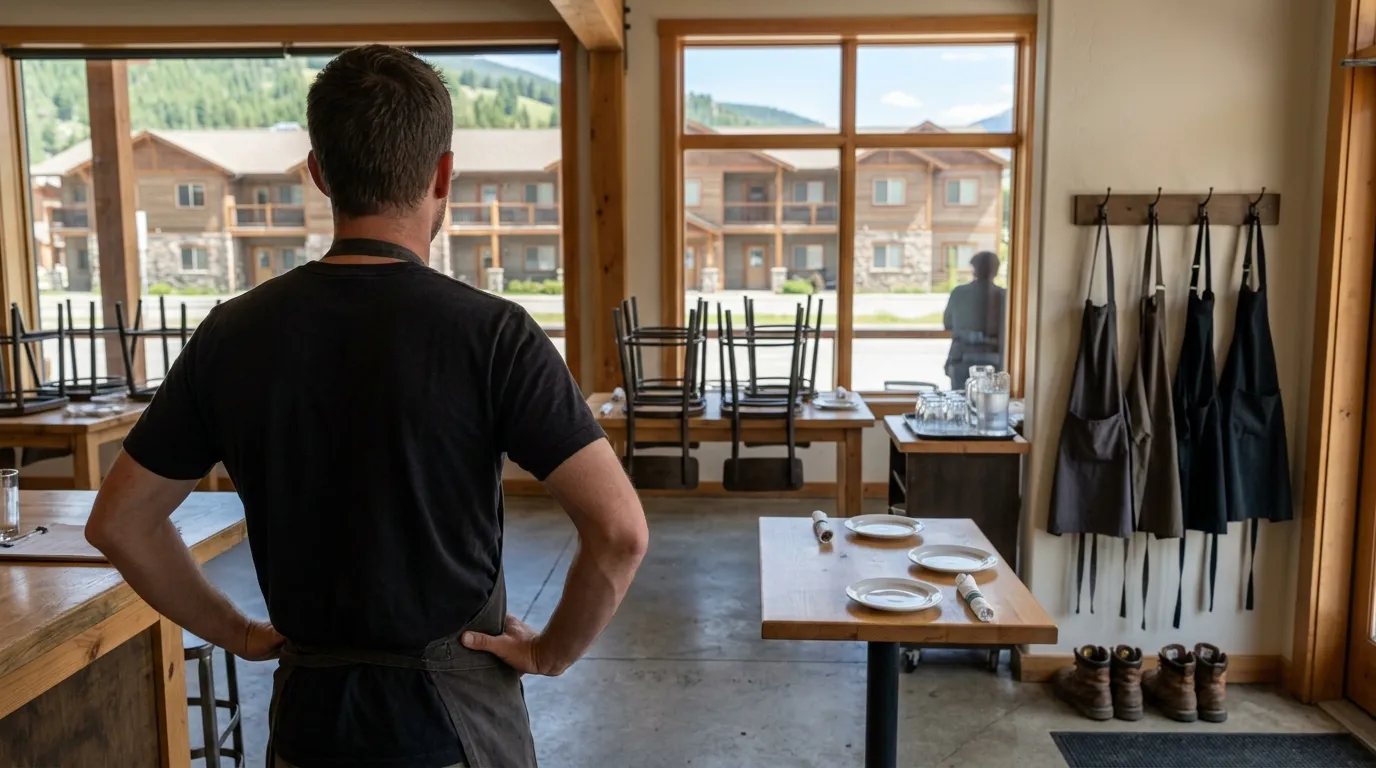
Business owners in Canmore are facing a mounting labour crisis as an acute housing shortage makes it increasingly difficult to hire and retain staff ahead of the busy summer season. With record tourism numbers expected this year, local employers are reporting that they cannot meet demand, as entry-level wages struggle to keep pace with the high cost of rent in the region.
Brande White of the Grizzly Paw Brewing Company recently issued a public appeal for at least 35 new workers by June 1, 2026. White noted she has conducted 600 interviews over the past three years but frequently cannot retain staff because they are unable to secure local housing. Her experience reflects a broader trend, as the town is estimated in a 2024 report to have a labour deficit of 600 to 650 employees according to local government data.
The Tourism Industry Association of Alberta identifies the lack of affordable housing as the primary driver behind this workforce exodus. In Canmore, the average rent for a one-bedroom unit sits at $2,381, while a two-bedroom unit averages $3,169. These costs are difficult to manage for workers in tourism roles, which typically pay between $16 and $20 per hour. In contrast, the Alberta Living Wage Network has calculated that a wage of $38.80 per hour is required to comfortably live in Canmore.
The housing supply is further constrained by the prevalence of short-term rentals, which Statistics Canada reports account for at least 15 percent of the town’s housing stock. Additionally, federal policy changes have recently reduced the allowable share of low-wage temporary foreign workers from 30 percent to 10 percent in the Bow Valley, removing a previous source of labour for many businesses.
While the Town of Canmore is attempting to address these pressures through programs like the Livability Tax and the phasing out of tourist homes to increase long-term residential availability, the immediate staffing needs remain high. Neighbouring Banff is also grappling with the issue, reporting a vacancy rate of only 0.3 percent and a housing shortfall of 700 to 1,000 units, according to Sharon Oakley, the manager of housing for the town.