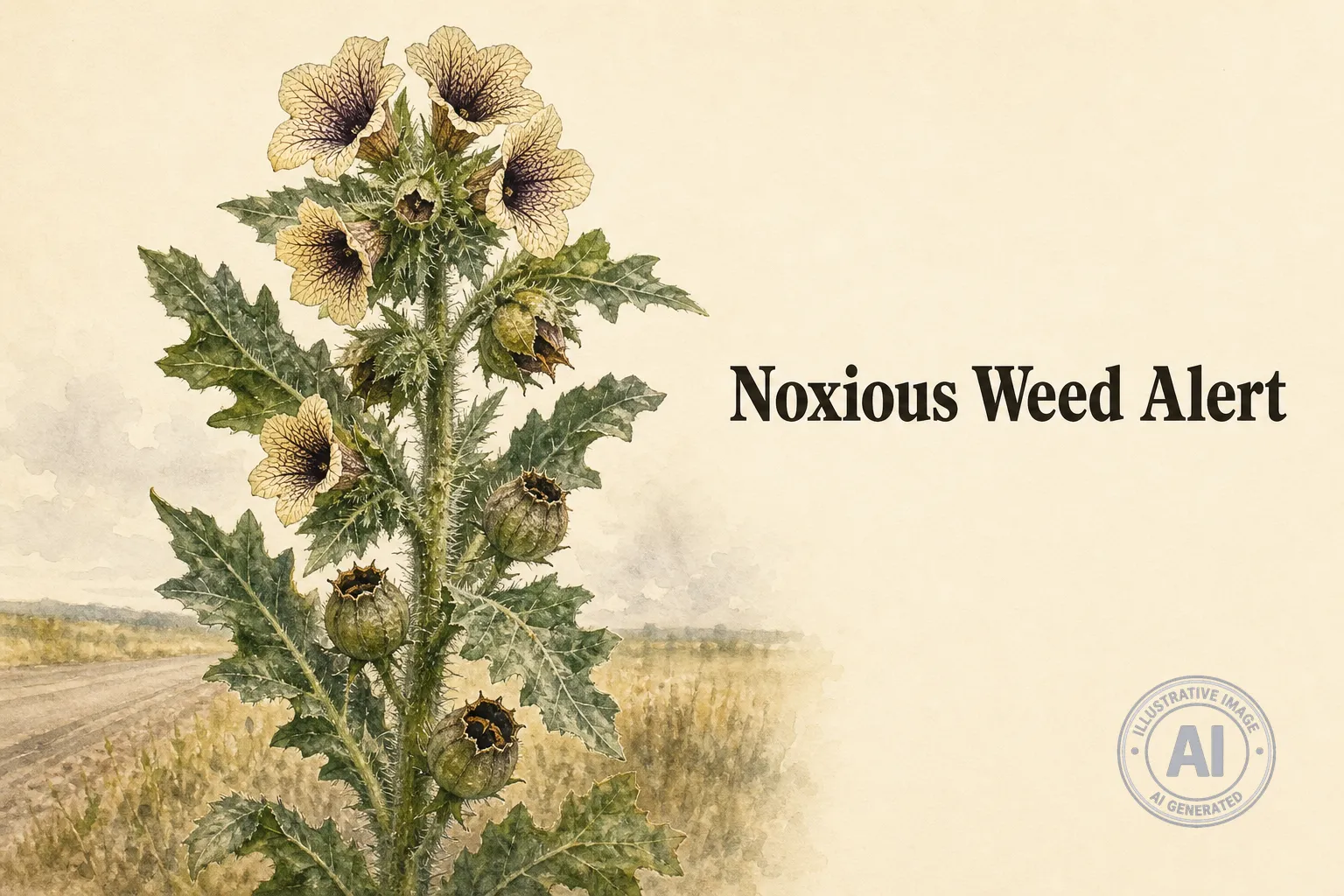
Rocky View County is asking landowners and residents to keep an eye out for black henbane, a harmful weed that can sicken people and livestock. Agricultural specialists with the county say the plant is showing up in fields, along roadsides, and in other disturbed spots, and they want folks to get rid of it before it spreads further.
Black henbane gives off a foul smell and has tough stalks that can reach a metre tall. Its pale-yellow flowers have dark purple veins, making it pretty easy to spot. But the plant is no garden flower. Under Alberta’s Weed Control Act, it is listed as a noxious weed, which means property owners have to keep it under control.
The real danger is inside the plant. Black henbane contains chemicals that mess with the nervous system. If a person or animal eats any part of it, they could face blurred vision, confusion, hallucinations, seizures, or even slip into a coma. The weed stays poisonous even after it dries out, so if it ends up in hay or livestock feed, it can still cause harm. Most animals stay away from it because of the bitter taste and strong odor, but the risk climbs if it gets mixed into feed by accident.
Each plant can pump out up to half a million seeds, held in little urn-shaped pods that pop open and scatter seeds everywhere. Those seeds can sit in the soil and stay ready to sprout for up to five years. For small patches, the county says pulling the plants by hand works well. Once the root is yanked out, a black henbane plant won’t grow back. The pulled plants should be bagged right away and tossed in the garbage, never the compost pile, to stop any seeds from getting loose.
For bigger outbreaks, agricultural producers can turn to herbicides like ClearView, Reclaim II, or Sightline A, which have recently been approved for black henbane control in Alberta. These can knock back the weed for more than one season. But acreage owners can’t just buy them off the shelf – they need to go through a certified contractor. Rocky View County also runs its own Weed Control Program, with seasonal crews that spray, mow, and inspect for problem plants on a three-year rotation through different parts of the county.
More details and fact sheets are available from the Alberta Invasive Species Council, and the county has posted its own guidance online. Agricultural Services urges anyone who spots the weed to act quickly and to reach out if they need help identifying or removing it.