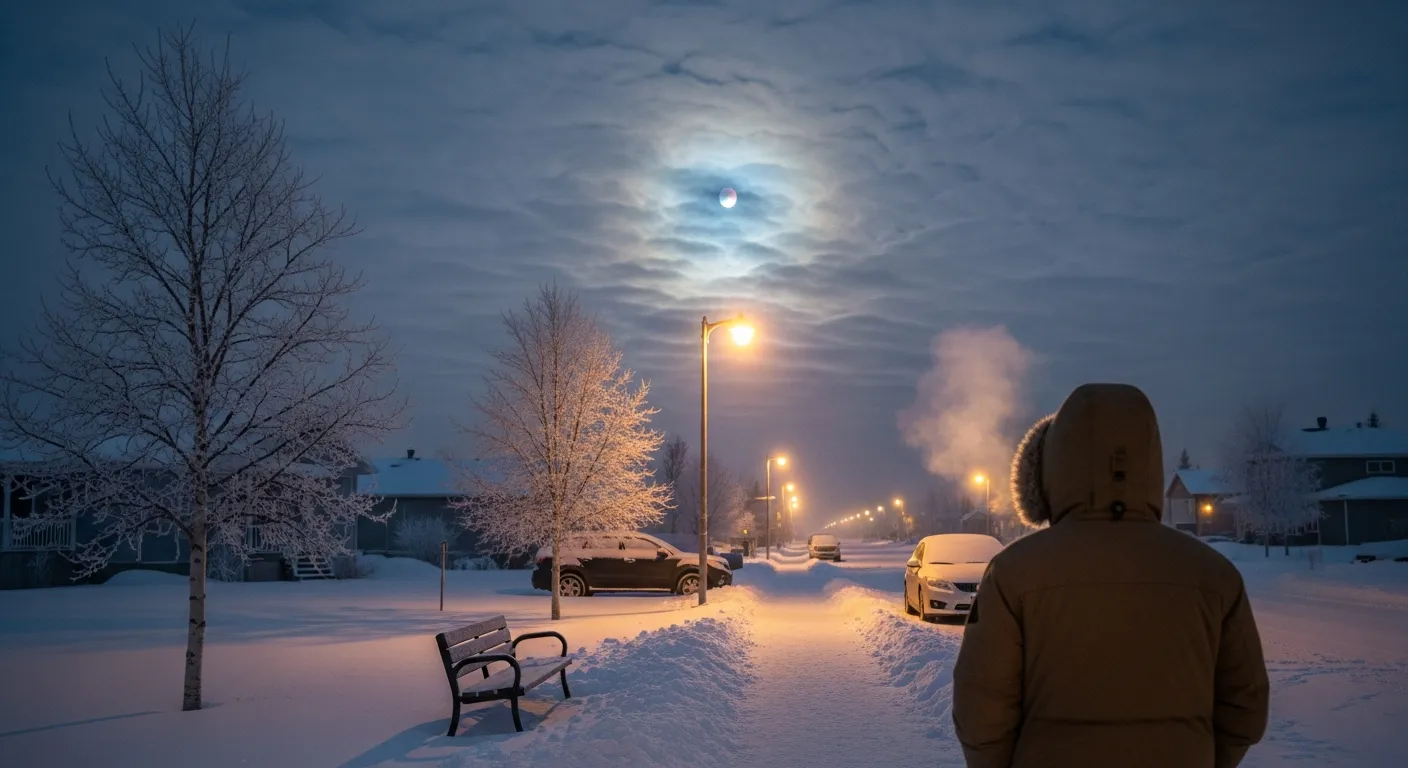
Residents of Dawson Creek, British Columbia, had the chance to witness a rare total lunar eclipse during the early morning hours of March 3, 2026. This celestial event, often called a blood moon, occurred when the Earth moved directly between the sun and the moon, casting a shadow over the lunar surface.
According to Space.com, the moon was fully covered by the Earth’s shadow from 4:04 a.m. to 5:02 a.m. Mountain Standard Time. The moon reached its deepest reddish colour at 4:33 a.m. as it passed through the darkest part of the shadow.
This was a significant event for local skywatchers because it is the last total lunar eclipse that will be visible from North America until late 2028 or 2029. Information from Starwalk Space notes that because the eclipse happened before dawn on Tuesday, it will not be visible again on the night of March 3 leading into March 4.
Many people in the community may have missed the sight due to difficult weather conditions during the early morning. As reported by The Weather Network, the city saw light snow and heavy cloud cover with temperatures around -14°C during the peak of the eclipse.
The reddish appearance of the moon is caused by a process known as Rayleigh scattering. The International Star Registry explains that the Earth’s atmosphere filters out blue light and bends red light toward the moon, which is the same reason why sunrises and sunsets look red.