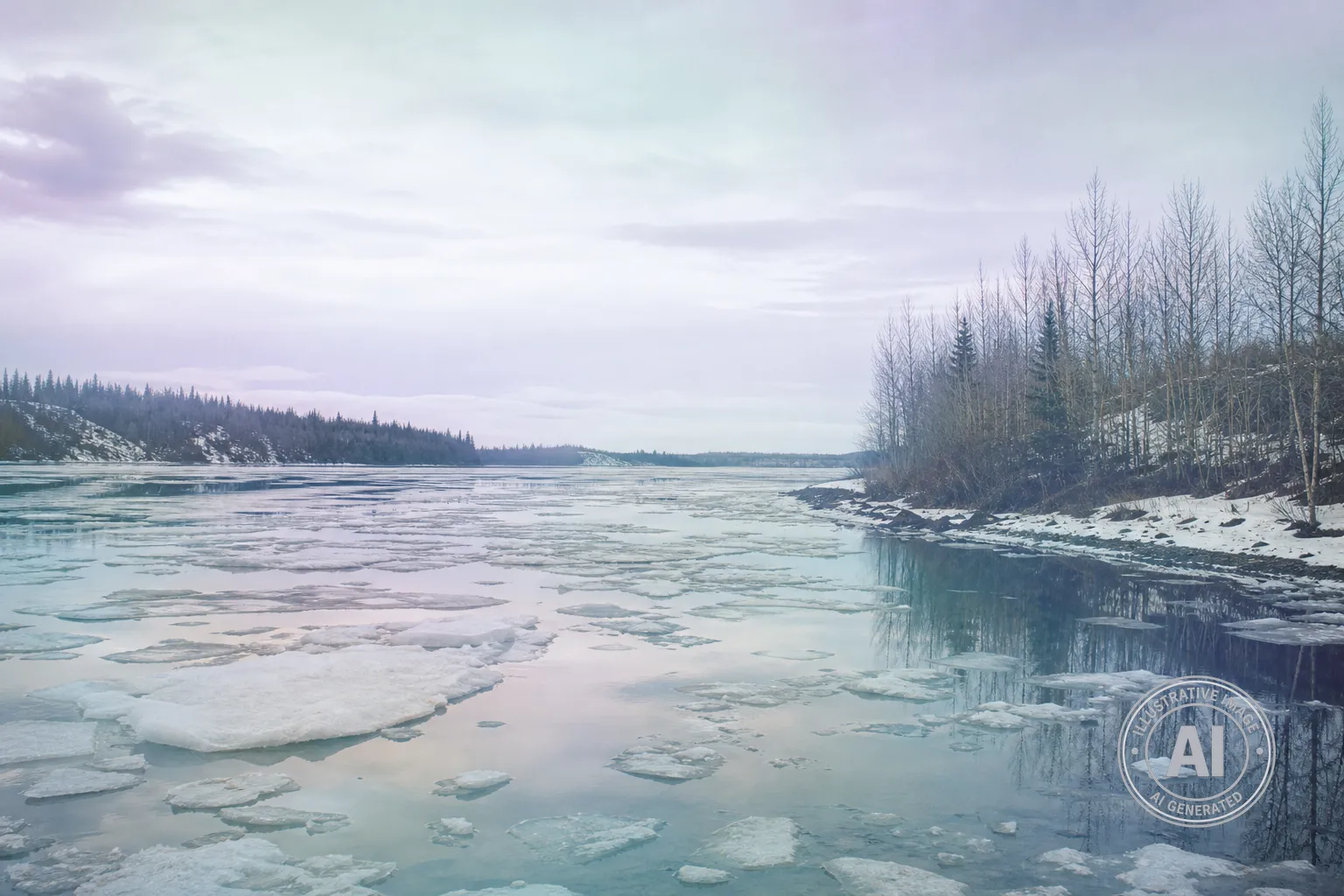
The Town of Hay River, Northwest Territories, has officially finished its spring breakup monitoring season as of May 11, 2026. Officials confirmed that ice in the East Channel cleared overnight, allowing water to flow freely through both the East and West channels into Great Slave Lake without causing flooding.
While current water levels remain higher than historical averages for this time of year, the town reports that there is no immediate flood risk. The Local Emergency Management Organization, which coordinated months of preparations involving the Hay River Fire Department and town staff, is now shifting its focus toward wildfire season preparedness.
Although the threat of flooding has passed for the moment, residents should remain cautious. The town warns that logs, remaining ice, and other debris may still be present in the waterways. These materials can pose hazards to anyone operating watercraft, especially as water levels continue to rise.
This year’s monitoring season was supported by a series of webcams and water level graphs installed at key locations such as Alexandra Falls, Paradise Valley, the Pine Point Bridge, and the Riverside Apartments. The town expressed its appreciation for the fire department and the flood monitoring crew for their work in tracking the breakup.
The successful conclusion to the season is a notable relief for the community, which has a history of significant flooding events. The town previously experienced major flooding in 1963, 2008, 2009, 2020, and most recently in 2022, when ice jams and severe weather forced a full community evacuation. Due to this history, both Hay River and the Kátł’odeeche First Nation are consistently identified by the government as areas that require close observation during the spring thaw.