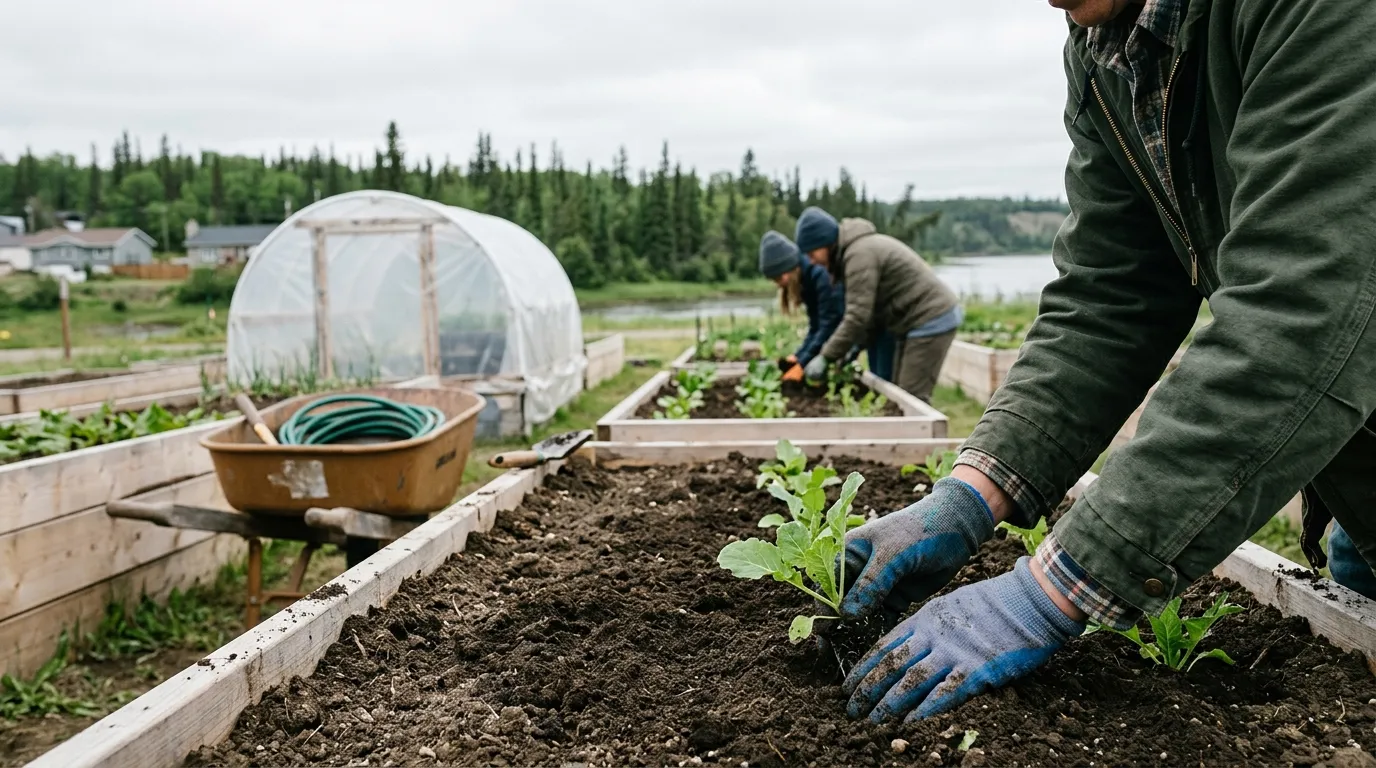
Gardeners and food producers in Hay River, Northwest Territories, are part of a growing movement to strengthen local food production as the territory works to increase its self-sufficiency. This push was highlighted by the recent Grow NWT 2026 conference, which took place from March 26 to March 28, 2026, at the Chateau Nova Hotel in Yellowknife.
The conference concluded with a public-facing event called Seedy Saturday on March 28. Attendees participated in workshops focused on practical skills, including square foot gardening, soil versus hydroponics, and seed saving. These sessions are designed to help residents and growers improve their ability to produce food locally, a goal supported by the Territorial Agrifood Association.
As the “Hub of the North,” Hay River plays a central role in this agricultural shift. The town has maintained an Agriculture Plan since 2014, which serves as a framework to guide land use and investment for both backyard gardeners and commercial farms. Despite challenges such as flooding in 2022 and wildfire damage in 2023 that affected the former Northern Farm Training Institute site, the community continues to redevelop land to support future agricultural projects.
Janet Dean, Executive Director of the Territorial Agrifood Association, notes that genuine food security is achieved by producing food within the territory. This approach helps reduce reliance on external supply chains and unpredictable grocery prices. The association, chaired by Kevin Wallington, a key figure in the development of the territory’s commercial agriculture sector, continues to advocate for policies that promote locally grown food.
The focus on northern food production coincides with broader efforts at the federal level. On March 26, 2026, the Government of Canada announced over $2 million in funding to support nine Indigenous-led projects focused on northern food security research. These investments build on the ongoing NWT Agriculture Strategy, which has seen approximately $5.6 million in federal support provided through the Canadian Agricultural Partnership to help expand food production capacity across the region.