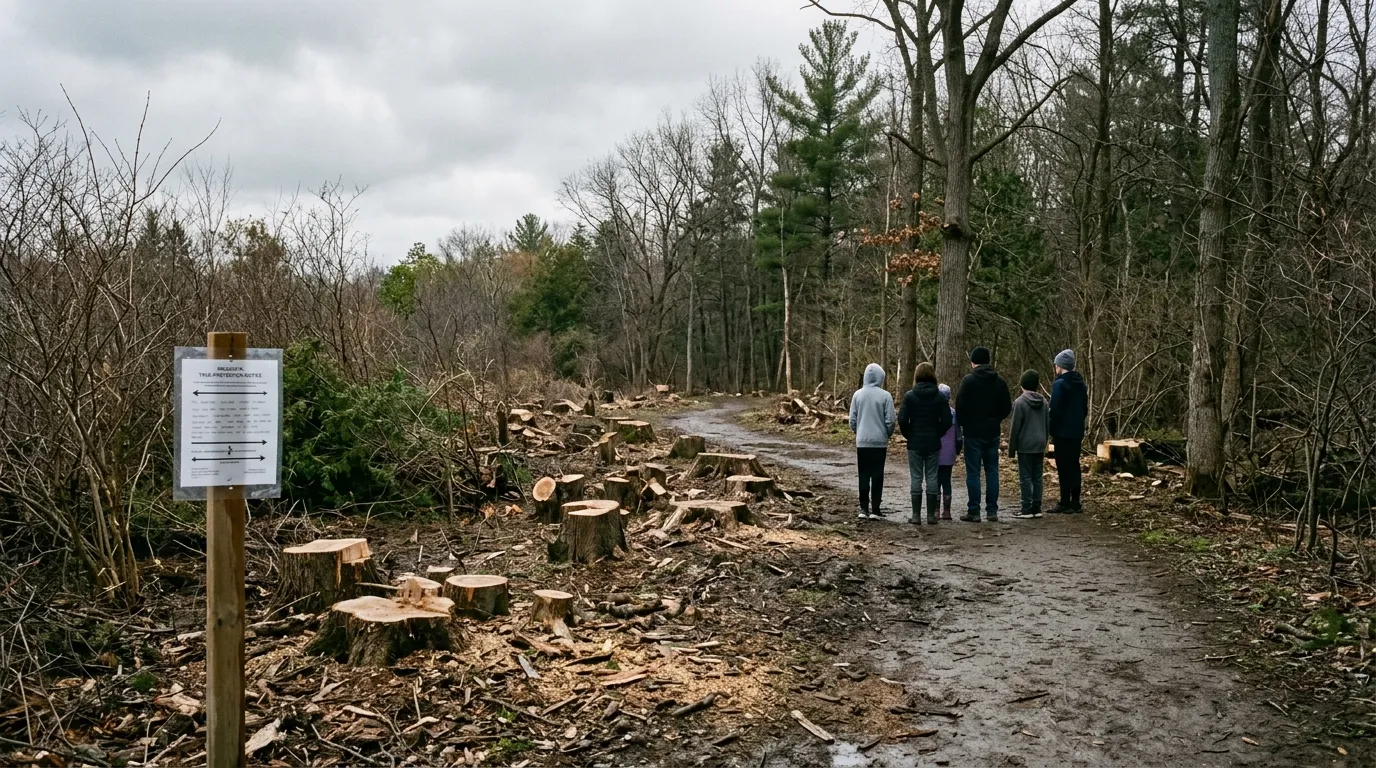
Kingston City Council has put a temporary halt on the clear-cutting of trees across the city, following a recent push to close legal loopholes that allowed for the mass removal of urban forests.
On March 24, 2026, council members voted 12-1 in favour of a temporary bylaw that prohibits clear-cutting unless a permit is obtained. The move comes after hundreds of trees at the corner of Taylor-Kidd Boulevard and Coronation Boulevard, known to locals as the Mile Square block, were cleared for agricultural purposes. This activity triggered significant public outcry and protests from residents concerned about the rapid loss of local green space.
The city defines clear-cutting as the removal of the majority of trees within an area larger than 0.2 hectares, or half an acre. Prior to this new measure, the existing Tree Bylaw allowed for an agricultural exemption, permitting land clearing without oversight if it was classified as a normal farm practice. Sarah Knight, founder of the Friends of Collins Creek advocacy group, noted that this exemption had been used to bypass the need for permission from the city.
Environmental advocates have raised alarms regarding the impact of this development on local wildlife. According to Joyce Hostyn, also of the Friends of Collins Creek, the loss of this forest has displaced several protected species, including the federally protected pileated woodpecker, as well as wood frogs, scarlet tanagers, wood thrush, and the whip-poor-will, which is considered a threatened species in Ontario.
The city had previously issued a stop-work order on March 17, 2026, after determining that the work at the Mile Square site was destroying trees in a designated Significant Woodland area without the required permits. Councillor Lisa Osanic, who introduced the motion for the temporary bylaw, stated that the decision reflects the community’s commitment to protecting the environment. This action aligns with the city’s 2019 declaration of a climate emergency and its ongoing Urban Forest Management Plan.
Councillor Gary Oosterhof, who cast the lone dissenting vote, expressed concerns about how the new bylaw might affect future farming and housing development. The temporary rules will remain in place until the city finalizes its new official plan later in 2026.