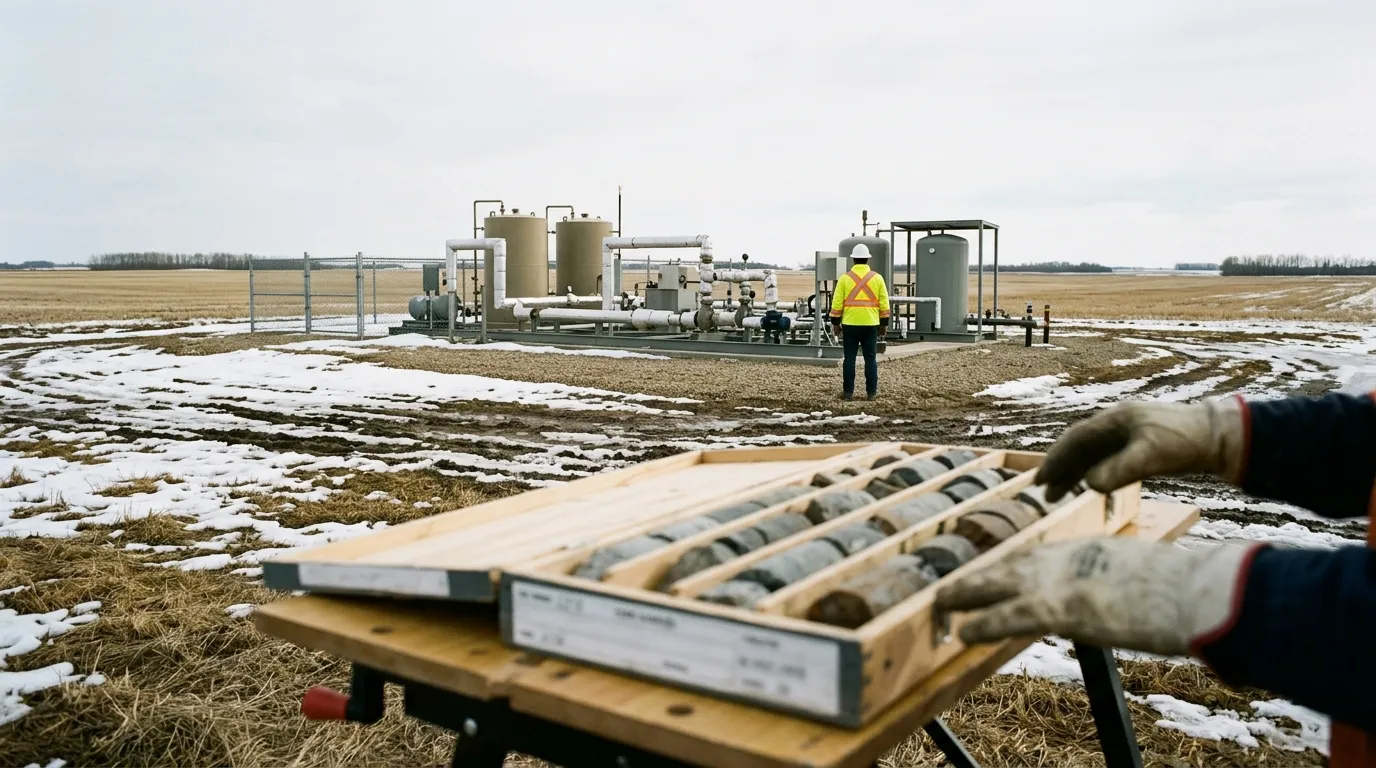
A new assessment from the Alberta Geological Survey confirms that the province of Alberta contains one of the world’s largest known supplies of lithium. Released on March 18, 2026, the study found that 95 per cent of this resource is located in the Devonian Leduc Formation—the same underground rock layer that launched the province’s modern oil industry with the historic Leduc No. 1 discovery in 1947. This finding could position Alberta as a major global source for the minerals needed to build electric vehicle batteries.
The research estimates there are 82.5 million tonnes of lithium carbonate equivalent deep in the earth across the province. Using a process called direct lithium extraction, the resources could theoretically generate over US$1 trillion in revenue. This method involves removing lithium from salty water found in old oil reservoirs and then returning the water underground.
While the Leduc Formation spans much of the province, E3 Lithium has been testing ways to create battery-grade material at its demonstration facility near Olds. To support the emerging industry, Imperial Oil invested $6.35 million into the partnership in 2022 to leverage existing oil and gas expertise for lithium production.
This push for local lithium comes as the demand for the mineral is expected to grow by 40 per cent in Canada by the end of the decade. In March 2026, the federal government provided a conditional $36.5 million to help E3 Lithium accelerate its Clearwater Project. The Alberta Energy Regulator has already seen about two million hectares of land leased for exploration as companies target commercial production by 2027.