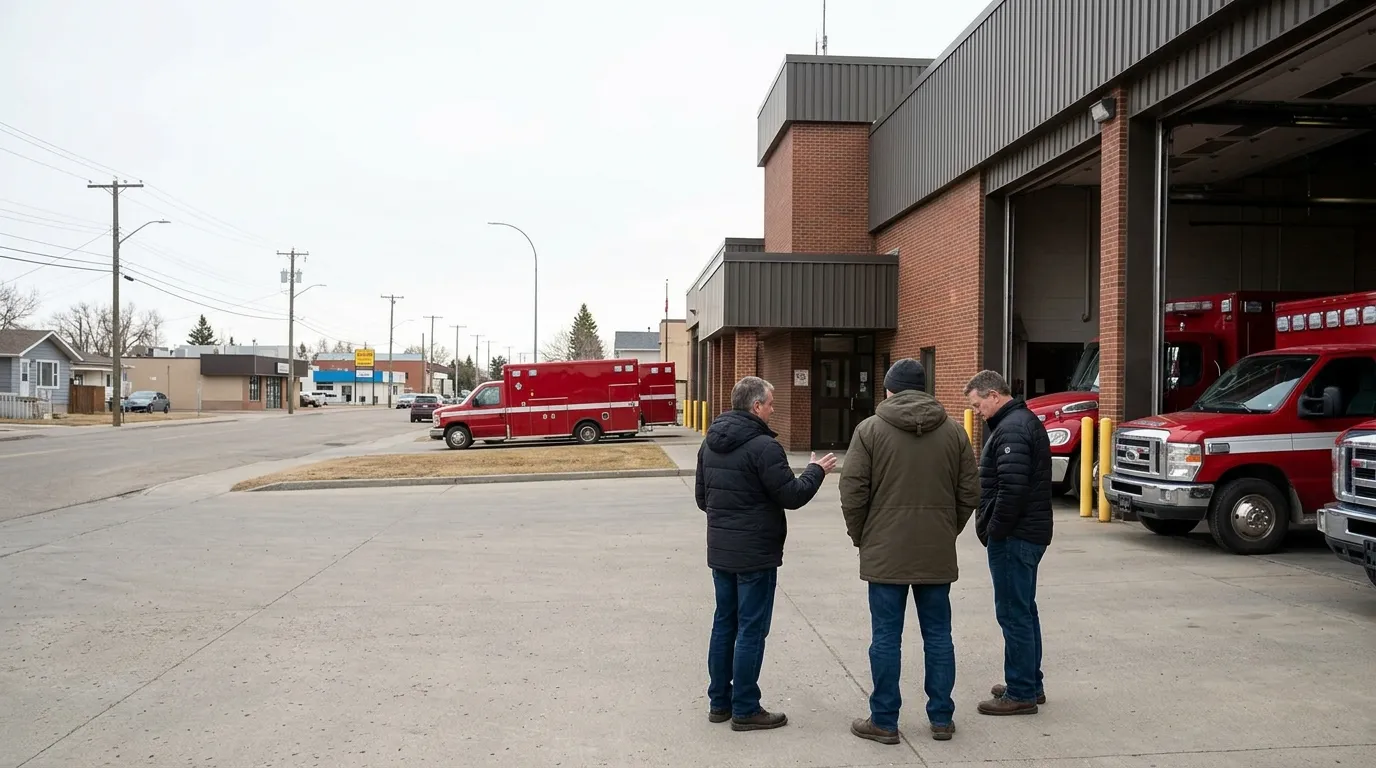
The Alberta government has issued an ultimatum to Lethbridge and six other municipalities that could force the city to pay more for ambulance services or risk losing local control over its emergency response model. The province has informed Lethbridge that to negotiate a new contract, the city must agree in advance to cover any costs that exceed provincial benchmark rates, or face the prospect of a competitive bidding process for ambulance services.
This requirement comes as the City of Lethbridge prepares for its current ground ambulance service agreement with the provincial health agency, Acute Care Alberta, to expire on September 30, 2026. The provincial government initially set a late March deadline for a response but has since extended it to May 31, 2026.
Minister of Hospital and Surgical Health Services Matt Jones stated the province is seeking cost-alignment, claiming that integrated fire and emergency medical services models, such as the one used in Lethbridge, cost 40 per cent more than other provider options. In response to the mandate, Lethbridge city council voted unanimously to send a joint advocacy letter with the other affected municipalities—Red Deer, Leduc, St. Albert, Strathcona County, Spruce Grove, and Wood Buffalo—to the Minister of Public Safety and Emergency Services. The group is requesting a meeting to discuss the contracts and seek further clarity.
Mayor Blaine Hyggen has noted that the city currently lacks the specific financial figures required to make an informed decision on the provincial proposal. Lethbridge has provided an integrated fire and emergency medical system for over 100 years, and the city’s current agreement includes 10 ambulances divided between 24-hour and 12-hour shifts. Residents are encouraged to share their feedback on the potential service changes through the city’s online engagement page.
Local concerns regarding the proposal remain high. Brent Nunweiler, president of the Lethbridge Firefighters IAFF Local 237, has publicly raised concerns that bringing in a for-profit, lower-cost provider could result in a lower level of care for the community. The provincial government expects the procurement process to continue until April 2027, with any potential service transitions expected to be completed by September 2027.