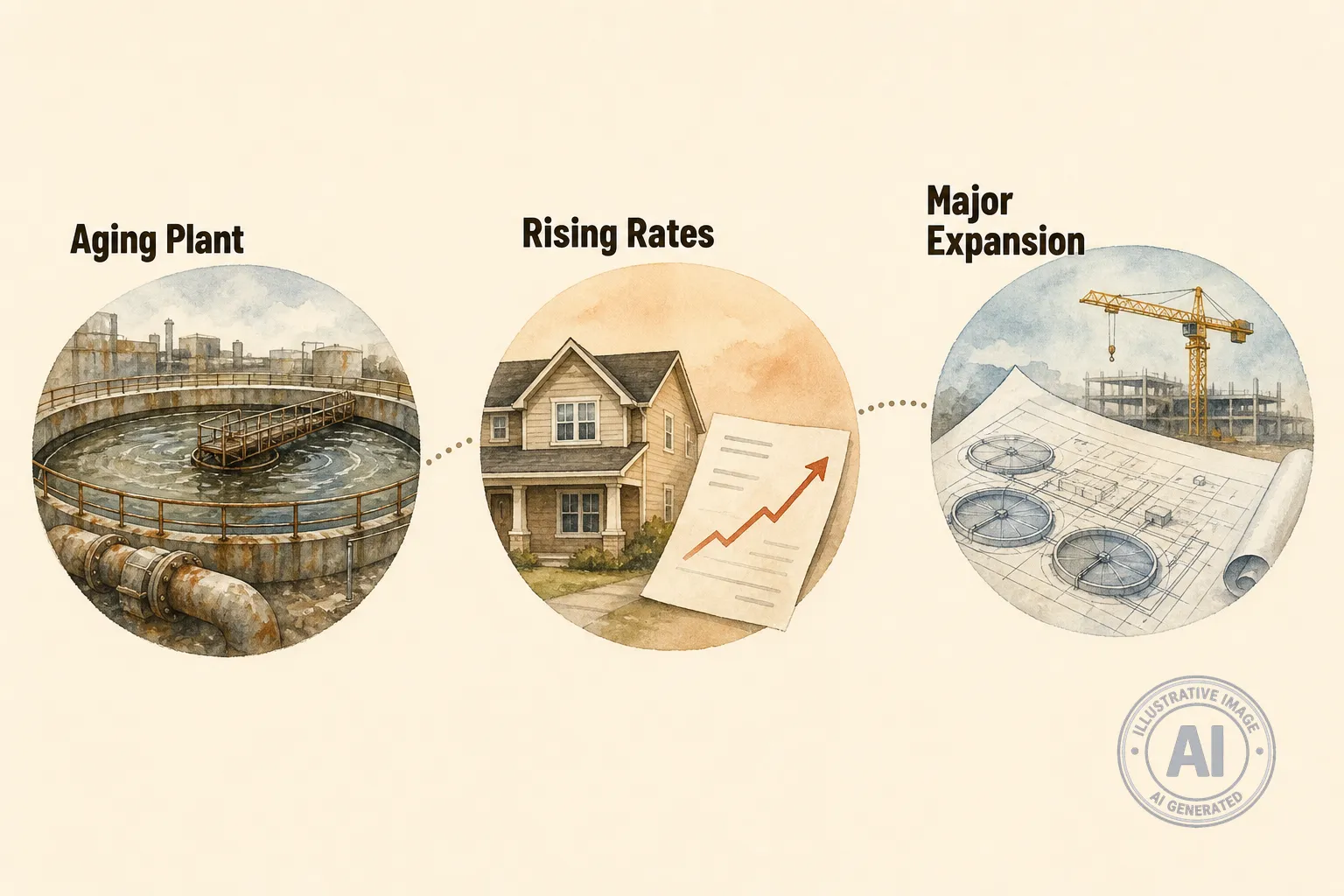
City council in Lethbridge, Alberta, has given the green light to a $285 million upgrade of the aging Wastewater Treatment Plant, a move that will bring higher monthly bills for residents but is needed to avoid a system failure and keep up with growth.
The project, approved unanimously by council on May 26, 2026, is the largest infrastructure spend in the city’s history. It will add a second treatment train to boost capacity by 50 per cent, or 20 million litres per day, and includes a pre-treatment facility for industrial customers. The plant, last expanded in 1989, is now running near its realistic limit.
Joel Sanchez, Director of Infrastructure Services with the City of Lethbridge, told council that several key parts of the plant are in “very poor” shape. He noted the electrical building and ultraviolet disinfection tank have no backups, and warned that a breakdown could lead to service disruption or environmental problems. The plant’s rated capacity is 50 million litres per day, but concentrated industrial wastewater typically cuts that to about 40 million litres.
To pay for the work, the city will borrow $261 million and pull $24 million from reserves. Households will see wastewater rates climb by 18.05 per cent each year from 2027 through 2030. By the end of that period, the average monthly residential bill will be $23.05 higher than it is now. Despite the jump, officials note that Lethbridge’s rates will stay about 60 per cent below the Alberta average, keeping them among the lowest in the province.
Construction is slated to start in early 2027, with detailed design work already set to begin this month. The city aims to have the expanded plant running by the fall of 2030. The Community Issues Committee, a newly streamlined panel, had backed the plan with a unanimous vote on May 13 before it went to full council.