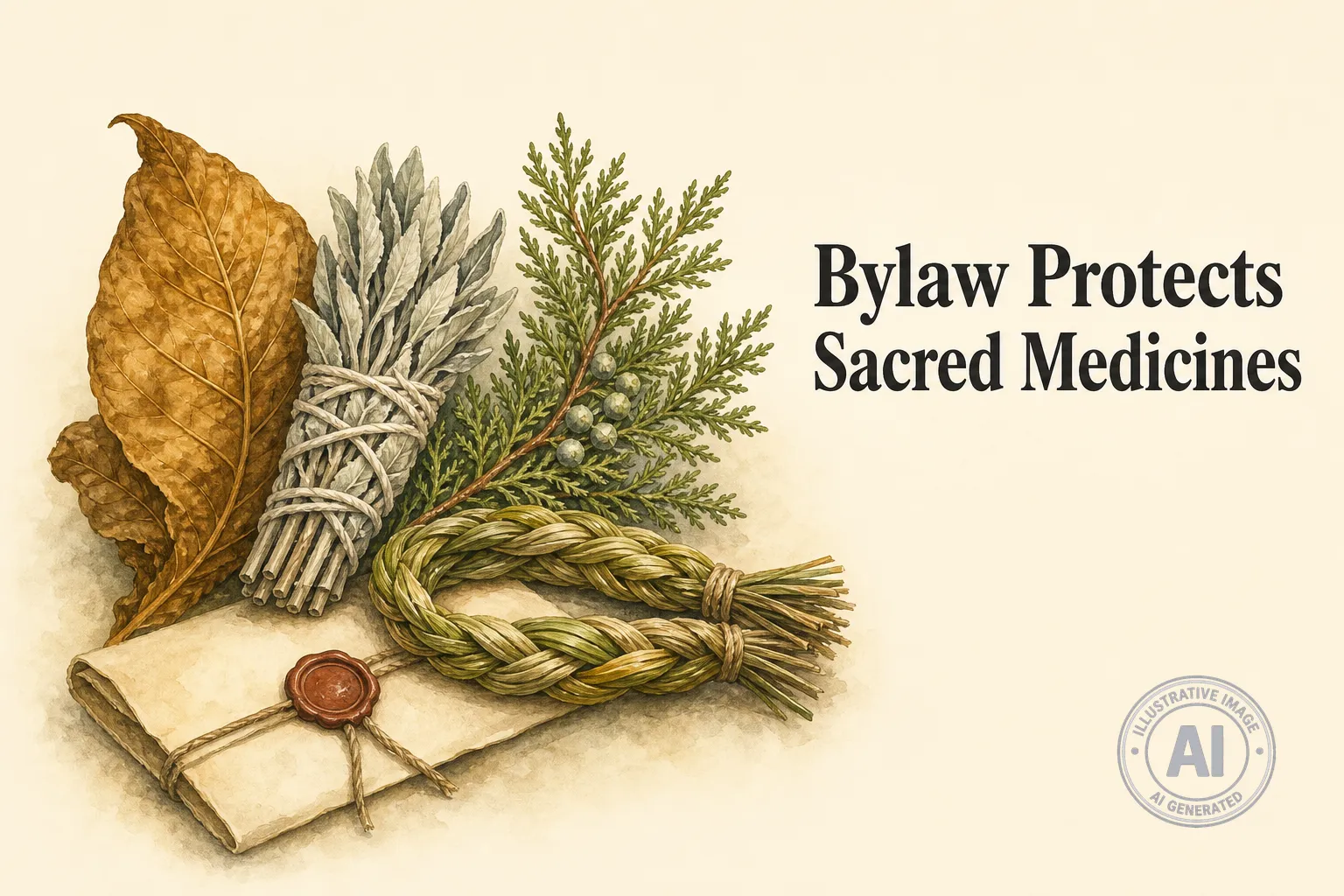
The largest First Nations community in Manitoba has passed a law to keep traditional healing plants safe for future generations. Peguis First Nation, located about 196 kilometres north of Winnipeg, enacted the Protected Traditional Medicines bylaw on July 28, 2026. The move is a direct effort to protect the roots, leaves and berries that Ojibway and Cree healers have used for centuries.
Chief Dr. Stan Bird and council formally approved the bylaw this week. It aims to stop overharvesting and misuse of plants many members rely on for smudging, ceremonies and health remedies. Indigenous peoples across Canada have long turned to more than 400 species of plants, lichens and fungi for medicine, and the new bylaw adds local legal weight to the protection of those traditions.
The four sacred medicines most central to local traditions are tobacco, sage, cedar and sweetgrass. Together they anchor purification and healing practices. The bylaw is part of the community’s larger push to assert its rights and preserve its identity, even as Peguis faces a major flooding crisis.
The bylaw arrives in a difficult year. In April, Peguis declared a state of emergency because of flooding that has hit the region hard for decades. The nation had already filed a $1 billion lawsuit in 2024 against the federal and provincial governments, claiming they have failed to safeguard First Nations from recurring flood damage. Despite those challenges, Chief Bird has made cultural protection a top priority.
The new rules align with the United Nations Declaration on the Rights of Indigenous Peoples, which Canada adopted through national legislation in 2021. Article 31 of that declaration recognizes Indigenous peoples’ right to control and safeguard their traditional medicines. Peguis leaders point to that framework as they build local laws that reflect the community’s own values.