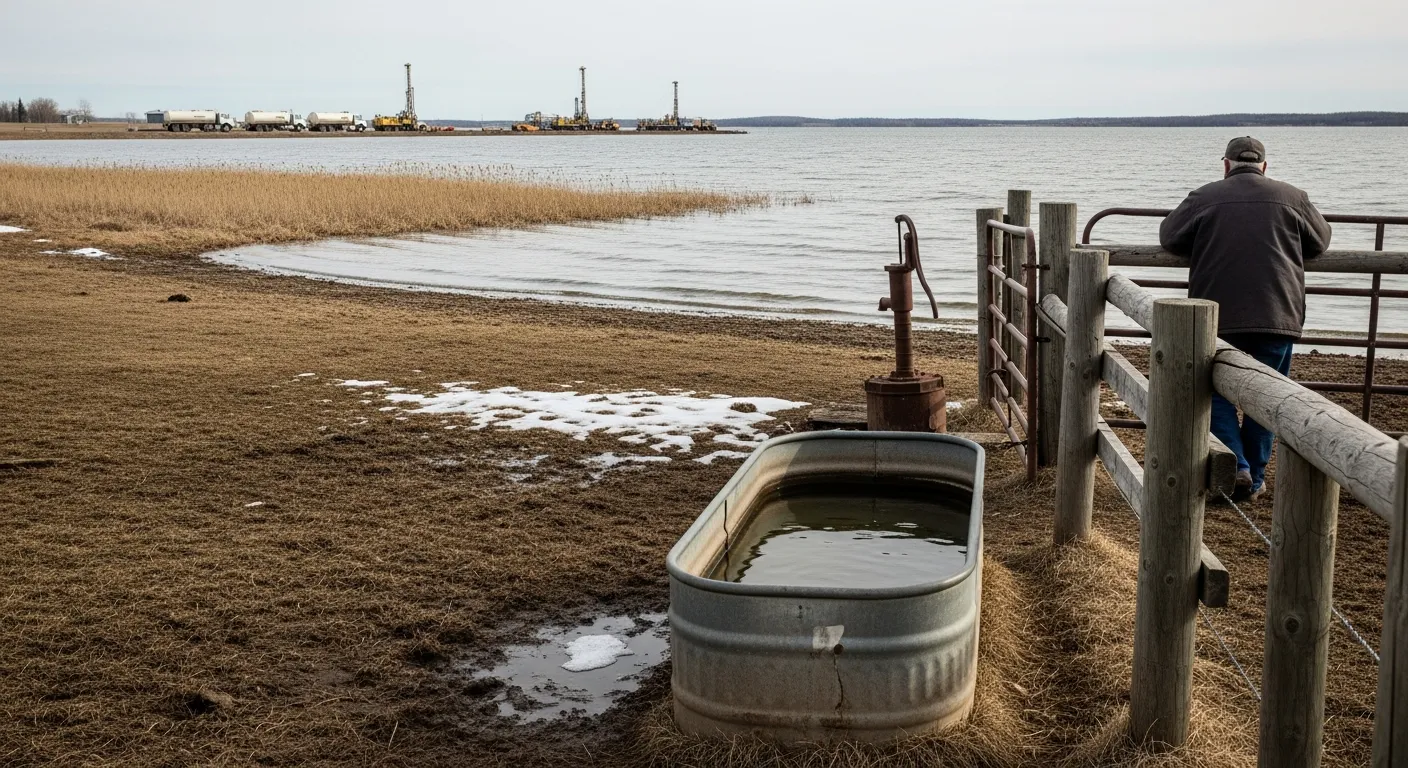
Sylvan Lake, Alberta, is at the centre of a growing debate as of March 23, 2026, over the amount of water used for oil and gas operations in the area. Local farmers and environmental advocates are expressing concern about the volume of groundwater Spartan Delta Corp. is extracting to support its fracking projects in the Duvernay shale formation. Critics worry the cumulative amount taken over the next five to six years could approach a significant fraction of Sylvan Lake’s total volume.
Ranchers near Rimbey, such as bison farmer Butch Smith and cattle rancher Dustin Dial, say the water extraction has already caused their own wells to run low and dried up their pastures. These farmers report they have been forced to sell livestock because there is not enough water to sustain them. According to the Alberta Energy Regulator, wells in the Duvernay formation use 10 times more water on average than older types of wells in the region.
The Sylvan Lake Watershed Stewardship Society has been monitoring the area’s water levels, noting that Sylvan Lake holds about 428 million cubic metres of water but loses about 20 million cubic metres to evaporation every year. Spartan Delta Corp. plans to spend between $410 million and $470 million this year to grow its oil and gas production in the region. Mark Dorin, president of Dorin Land and Oilfield Management Inc., has called for stricter rules and better protection for the rights of landowners facing these issues.
This discussion comes as the community marked World Water Day on March 22, 2026, which followed a United Nations report declaring an era of “global water bankruptcy.” Energy companies are required to apply for water use licences through a provincial system called OneStop, which has been the standard since June 2, 2025. In 2024, fracking operations across the province used about 30 million cubic metres of water to help extract resources from the ground.