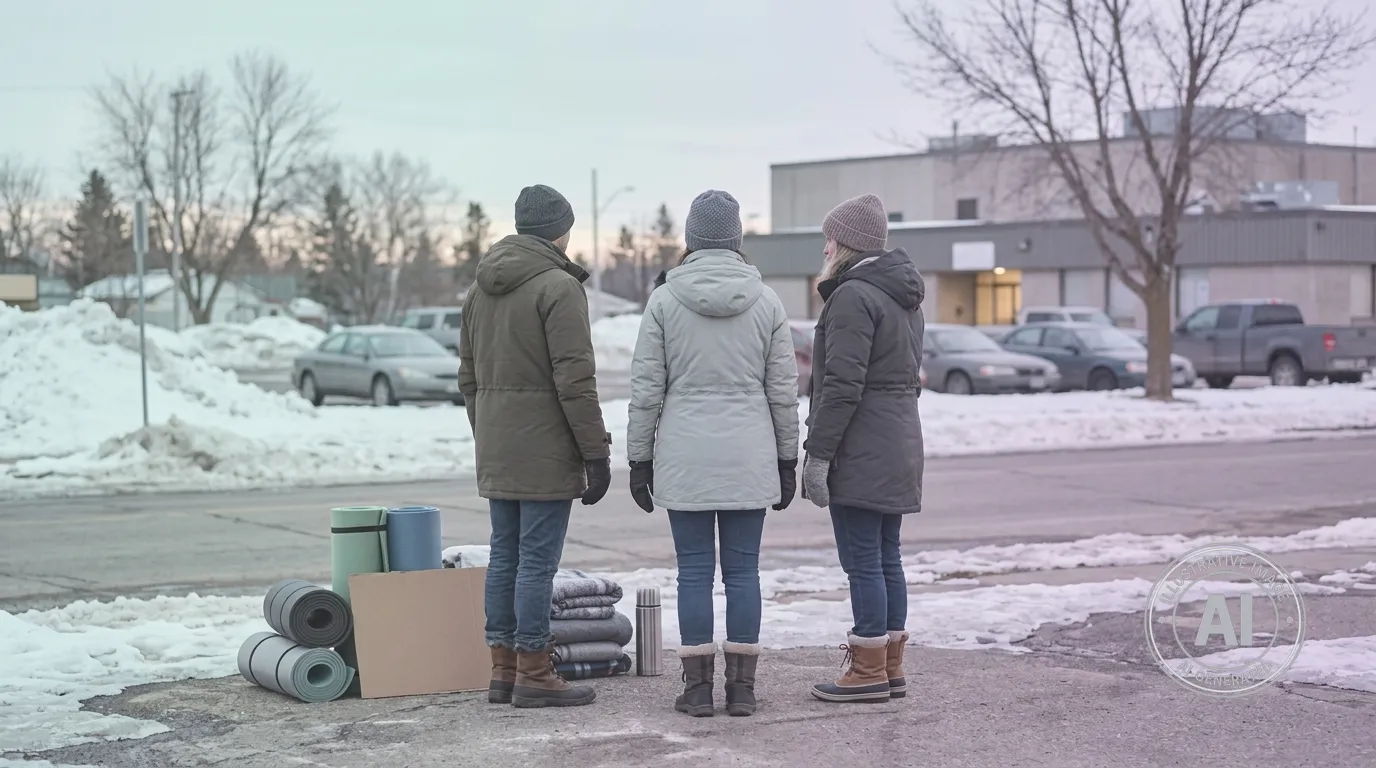
The United Way of Thunder Bay and the Thunder Bay Police Service partnered in March 2026 for an event called Sleepless in Thunder Bay, an overnight experience designed to build empathy and raise awareness regarding the city’s ongoing homelessness crisis.
Participants in the overnight event, including Deputy Chief Jeremy Pearson, spent the night experiencing a fraction of the discomfort faced by those without stable housing. The police service noted that while the event cannot replicate the true experience of being unhoused, it highlights that homelessness is a daily reality for many, involving constant exposure to the cold, isolation, and uncertainty. Deputy Chief Pearson stated that the experience serves as a meaningful starting point to spark conversation and deepen community understanding.
This awareness effort follows the official declaration by the City of Thunder Bay on February 18, 2026, that homelessness is a humanitarian crisis. Mayor Ken Boshcoff stated that the current system is not meeting the level of need in the community and that the declaration signals a commitment to work with Indigenous partners, community service providers, and all levels of government to create sustainable pathways for those in need.
Recent data underscores the severity of the issue, with 652 people recorded as experiencing homelessness during the 2025 count. Notably, 78 percent of those individuals identified as Indigenous, despite Indigenous residents making up only 14 percent of the local population. To help coordinate a response, a leadership table has been formed, bringing together the city, Anemki Wajiw (Fort William First Nation), Nishnawbe Aski Nation, and the District of Thunder Bay Social Services Administration Board.
As part of broader efforts to address the crisis, the city is preparing to open a temporary shelter village at 879 Alloy Place in the spring of 2026. The village will provide 80 private, climate-controlled units equipped with beds and locking doors. Residents who wish to support local efforts to address poverty and community inclusion can learn more about the United Way’s Better is Possible initiative through their website.