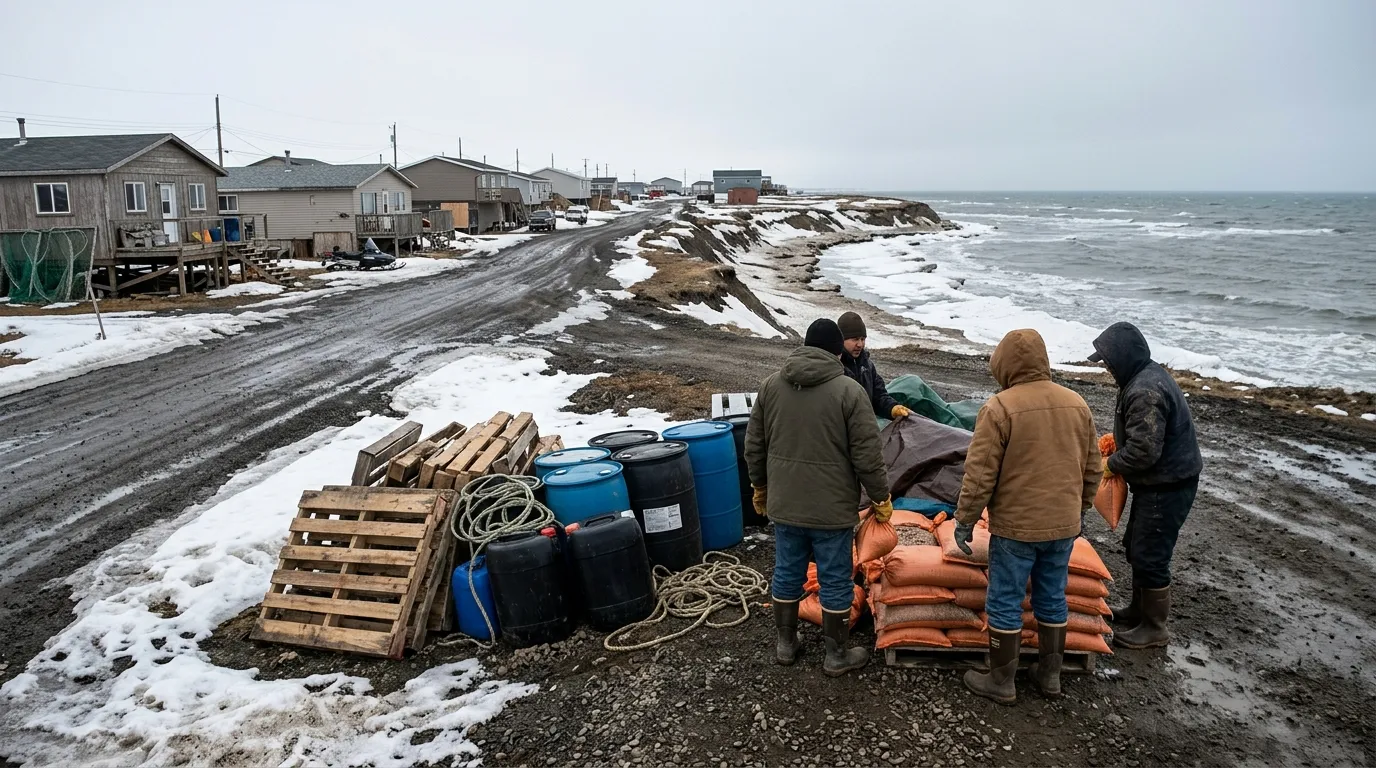
The Government of Northwest Territories is urging residents to prepare for the spring flood season as warming temperatures begin to affect waterways across the territory. While the official flood season typically begins in late April, officials are encouraging residents in high-risk areas, including Tuktoyaktuk, to finalize their emergency plans and prepare safety kits.
Most flooding in the Northwest Territories is caused by ice jams, which occur when large chunks of ice block river flow, causing water to build up and breach banks. The Department of Municipal and Community Affairs notes that the risk of such flooding is highest during the spring breakup period as ice moves unpredictably through rivers during the thaw.
For residents of Tuktoyaktuk, flood preparedness takes on a distinct meaning. While the community is designated as a high-risk flood area by the Government of Northwest Territories, its primary threat comes from Arctic coastal storm surges rather than river ice jams. These surges, which occur during late summer and fall, can cause significant damage to the low-lying coastline.
The community is still recovering from a historic storm surge on August 30, 2025, which saw water levels reach 2.6 metres and wind gusts hit 130 km/h. That event caused extensive damage, surrounding 14 homes with water and sweeping away many workshops and smoke houses. In the aftermath, the community faced challenges accessing disaster assistance, highlighting the ongoing need for local readiness.
Beyond immediate flood risks, the hamlet continues to grapple with long-term environmental changes. Research from groups such as Future Tuktoyaktuk indicates the area loses up to one metre of coastline each year due to erosion. These persistent threats have prompted the territorial government to release updated flood hazard maps in February 2026, which utilize a 200-year flood standard to better reflect the risks posed by a changing climate.
Residents are advised to stay informed through Environment and Climate Change Canada, which provides ongoing weather monitoring and storm surge forecasting for Arctic coastal communities.