Farmers, ranchers, and residents in the Red Deer area can expect much better water conditions this summer, according to the Alberta government’s latest outlook. The province released its May Water Supply Outlook on May 25, 2026, showing the Red Deer River basin is in good shape heading into the warmer months.
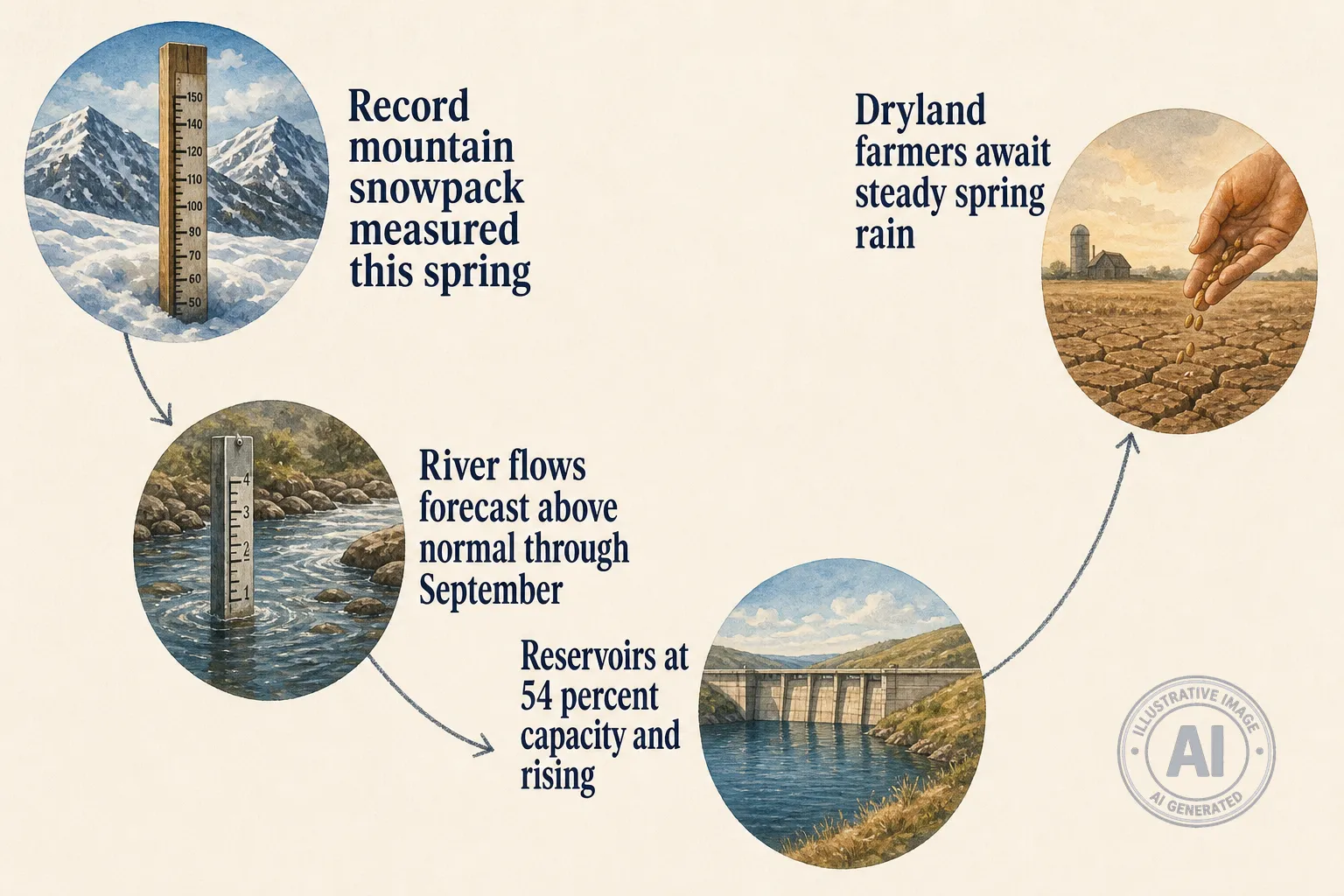
The report forecasts river flows in the Red Deer River basin will be above normal through September, a sharp turnaround from the drought-challenged levels of 2025. Two mountain snowpack sites in the basin, Gable Mountain and McConnell Creek, recorded snow depths that are among the highest ever measured—160% and 152% of normal. That deep snowpack is expected to keep the river well-fed as it melts.
Reservoirs in the basin are currently at 54% capacity, a normal level for late May. Since early April, stored water has risen by eight percentage points. While the Red Deer River basin is still in Drought Stage 1, a low warning level, conditions are much better than in recent drought years.
Grant Hunter, Minister of Environment and Protected Areas, said the province is heading into summer in a much better situation than recent years. He credited strong mountain snow and a series of spring snowstorms for boosting water supplies across Alberta.
The only part of the province still facing serious trouble is the far southern Milk River basin, where early snowmelt soaked into dry ground instead of flowing into the river. As a result, flows there are forecast to be well below normal, and Canadian irrigators have been cut off from drawing water under an international treaty.
Despite the strong river forecast, soil moisture is still low in many local fields. A map from Alberta Agriculture and Irrigation shows Red Deer and parts of Mountain View, Stettler, Lacombe, and Clearwater counties have very dry soil. That means while irrigation and municipal supplies look secure, dryland farmers will need steady spring rain to help their crops.