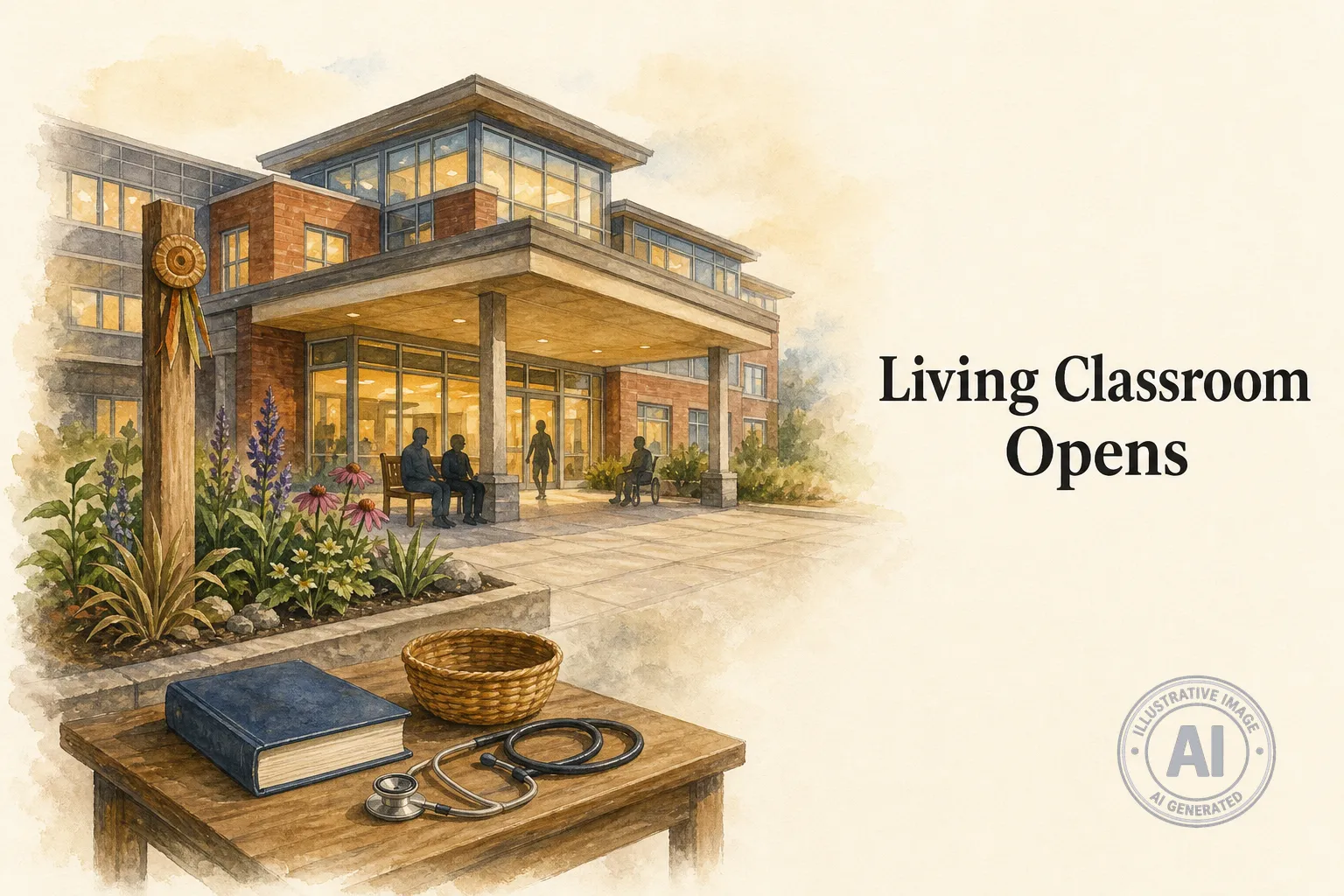
Six Nations Polytechnic and St. Joseph’s Health System have opened one of Ontario’s first Indigenous living classrooms at St. Joseph’s Lifecare Centre in Brantford, Ontario. The program, launched September 16, 2026, brings culturally safe healthcare education directly into the long-term care home, where students learn alongside residents and Elders.
The living classroom trains personal support workers using a Two-Eyed Seeing approach that blends Haudenosaunee and Anishinaabe teachings with Western healthcare practices. The first group of graduates has already completed the program, which is funded by the Government of Ontario and led by the Schlegel-UW Research Institute for Aging.
“We call it the Two-Eyed Seeing approach, marrying Indigenous knowledge and Western ways,” said Brynlea Webb, instructor and field placement specialist. The model embeds education within the care environment, giving students hands-on experience while responding to the Truth and Reconciliation Commission’s Call to Action #23, which urges more Indigenous professionals in healthcare and cultural competency training for all workers.
Ontario will need an additional 50,000 personal support workers by 2032 to meet standard care ratios, according to the Higher Education Quality Council of Ontario. St. Joseph’s Lifecare Centre, the largest long-term care facility in Brantford and Brant County, has served the community for over 70 years with more than 205 long-term care beds and ten hospice beds.
Six Nations Polytechnic is a Haudenosaunee-governed institution with campuses in Ohsweken and Brantford, recognized under Ontario’s Indigenous Institutes Act of 2017. The Brantford living classroom builds on a model first launched in 2009 at the Village of Riverside Glen in Guelph.