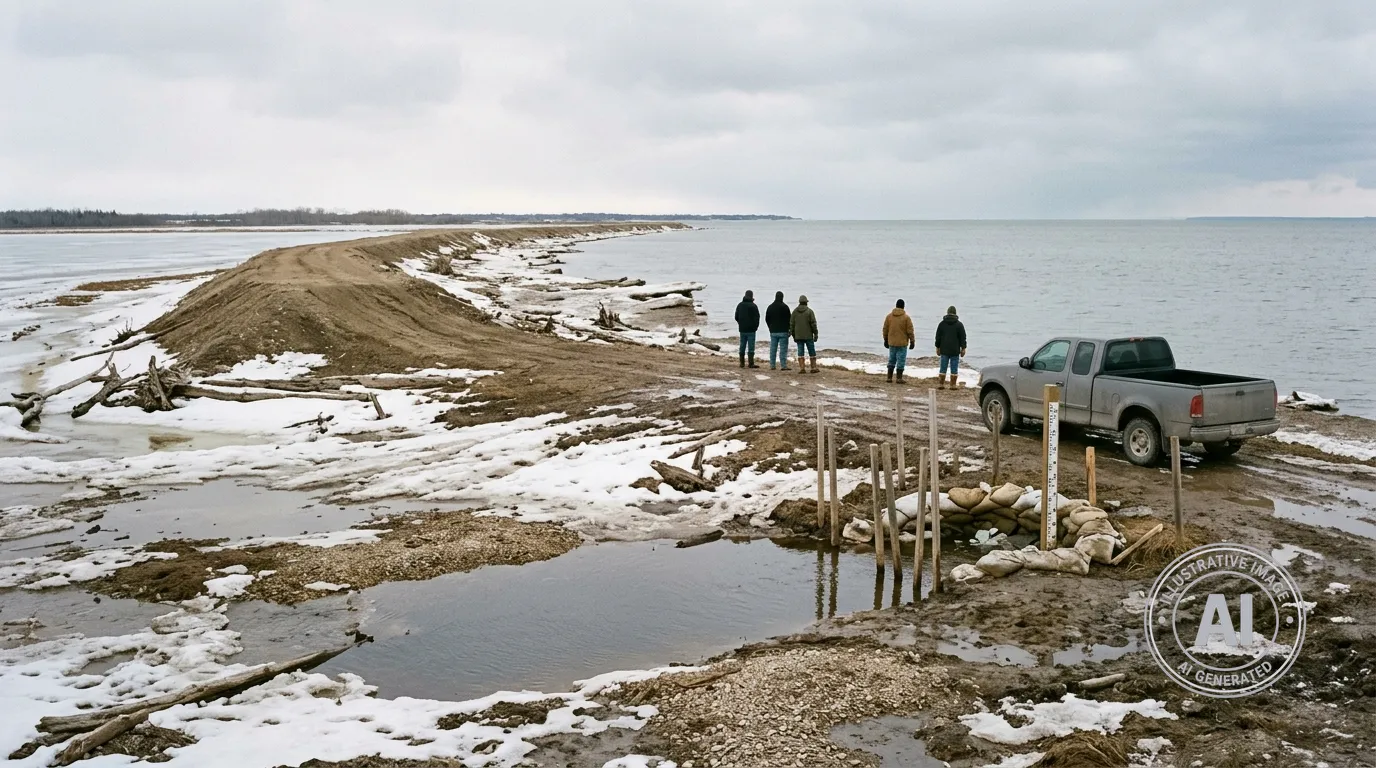
Residents in the Interlake region are being advised to prepare for a higher risk of spring flooding this year as the provincial government updates its seasonal outlook. The Manitoba Transportation and Infrastructure’s Hydrologic Forecast Centre issued the warning on April 7, 2026, noting that the risk is particularly elevated for areas within the Fisher River basin.
The increased flood potential is driven by a combination of factors, including a significantly above-normal snowpack and a delayed spring melt. Experts at the forecast centre report that snow water equivalent levels in the Fisher River basin are currently near 110 millimetres, which is nearly double the typical amount for this time of year and comparable to levels seen in previous years that resulted in major flooding.
Depending on weather conditions during the melting process, water levels could fluctuate significantly. Under median conditions, forecasters expect peak flows similar to those seen in the 2014 spring flood. However, if unfavorable weather conditions occur, officials caution that flows could approach the high levels experienced during the 2022 spring flood, an event that caused widespread damage and displacements across the region.
While the risk is highest near the Fisher River, residents in and around the Rural Municipality of Gimli are also advised to monitor conditions. Although most lakes across Manitoba currently face a low risk of spring flooding, lakeside communities can still experience localized issues if high water levels combine with strong winds. Gimli is protected by a 110-kilometre dike system and the Gimli diversion channel, which was completed in 1995 to help manage water levels.
The Icelandic River, which flows through areas including Arborg and Riverton, is currently considered at a moderate risk for flooding. The Manitoba Emergency Management Organization is actively working with local municipal authorities and First Nation partners to ensure communities are prepared and to provide support as the spring runoff begins.