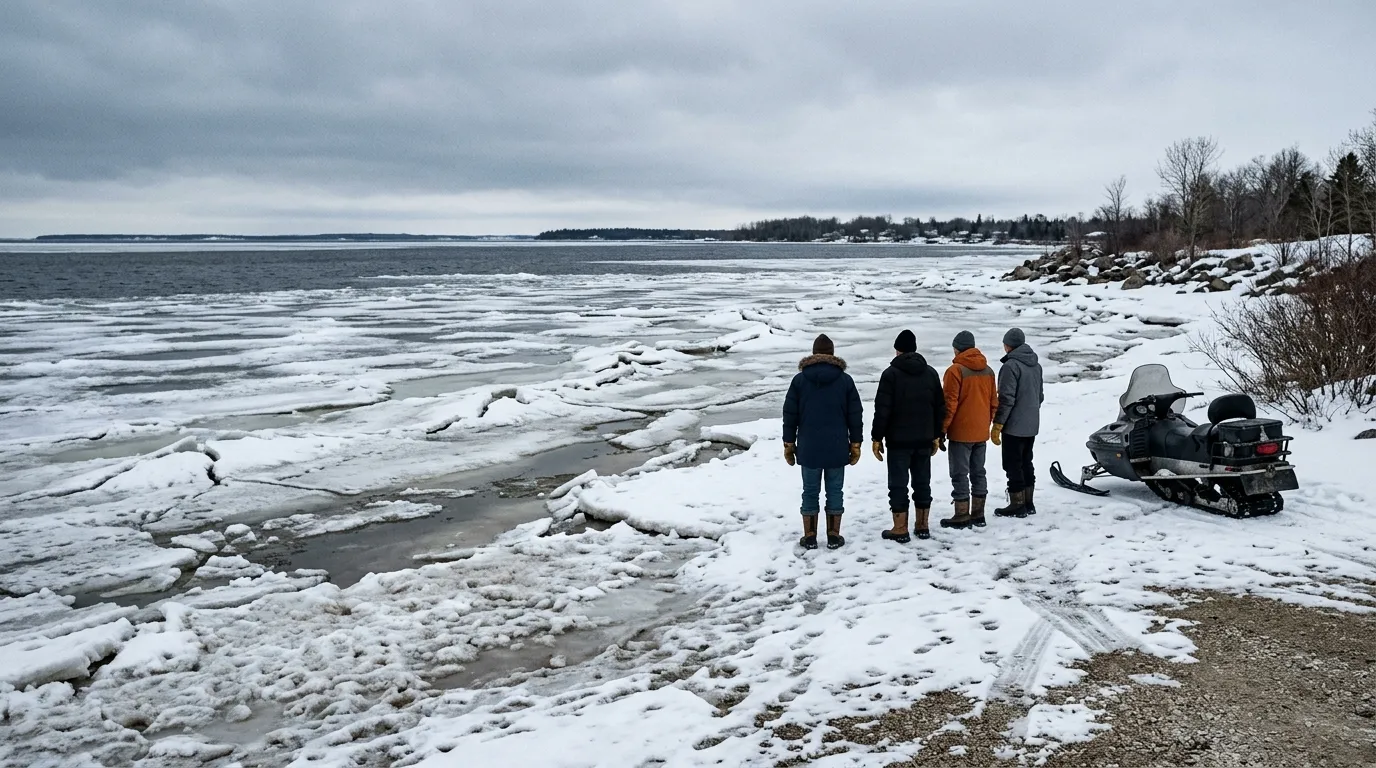
A safety advisory is in effect for Lake Winnipeg as spring thaw conditions create increasingly hazardous ice across southern Manitoba. Residents in Gimli are being urged to exercise extreme caution as warming temperatures and changing water levels make ice conditions unpredictable and potentially dangerous.
According to the province’s Hydrologic Forecast Centre, the spring thaw is currently underway, which is expected to cause river flows and water levels to rise. Environment Canada recorded temperatures at 1°C at Royal Island on the morning of April 3, 2026, marking a transition period that often leaves ice unreliable.
Experts warn that the ice has become unpredictable due to fluctuating temperatures, which prevent the formation of solid, stable surfaces. Rick Gergatz, administrator of The Lake Winnipeg Report, has specifically cautioned that hidden pockets of slush beneath heavy snow can quickly trap vehicles and snowmobiles. This danger is compounded by high winds, which can limit visibility and erase established trails, a challenge noted by local fishing guide Brady Kingsland of Kingsland Outfitting.
Manitoba Public Insurance emphasizes the severity of these risks, noting that winter months see a significant portion of the province’s drownings. The recommended minimum ice thickness for safety is 10 centimetres for walking, 12 centimetres for snowmobiles or all-terrain vehicles, 20 to 30 centimetres for cars, and 30 to 38 centimetres for trucks.
While the Rural Municipality of Gimli has provided support for winter safety through equipment for ice road maintenance and emergency standby by Gimli Fire & Rescue, officials stress that individual caution remains essential. Water safety expert Christopher Love of WaveCrest Aquatics reiterates that stable ice requires consistently cold temperatures. If a vehicle does break through the ice, Dr. Gordon Giesbrecht of the University of Manitoba recommends the SWOC method: seatbelts off, windows open, out immediately, and get children out first.