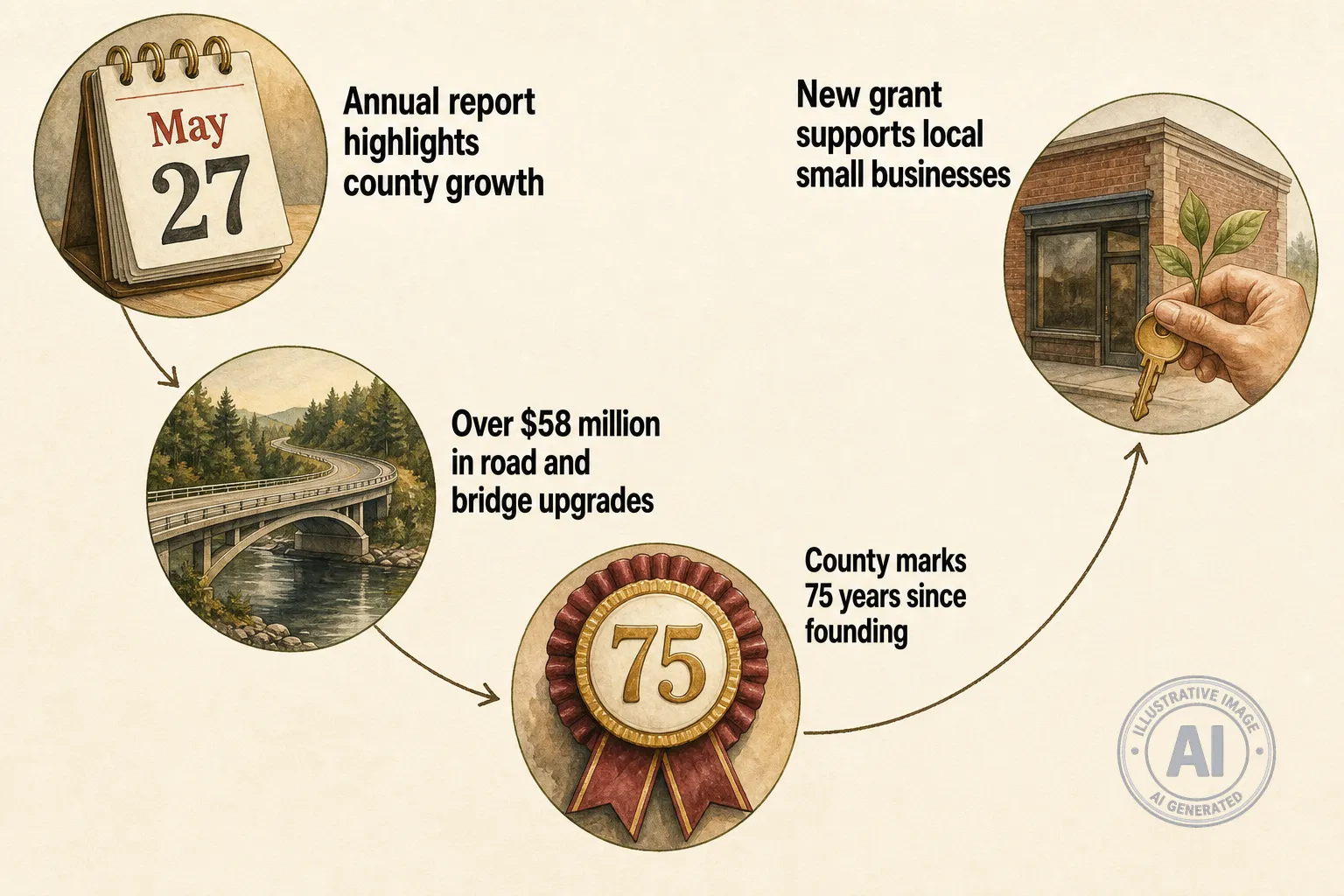
The County of Grande Prairie, Alberta released its 2025 annual report on May 27, 2026, giving residents a clear look at how their tax dollars were spent and what the county has planned next. The report highlights more than $58.9 million in transportation upgrades, a growing population of 26,701 people, and a balanced $216.5-million budget.
According to the County of Grande Prairie, $37.2 million went directly to capital road and bridge projects, with 70 per cent of the capital budget focused on roads and bridges. Reeve Amanda McDonald said the investments show council’s focus on safe communities and strong infrastructure. McDonald, whose great-grandfather homesteaded in the region in 1911, represents a council that approved a 2.4 per cent municipal tax rate increase to keep services at current levels.
The report also shows more than $10 million in grants and contributions went to local organizations, recreation programs, social services, and regional partnerships. A new grant program launched in 2025 gives small businesses access to up to $2,000 each year for things like technology improvements and infrastructure upgrades. Applications for the Business Retention and Expansion Infrastructure and Technology Grant opened in October 2025, offering $26,000 in total annual funding.
Emergency readiness was a key focus in 2025. The Grande Prairie Regional Emergency Partnership was activated twice during wildfire season. One fire in the region burned more than 26,000 hectares, and the partnership coordinated response efforts across multiple municipalities.
The county is marking its 75th anniversary in 2026. It was established in 1951 as the first county in the province of Alberta, and the annual report comes at a time when the region is looking back at its history while planning for growth. Heritage family businesses like TurCon Construction, started in the 1930s as Turner & Sons, and First Nature Farms, settled in 1918, are still part of the local economy.