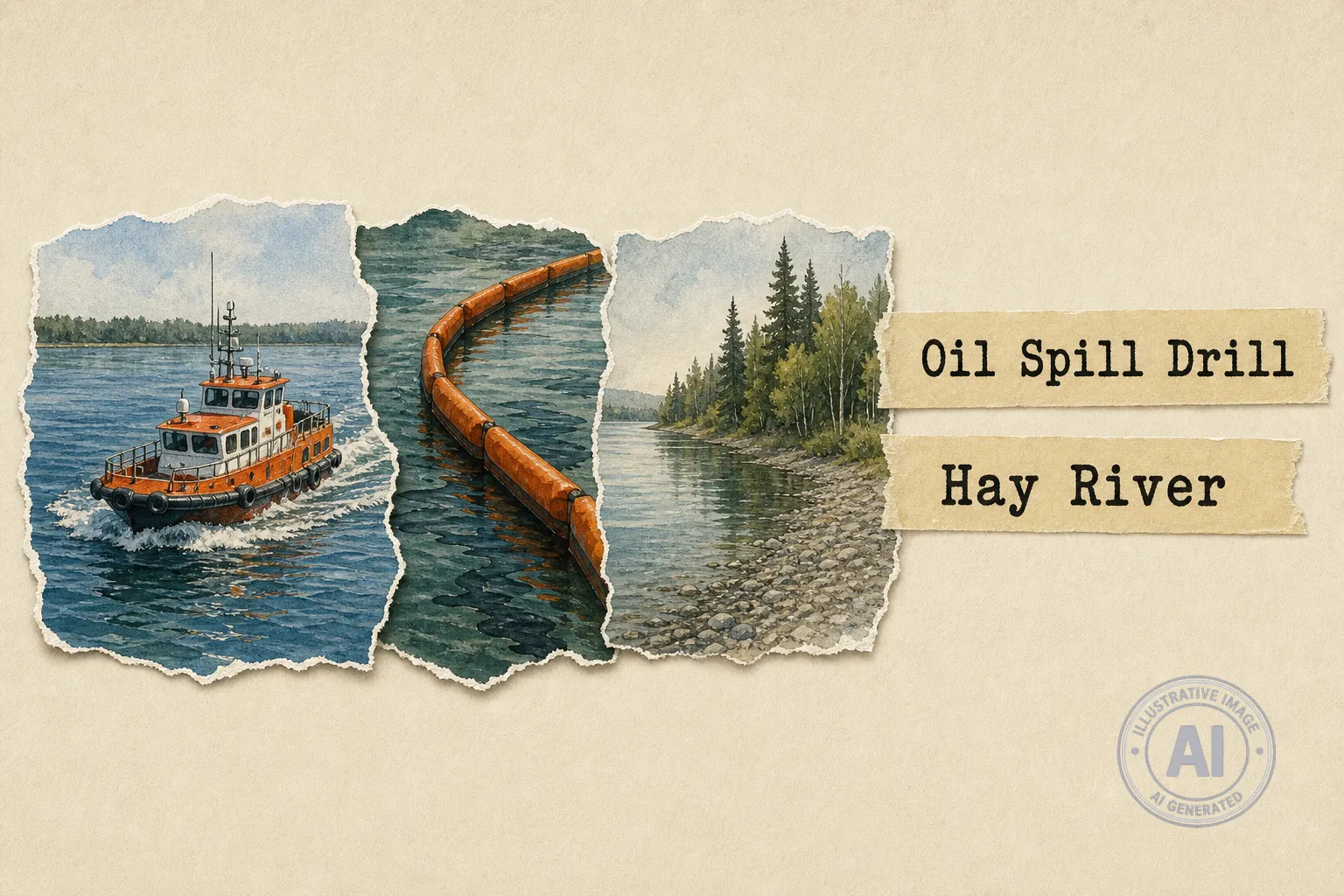
A four-day oil spill response training wrapped up in Hay River, Northwest Territories, the week of July 5, 2026, bringing together the Canadian Coast Guard and local partners to practice protecting the community’s waterways.
Crews deployed containment booms and ran response boats on the Hay River as part of the hands-on exercise. The drill included members from the Kátł’odeeche First Nation, Marine Transportation Services, and the Government of the Northwest Territories.
The training is part of Canada’s Oceans Protection Plan, which has already trained over 450 Indigenous and coastal community members since 2024 to respond to marine emergencies. The goal is to build local capacity so that if a spill ever happens, people on the ground are ready to act fast.
The Hay River area depends heavily on its waterways. Marine Transportation Services runs barges from the Port of Hay River to supply communities along the Mackenzie River, Great Slave Lake, and the Western Arctic with fuel and freight. The Coast Guard also uses Hay River as its northern base, keeping two shallow-draft buoy tenders—the CCGS Dumit and CCGS Eckaloo—here year-round to maintain navigation aids.
Recent history shows why this training matters. In 2023, devastating wildfires forced evacuations and required coordinated emergency response between Hay River, Kátł’odeeche First Nation, and neighbouring communities. That experience has made all levels of government push for tighter readiness on a range of threats, including environmental ones on the water.