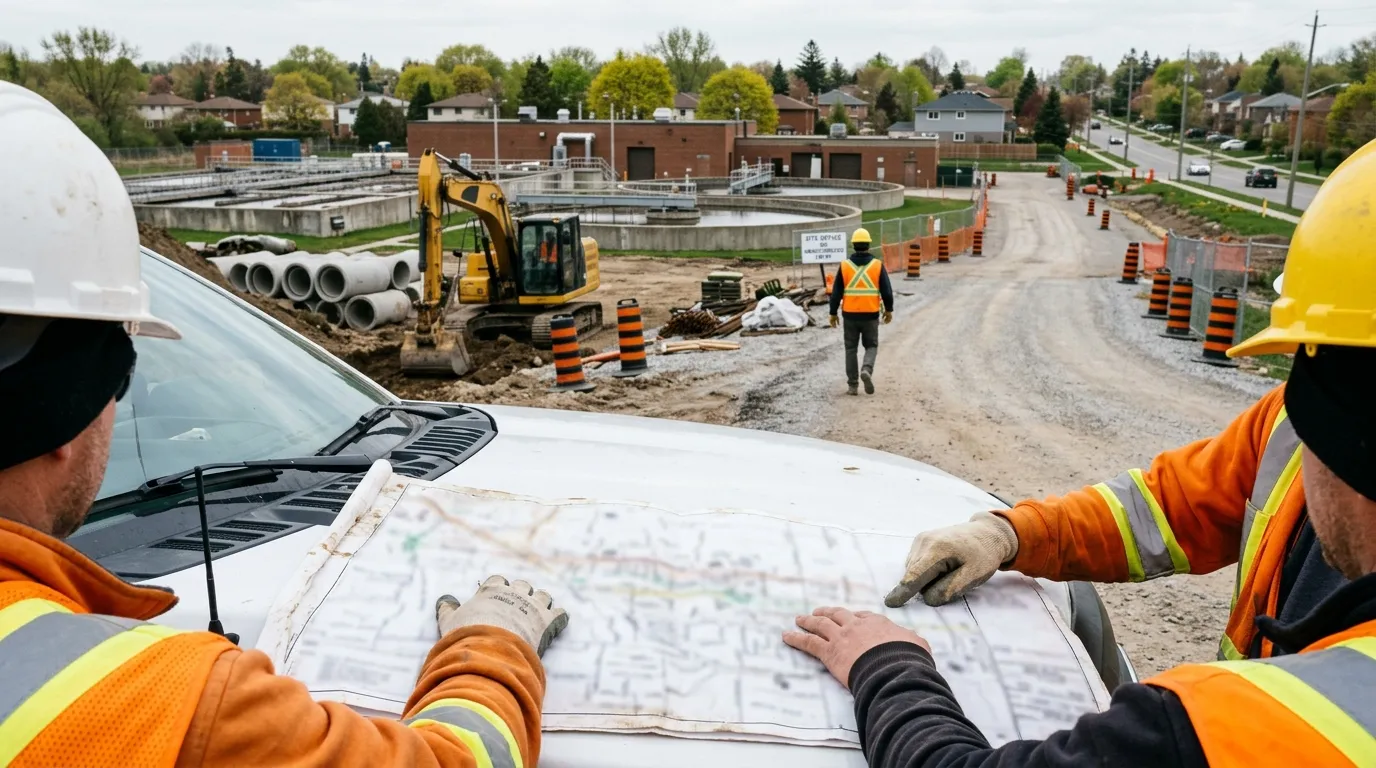
Halton Region has launched a long-term plan to guide the expansion of water, wastewater, and transportation infrastructure to support a population expected to nearly double by 2051.
The Integrated Master Plan outlines a strategy to accommodate a growth forecast that would see the region’s population rise from approximately 660,000 to 1.1 million residents. This planning process helps the region prepare for provincial housing targets, which include delivering 92,500 new homes across Milton, Burlington, Oakville, and Halton Hills.
Residents have until April 27, 2026, to provide feedback on the plan. Comments can be sent by email to [email protected] or by contacting members of the project team, including Ann Larkin for transportation, Hanna Daniels for water and wastewater, or Chris Hamel from GEI Consultants.
To support this growth, the region has planned significant investments. This includes $5.2 billion for infrastructure by 2031, with more than $1.18 billion in projects expected to be put out for tender in 2026 alone. Over the next decade, the region estimates capital spending could exceed $7 billion.
Major projects identified in the plan include the expansion of the Burloak Water Treatment Plant at a cost of $290 million, a $320 million expansion of the Mid-Halton Wastewater Treatment Plant, and a $380.5 million project for the Lower Base Line wastewater pumping station. These efforts are part of the region’s work to ensure services remain reliable while meeting the demands of one of the fastest-growing areas in the Province of Ontario.