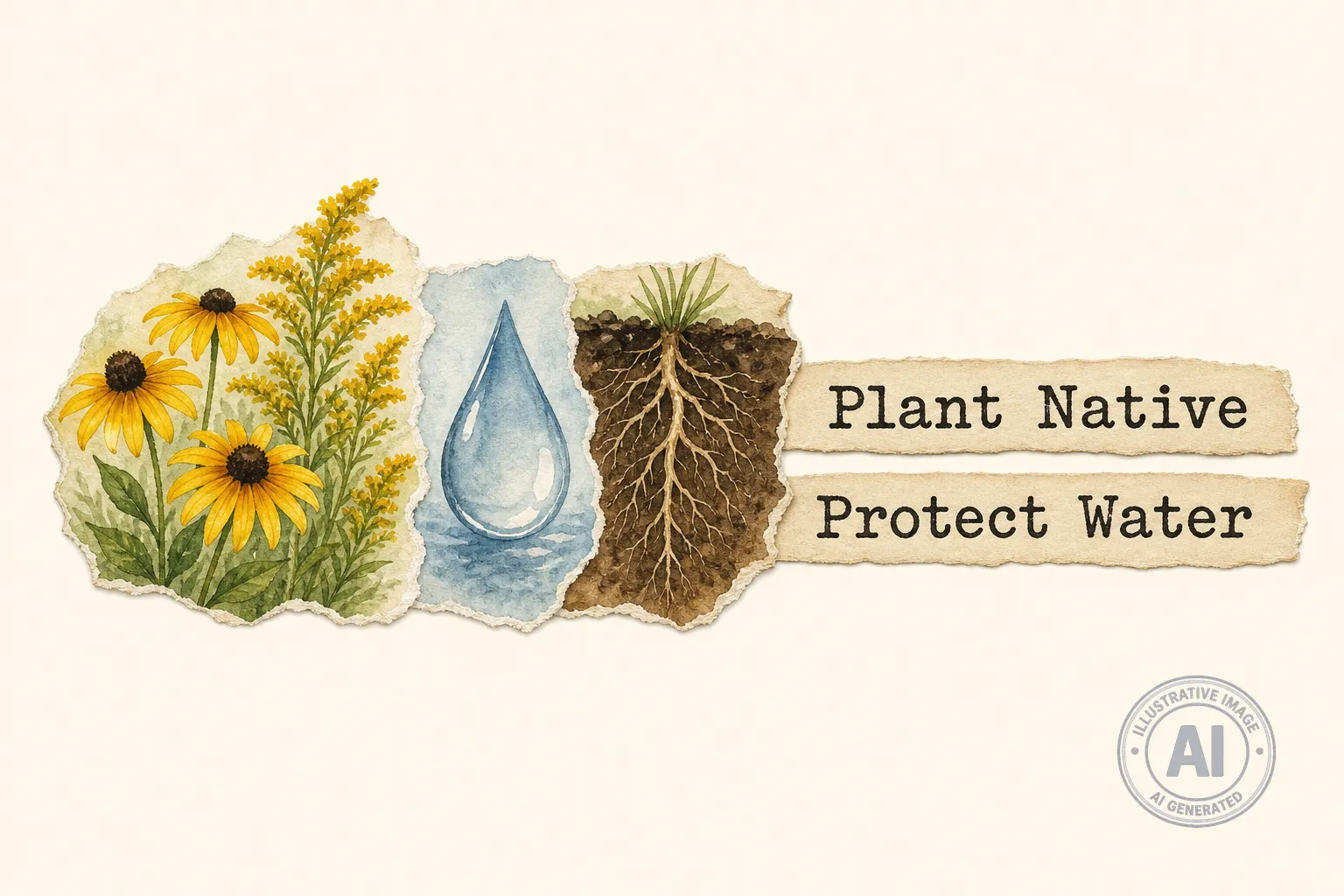
The Town of Orangeville is asking residents to plant native species like black-eyed Susans and goldenrods as a simple but effective way to protect the community’s supply of drinking water. The town, located in Dufferin County, relies entirely on 12 groundwater wells, and conservation science suggests that replacing water-thirsty lawns with drought-resistant native plants can help replenish these underground sources.
Native plants require far less water than non-native ornamentals because they are adapted to local rainfall. Their deep root systems also help stormwater soak into the ground, recharging the aquifers that feed Orangeville’s wells. As conservation guidance notes, “Native plants possess long and robust root systems which allows them to filter and infiltrate water. This helps recharge our important groundwater systems and reduces stormwater runoff and flooding.”
The call to action aligns with Orangeville’s Bee City Canada designation, which the town has held since 2020. That commitment includes pledges to avoid pesticides, plant native species, and add more pollinator gardens. In March 2025, town council directed staff to develop a Pollinator Protection Plan and find spots for a municipal pollinator garden, reinforcing the link between local greenery and water security.
The push comes as a June 2025 report from the Grand River Source Protection Area classified the wellhead protection zones around Orangeville’s wells as having a significant risk for water quantity. The assessment points to the combined pressure of groundwater pumping and reduced natural recharge. Town officials note that Orangeville has already made progress on conservation, with effective measures cutting both maximum daily demand and per-person water use. A lawn-watering bylaw is also in place to limit outdoor water use during dry spells.
The message for homeowners is straightforward: planting native gardens supports bees and butterflies while also acting as a natural filter that feeds the town’s water supply. “Since they have evolved surviving on rainfall alone,” notes the City of Ottawa in its guidance on native plants, “they are good choices for low maintenance, low water consumption gardens.” With the town’s Pollinator Protection Plan in the works, residents can expect more resources and demonstrations in the coming months showing how a patch of goldenrod or black-eyed Susans can make a real difference for the water that comes out of every tap.