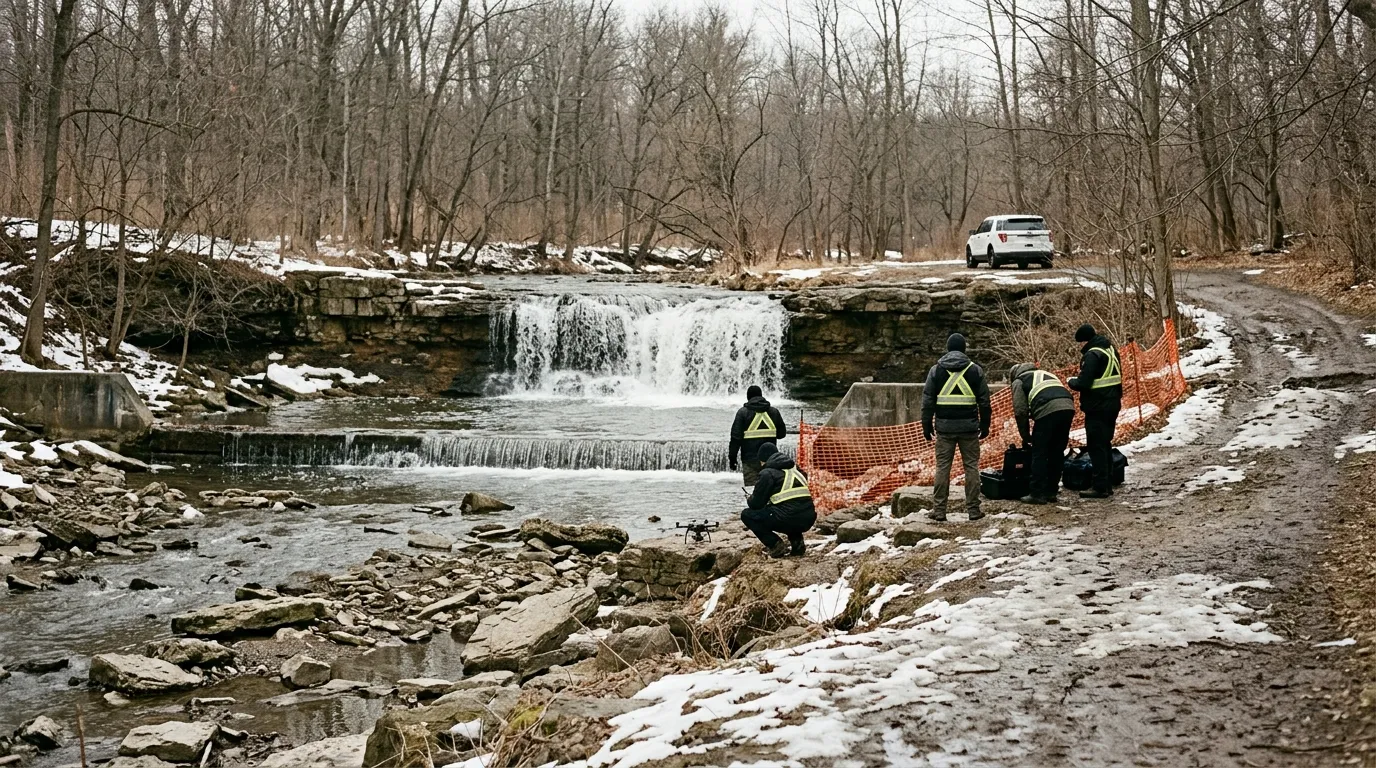
The Inglis Falls Conservation Area in Owen Sound, Ontario, was temporarily closed on March 25, 2026, to allow the Ontario Provincial Police to conduct a search operation for a missing person. During the operation, authorities recovered the body of 64-year-old James Van-Veen, who had been reported missing since January 26, 2026.
Mr. Van-Veen, a resident of Georgian Bluffs, was reported missing after he did not arrive for a scheduled work shift. His vehicle was later discovered in the parking lot of the conservation area. The police search was initially launched in late January but was suspended on February 2, 2026, due to hazardous winter conditions including deep snow, unstable ice, and dangerous terrain that made the site unsafe for rescue crews.
While the official police search was paused, the volunteer organization Please Bring Me Home continued daily efforts throughout the winter. Volunteers searched the area on foot and utilized drones to survey the property. On March 25, police search teams returned to the site and located Mr. Van-Veen’s body between the waterfall and the arboretum. According to the police, foul play is not suspected in his death.
To assist with the search, the Grey Sauble Conservation Authority temporarily reduced the water flow through the Inglis Falls dam. The authority, which manages the 200-hectare site, has expressed its condolences to the family. The conservation area is the most visited site in the region, known for its 18-metre waterfall and historical significance as the site of a 19th-century grist mill.