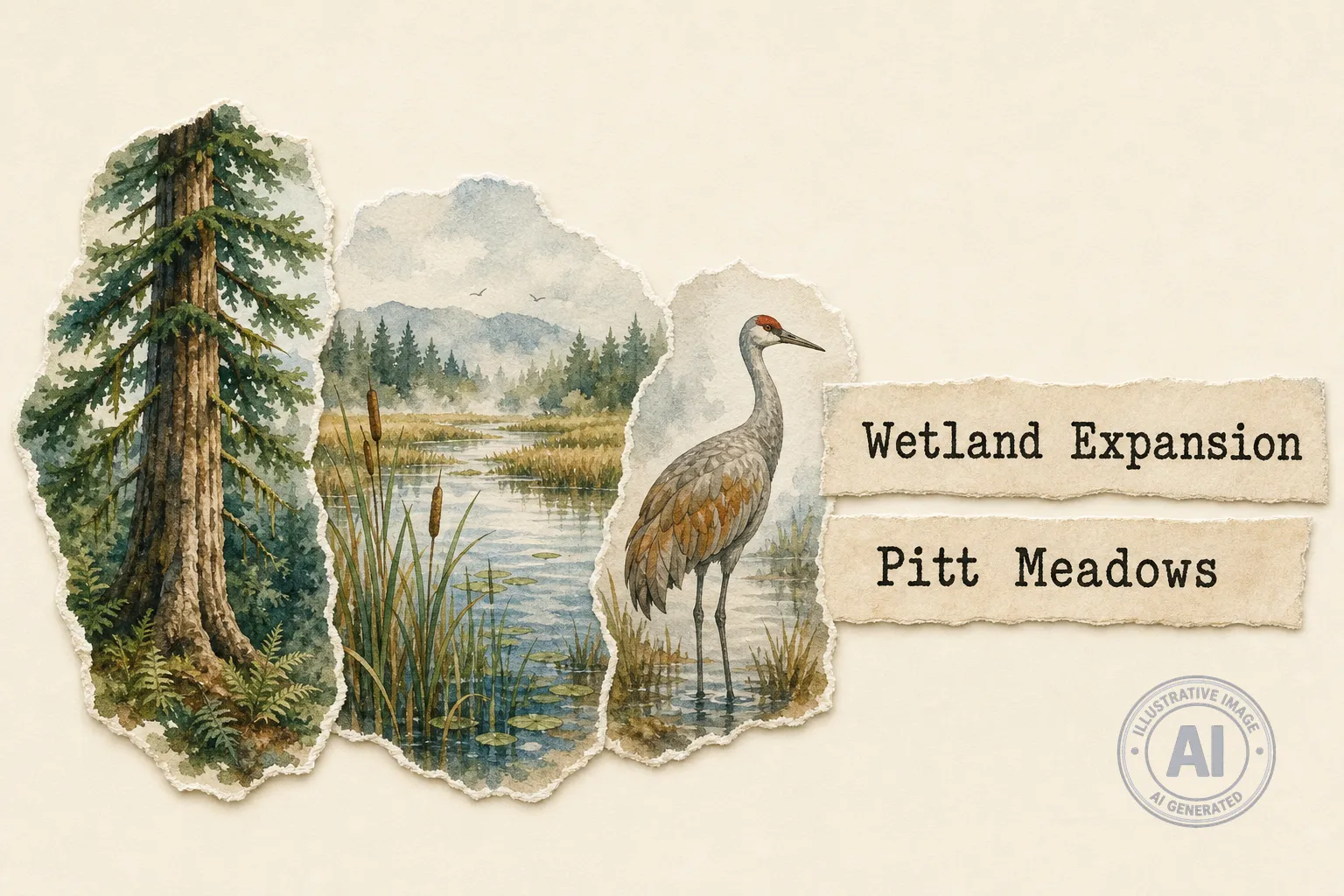
Pitt Meadows, BC, is adding 63 hectares of forest to the locally cherished Codd Wetland Ecological Conservancy Area, following a new 25-year lease between the city and Metro Vancouver. The agreement, signed earlier this week, allows Metro Vancouver to manage these lands as regional parkland, with an option to extend for another 25 years.
“This is about keeping our community’s natural character strong as we grow,” said Pitt Meadows Mayor Nicole MacDonald in a city announcement. “This partnership with Metro Vancouver reflects our commitment to balancing growth with environmental stewardship and safeguarding an important part of our community’s natural heritage.”
The newly protected area sits east of Neaves Road and Thompson Road, in the rural Pitt Polder region. It’s mostly forested, with stands of Douglas-fir, western red cedar, western hemlock, and mature big-leaf maple and alder. Two streams run north to south through the land and flow into Blaney Creek at the north end of Blaney Bog Regional Park Reserve just over the border in Maple Ridge.
The Codd Wetland has grown in stages since Metro Vancouver first acquired 104.5 hectares in 2004, with support from the province, the city, The Land Conservancy of British Columbia, Ducks Unlimited, and the Aquilini family. Additions in recent years have brought the total protected area to approximately 296 hectares. It’s a key stopover on the Pacific Flyway, hosting more than 160 bird species, and is one of the few places in the Lower Mainland where Sandhill Cranes have been seen nesting.
The conservancy is not open for public access right now because protecting wildlife and plants is the top priority. However, Metro Vancouver has a long-term vision to create trails and viewpoints so residents can one day experience the landscape up close. John McEwen, chair of Metro Vancouver’s Regional Parks Committee, called the expansion “a gift to current and future generations,” noting how quickly sensitive ecosystems are disappearing as the region develops.
The lease aligns with the city’s Parks, Recreation, and Culture Master Plan and its Climate Action Strategy, both of which emphasize preserving natural areas through regional teamwork.