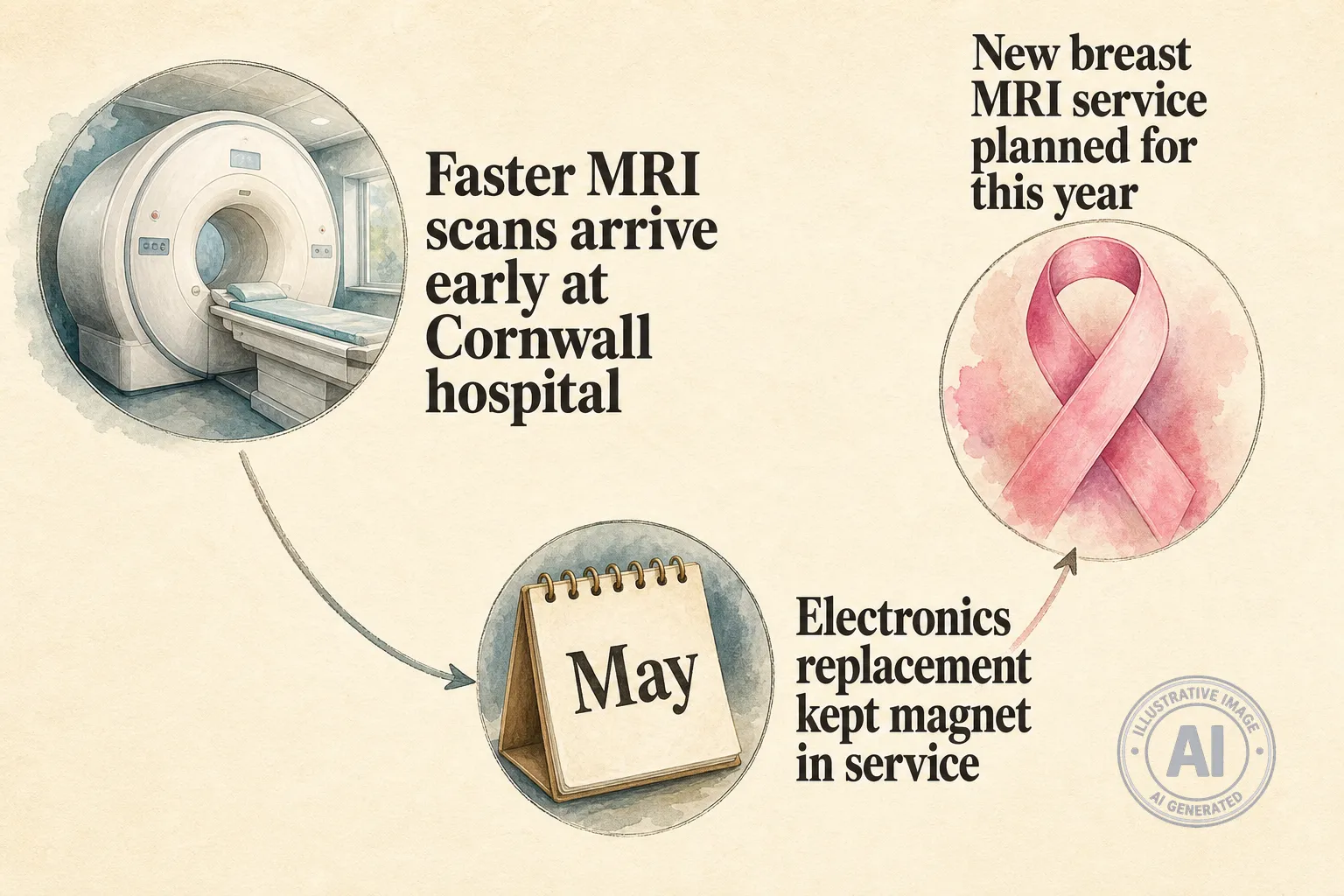
Patients needing an MRI in Cornwall now have access to faster and clearer scans after Cornwall Community Hospital completed a major upgrade of its machine in May 2026. The hospital brought the project forward from 2027 after staff found many of the system’s electronic parts were nearing the end of their working life, which could have threatened the department’s ability to maintain its famously short wait times.
The upgrade kept the core magnet from the original 2014 installation while replacing all the surrounding electronics and software with modern technology. CCH chief of staff and radiologist Dr. Anastasios Boubalos said the approach is like rebuilding a home from its foundation up while keeping the original base structure. It allowed the hospital to modernize imaging without the high cost and disruption of a full replacement. MRI magnets can last 30 to 40 years, but the electronics typically become outdated in 10 to 15 years.
Dr. Maryam Vakili, chief of diagnostic services and radiologist, said the improvements will help staff assess and diagnose results more accurately and efficiently, which should directly improve patient experience and reduce wait times. According to provincial data, Cornwall has historically maintained the shortest MRI wait times in Ontario, with nine out of ten patients getting their scan within 17 days — far below the provincial average of 83 days.
The upgraded system will also support a planned breast MRI service later this year, giving local patients access to this type of scan at CCH for the first time. Bringing that service in-house means patients will no longer need to travel outside Cornwall for the test. The hospital will work with the Cornwall Community Hospital Foundation this summer to fundraise for the new breast MRI component, as government funding does not cover all equipment costs.
The original MRI was installed during the 2014 construction of the hospital’s West Wing, part of a $126-million redevelopment. The hospital serves Cornwall, SDG Counties, and Akwesasne as an acute care teaching hospital with 165 beds and an emergency department that sees more than 60,000 visits each year.