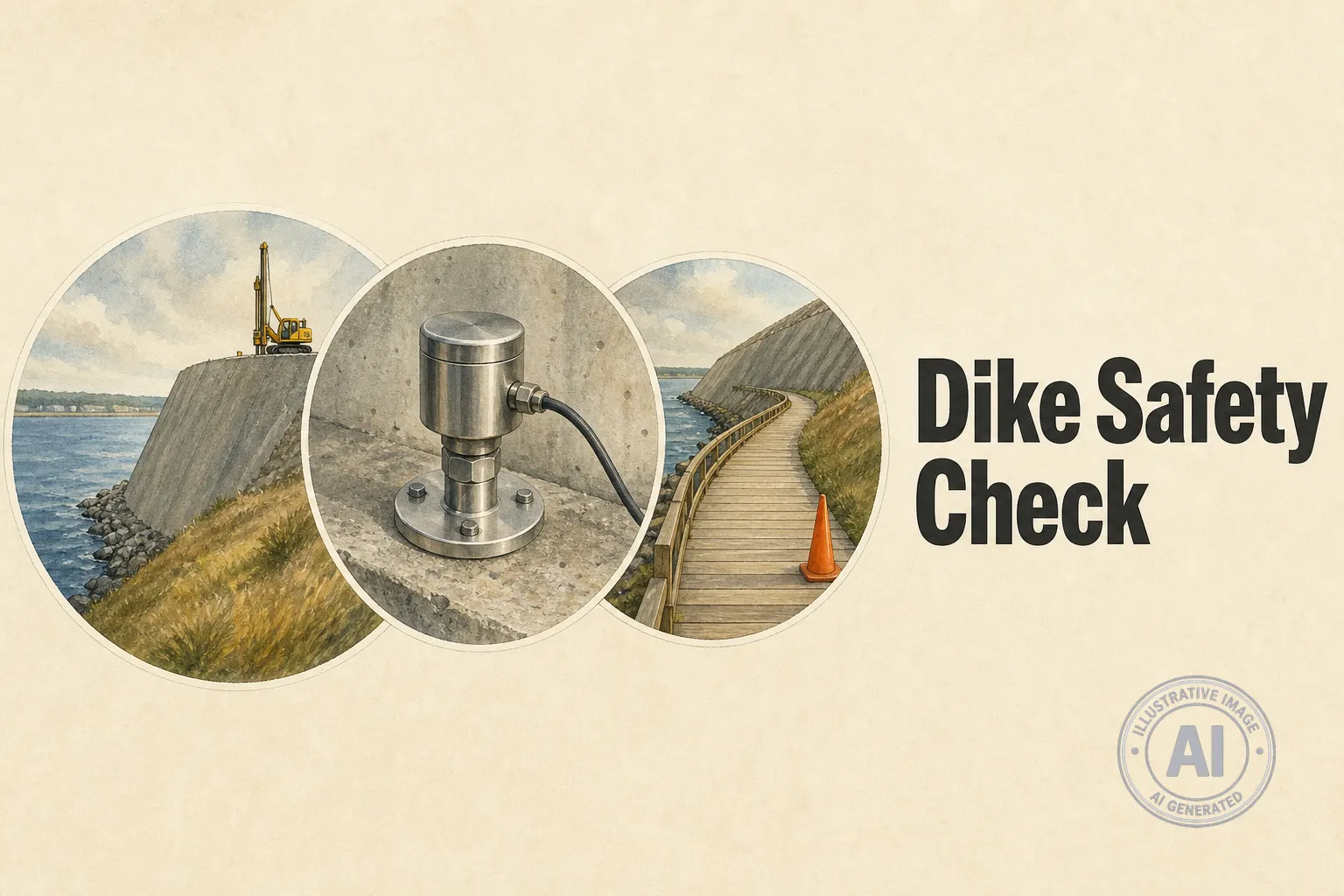
A safety review of the Pretty River Dike, the 1970s-era flood barrier that shields downtown Collingwood, Ontario, gets underway in mid-June with two weeks of borehole drilling. The work, led by the Nottawasaga Valley Conservation Authority, will check the structural state of the 2-kilometre dike and install gear to monitor pressure inside it. Residents using the River Trail during this time are asked to stay alert around the drill rig, though the disruption is expected to be minor.
The dike runs from Peel Street and Lynden Street through to Oliver Crescent near Nottawasaga Bay, built after the town, which sits on a shallow floodplain, suffered major floods in 1912 and 1942. It is made to hold back water from a storm so rare it has less than a one per cent chance of happening in any year. The review’s findings will guide future repairs to keep the aging structure reliable as climate change brings more frequent and intense weather.
Collingwood has already seen more local flooding, added strain on infrastructure, and pressure on stormwater systems, according to consultants who spoke to council earlier this year. The conservation authority has flagged Collingwood as the most flood-prone community in its watershed because it has more buildings and roads on the floodplain than anywhere else. In a major flood, key routes like Highway 26, Pretty River Parkway, Huron Street, and First Street could go under water, limiting access to the hospital, paramedic station, and police station.
The dike protects not just roads but community hubs such as the Collingwood Public Library, Collingwood Museum, Town Hall, and Central Park. Between 2021 and 2025, the conservation authority cleared dense vegetation from the dike after finding it was hurting water flow and raising flood risk. The current drilling and monitoring work marks the next step in keeping the barrier sound.
Dalia Al-Ali, the authority’s manager of engineering services, said trail users should be cautious around the equipment. “The work will begin in mid-June and should present minimal disruption to trail users,” she noted. Anyone with questions about the project can reach out to the conservation authority for more information.