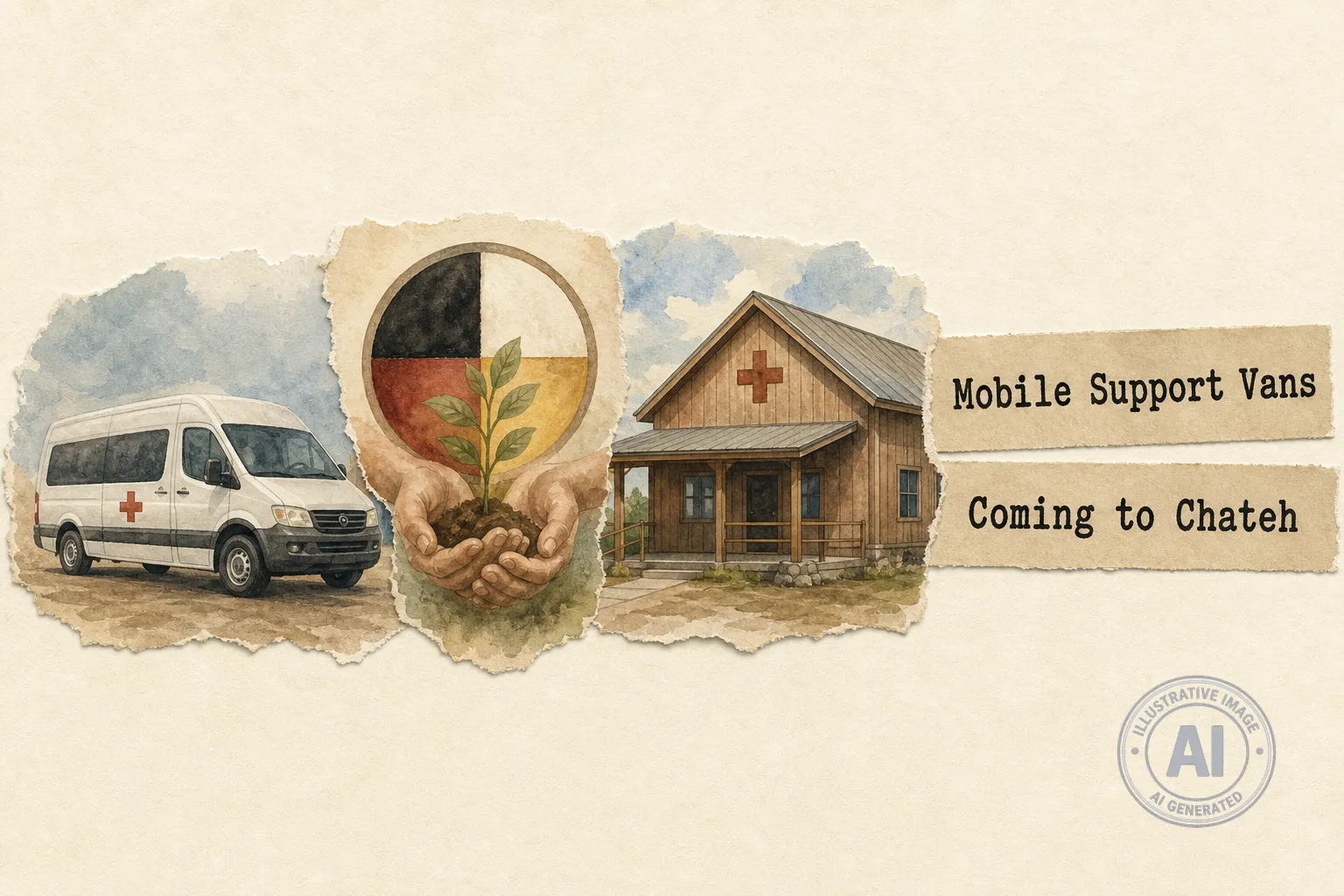
The Dene Tha’ First Nation in northwestern Alberta is launching new mobile support vans to bring health and social services directly to people in Chateh, Bushe River, and Meander River. Announced on June 3, 2026 through the First Nation’s community channels, the vans are meant to make it easier for residents in the three remote communities to get the help they need without travelling long distances to clinics or centres.
The region has limited health facilities, including the Meander River Health Centre and the Assumption Nursing Station. About 2,100 of the Nation’s roughly 3,100 registered members live on reserves, and many struggle with access to timely care. Chief Wilfred Hooka-Nooza has long stressed that culturally appropriate support should let community members stay close to home. “We were the land and the land is who we are. It does something to an individual when you’re out there on the land,” he said previously.
The van initiative comes eight months after Chief Hooka-Nooza declared a state of local emergency in November 2025. At the time, he called the rising mental health and addictions crisis a situation that had “exceeded our capacity,” pointing to an increase in drug- and alcohol-related deaths, including a recent suicide. The declaration was a direct appeal for help from the federal and provincial governments.
Indigenous people in Alberta are eight times more likely to die from non-intentional drug poisoning than non-Indigenous people, according to a Government of Alberta report. Data for First Nations communities like Dene Tha’ often lags behind, making community-led solutions even more critical. The Dene Tha’ First Nation’s mission is to achieve health in all its forms—physical, mental, emotional, spiritual, social, and economic—through approaches that respect cultural knowledge, language, and ways of knowing.
Exact routes and the range of services the vans will offer are still being finalized and will be shared through the First Nation’s website and mobile app. The mobile vans are a step toward filling service gaps in a region where travel distances are big and resources are stretched, letting people access support right in their own communities.