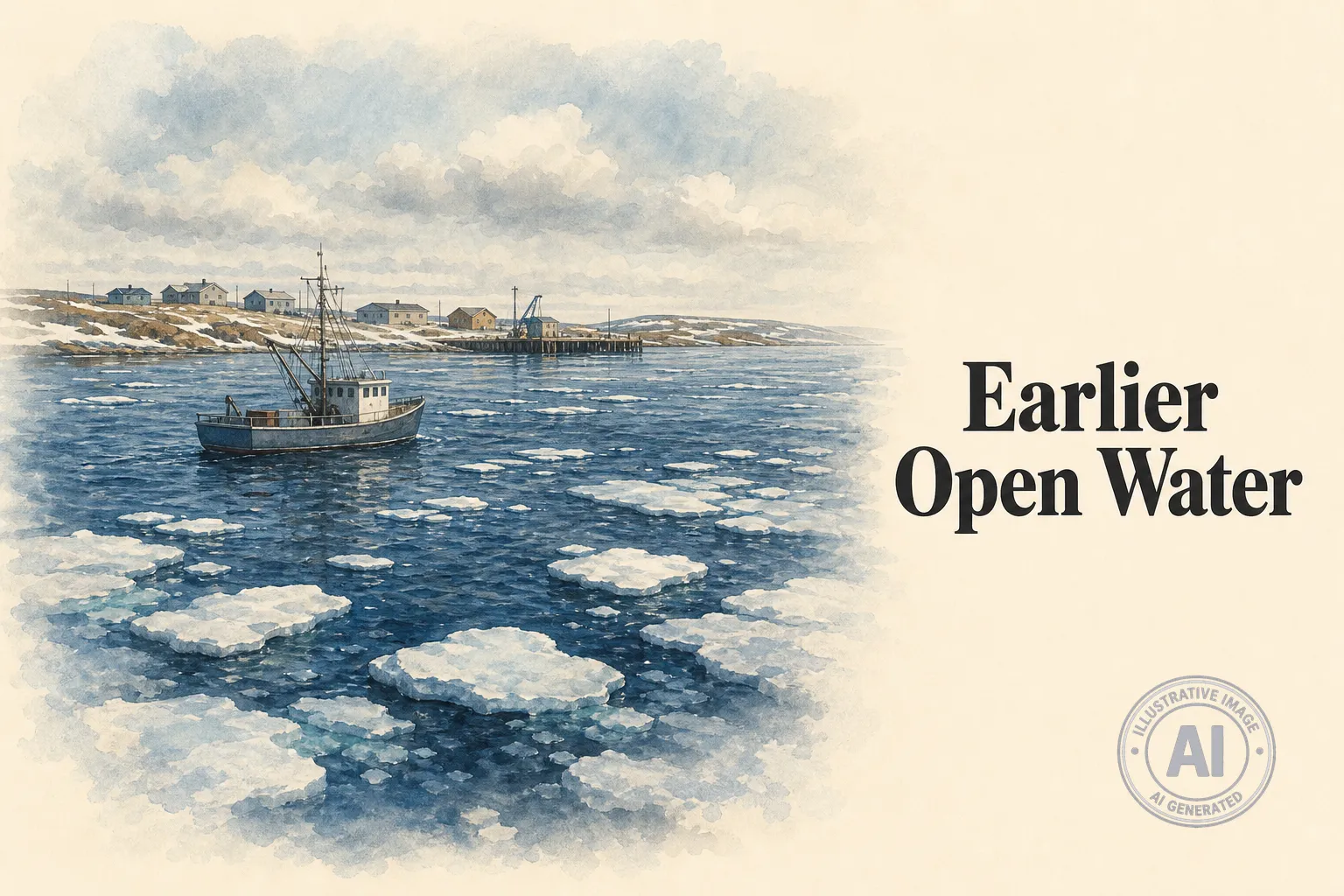
Rankin Inlet is seeing earlier open water on Hudson Bay this June as ice coverage remains below normal for this time of year. The Canadian Ice Service reports that while the navigation season is underway, some ice is still hanging on in the northern parts of the bay. This means marine traffic and traditional activities are getting a head start compared to many past seasons.
For the community, the lighter ice conditions translate into easier travel for boats and fewer risks for hunting and fishing. Sealift operations, which bring essential goods to Nunavut, typically run from late June to late October. This year, the below-normal ice is expected to help those supply ships move in sooner.
The Canadian Coast Guard’s Arctic Marine Response Station in Rankin Inlet is expected to be up and running for the 2026 season by late June. Staffed from roughly late June to early November, the station provides search and rescue services that line up with the open-water months. The timing is designed to match local hunting and fishing patterns, so having the station active now adds a layer of safety for those heading out earlier.
Long-term trends show the bay has been opening up sooner. Satellite data indicate ice breakup has shifted nearly two weeks earlier since 1988, and over the past 40 years, Hudson Bay has been ice-free for about 40 more days annually. This year fits that pattern, though ice charts still need a careful look before any trip. The Canadian Ice Service advises marine operators and commercial fishers to check the latest conditions before heading out, as pockets of ice can remain even when overall coverage is low.
For Rankin Inlet, which depends on the bay for both resupply and traditional harvesting of seals, beluga whales, and fish, the early open water is a practical boost. It means more time on the water for work and for putting food on the table, while the Coast Guard’s presence offers backup if things go wrong.