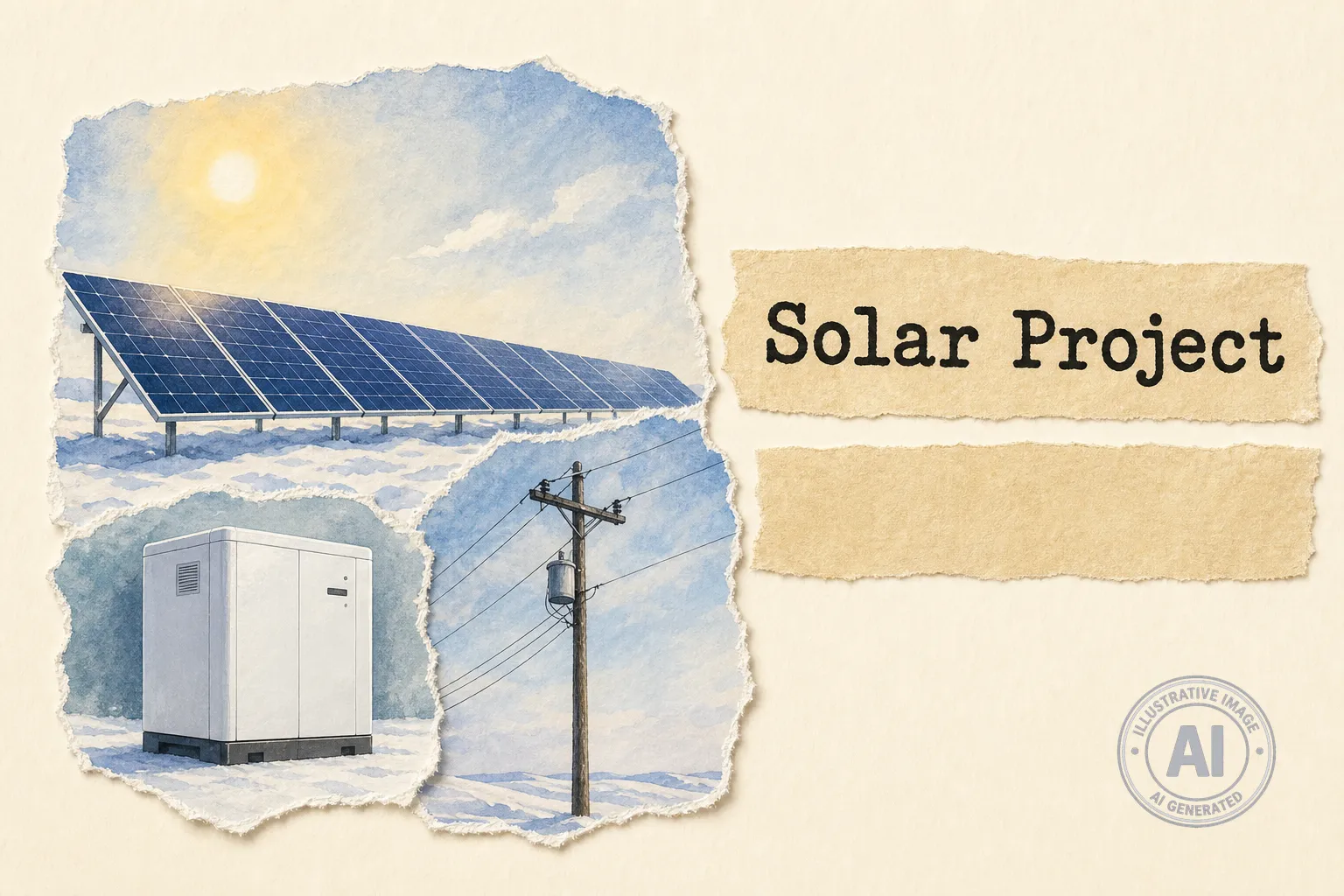
Rankin Inlet, Nunavut, is getting $2.5 million in federal money to help finish a solar and battery project that could change how the community gets its electricity. The funding for the Sakku Investments Corporation was part of a $17.2-million clean energy announcement made in Iqaluit on June 22, 2026.
MP Lori Idlout shared the news at the Qulliq Energy Corporation power plant. She was speaking for Tim Hodgson, Canada’s Minister of Energy and Natural Resources. The Sakku project is already 90 percent finished. All the solar panels and wiring are in place, and the system is expected to be up and running by September 30, 2026.
This will be Nunavut’s first solar and battery system that can work both with the local power grid and on its own if the grid goes down. Right now, all 25 communities in the territory rely completely on diesel fuel shipped up from the south to run their power plants. Nunavut burns more than 54 million litres of diesel every year just to make electricity.
David Kakuktinniq, President and CEO of Sakku Investments Corporation, said the project demonstrates how Inuit-led innovation can help transform the territory’s energy future. He added that by reducing reliance on diesel, it will build greater energy resilience and create opportunities for sustainable economic growth.
Sakku Investments Corporation was started in 1989 by the Kivalliq Inuit Association to help Inuit take part in the economy. This new project builds on other clean energy work, including more than $19 million announced in July 2024 for solar and battery projects in Naujaat, solar installations in Rankin Inlet, and wind studies in Baker Lake and Rankin Inlet.