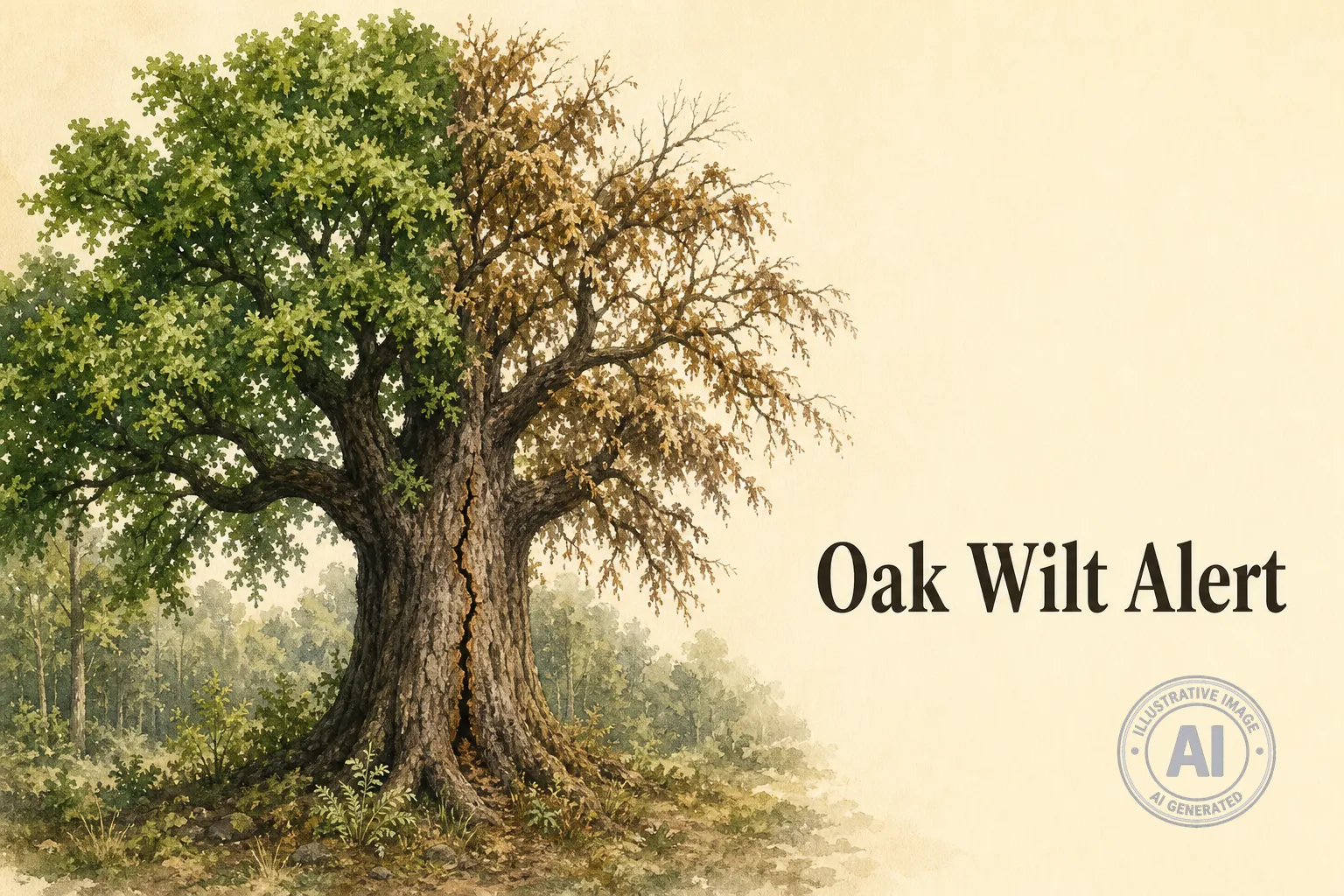
York Region is warning Whitchurch-Stouffville residents about a tree-killing fungus that could wipe out local oak trees if it gains a foothold here. The advisory, issued on July 23, 2026, outlines how to spot Oak Wilt and stop it from spreading, even though no cases have been confirmed in the region yet.
Oak Wilt is a fast-acting disease caused by a fungus that blocks water and nutrients inside oak trees. Red oaks are especially vulnerable, sometimes dying within weeks. The disease has already been found elsewhere in Ontario, including Niagara Falls in 2023, plus Springwater and Niagara-on-the-Lake. It spreads through sap-feeding beetles and root connections underground.
Whitchurch-Stouffville, which has about 28.9% forest cover and includes parts of the York Regional Forest, is home to many native oaks like red, white, and bur oak. York Region estimates more than 27,000 oak trees grow across its forest tracts, some of which are right in Stouffville, such as the Hall, Hollidge, North, Davis Drive, and Robinson tracts. The region is actively monitoring those areas and street trees for any signs of the disease.
Residents are being asked to watch for leaves turning dull green or brown starting at the top of the tree, bark cracking, and sudden leaf loss outside of fall. If you see these signs, you should report it right away to the Canadian Food Inspection Agency by calling 647-790-1100 or emailing [email protected].
The best way to protect oaks is to avoid pruning or wounding them between April and November, when the beetles that carry the fungus are most active. Moving firewood around can also spread the disease, so experts say to buy and burn it locally. If you must prune, always clean your tools before and after.
There is no treatment for Oak Wilt once a tree gets it. The advisory from York Region urges early reporting and common-sense habits to keep Stouffville’s oaks safe. The disease doesn’t pose a direct risk to people or animals, but its impact on forests, parks, and neighbourhood streets could be severe and costly.