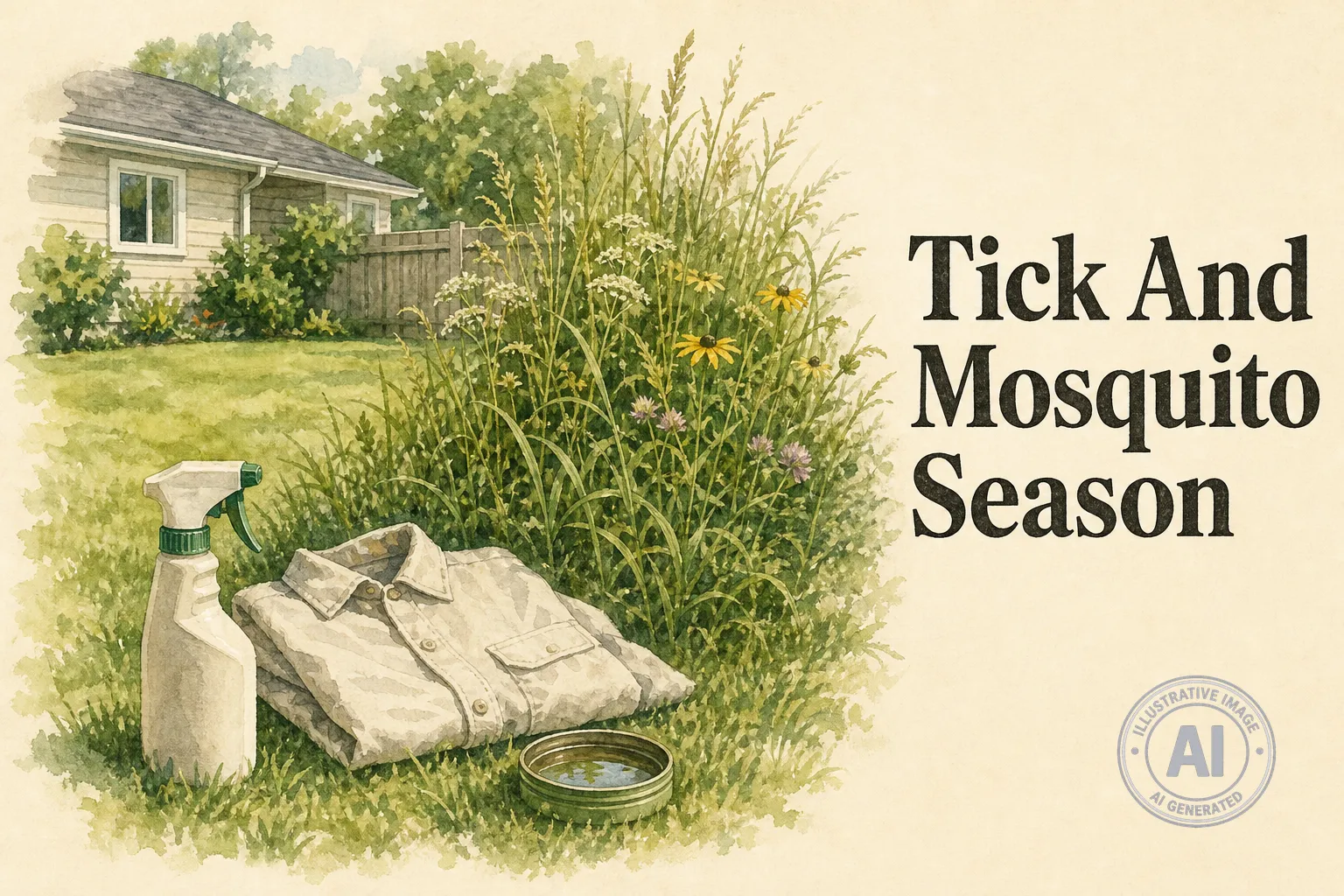
Brantford and Brant County residents are being reminded to protect themselves against tick and mosquito bites as summer activities peak. Grand Erie Public Health issued the seasonal advisory on August 6, 2026, warning that spending time outdoors, whether hiking, gardening, or at the cottage, can raise the risk of vector-borne illnesses.
“Whether you’re hiking a trail, gardening in your backyard, or spending time at the cottage, a few simple precautions can help protect you and your family from illnesses spread by ticks and mosquitoes,” the health unit said.
GEPH recommends using insect repellent containing DEET or Icaridin, wearing light-coloured long sleeves and pants, performing full-body checks for ticks after being outdoors, and keeping lawns shorter than 16 cm to reduce tick habitat. Eliminating standing water around homes is also advised to prevent mosquito breeding.
The advisory comes as Ontario faces a continuing rise in Lyme disease. The province confirmed 3,614 cases in 2025, a 19% increase over 2024 and a 30-fold jump since 2010. Blacklegged ticks that carry Lyme bacteria are now established in southern Ontario, and warming winters are helping their populations spread. In late July, Toronto Public Health reported the first human case of West Nile virus in that city for 2026.
Residents who find a tick can submit a photo through the eTick.ca platform or mobile app for professional identification and mapping, supporting public health surveillance across the region.
Grand Erie Public Health was formed in January 2025 through the merger of the Brant County Health Unit and the Haldimand-Norfolk Health Unit, serving Brantford, Brant, Haldimand, and Norfolk counties.