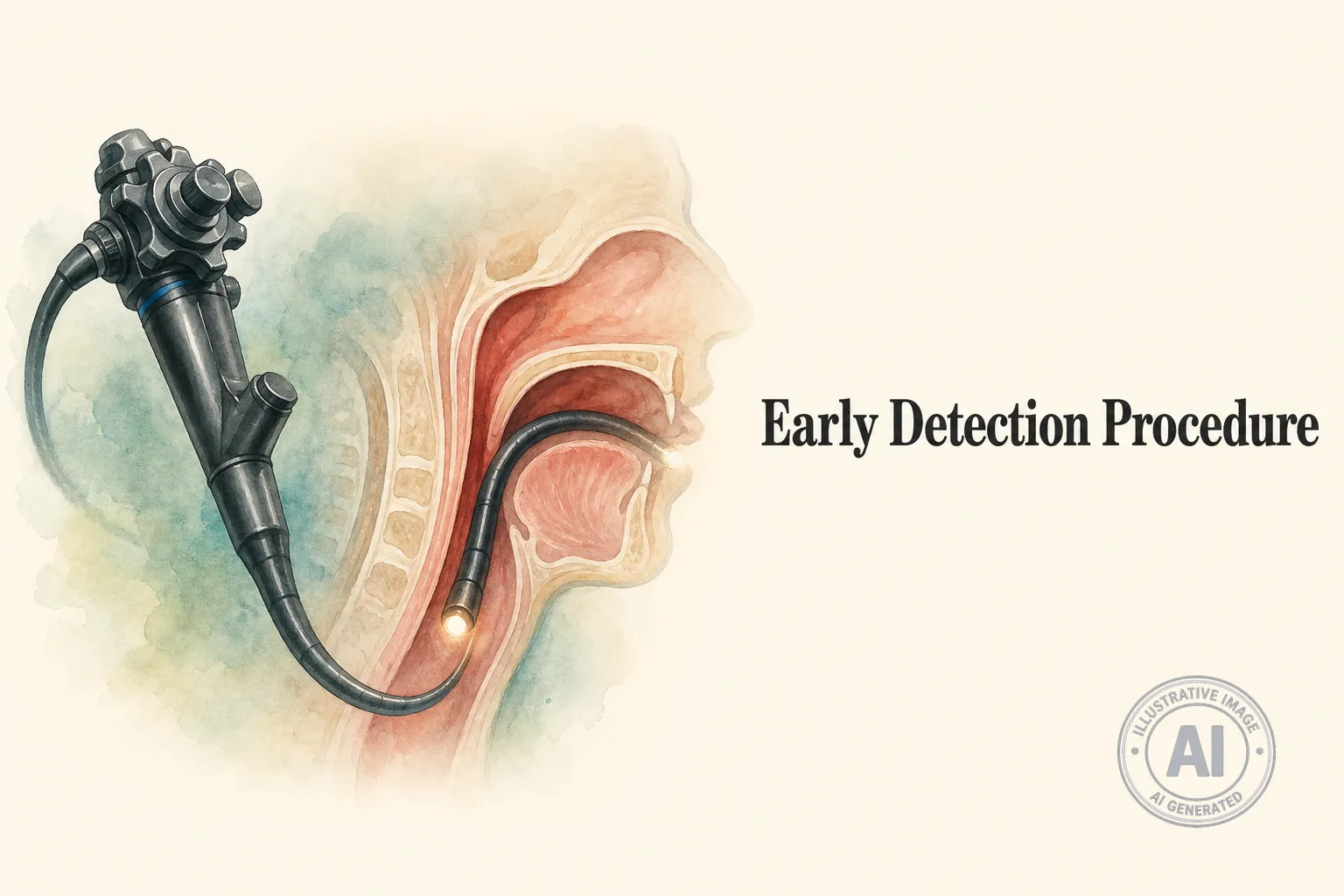
Kingston Health Sciences Centre has become the first hospital in North America to perform a combined detection and removal of early throat cancer, a procedure that adds only 30 seconds to a routine endoscopy. Dr. Robert Bechara, a gastroenterologist at KHSC and Associate Professor at Queen’s University, recently carried out the procedure at the Kingston hospital.
The groundbreaking technique focuses on the hypopharynx, an area at the back of the throat that is typically passed through but not closely examined during a standard upper endoscopy. By taking a closer look at this region, doctors can identify and remove early-stage hypopharyngeal cancer in the same procedure.
“Taking a closer look only takes about 30 seconds, but it can help us find cancer much earlier,” Dr. Bechara said in a KHSC news release.
Hypopharyngeal cancer often shows no symptoms until it reaches an advanced stage, making early detection a challenge. This new approach could lead to earlier diagnosis when treatment is more effective and outcomes are better for patients.
Dr. Bechara learned the technique during advanced training in Japan, where he studied under Dr. Haruhiro Inoue at the Showa University Digestive Disease Center Koto-Toyosu Hospital in Tokyo. He was the first Canadian physician to complete this specialized fellowship, which focused on advanced endoscopic procedures.
Since returning to Kingston, Dr. Bechara has helped establish KHSC as a leading centre for advanced endoscopy. Dr. Bechara performs approximately 100 third-space endoscopy procedures each year, a volume he believes is the most of any individual physician in Canada, with patients travelling from across the country for care.
KHSC is now sharing this early cancer detection approach with physicians across North America through research, presentations, and training programs. The hospital offers an optical diagnosis course in Kingston that is unique in North America, helping to spread the 30-second screening technique to other medical centres.
The procedure represents a significant step forward in catching throat cancers early, potentially saving lives through a simple addition to a routine exam.