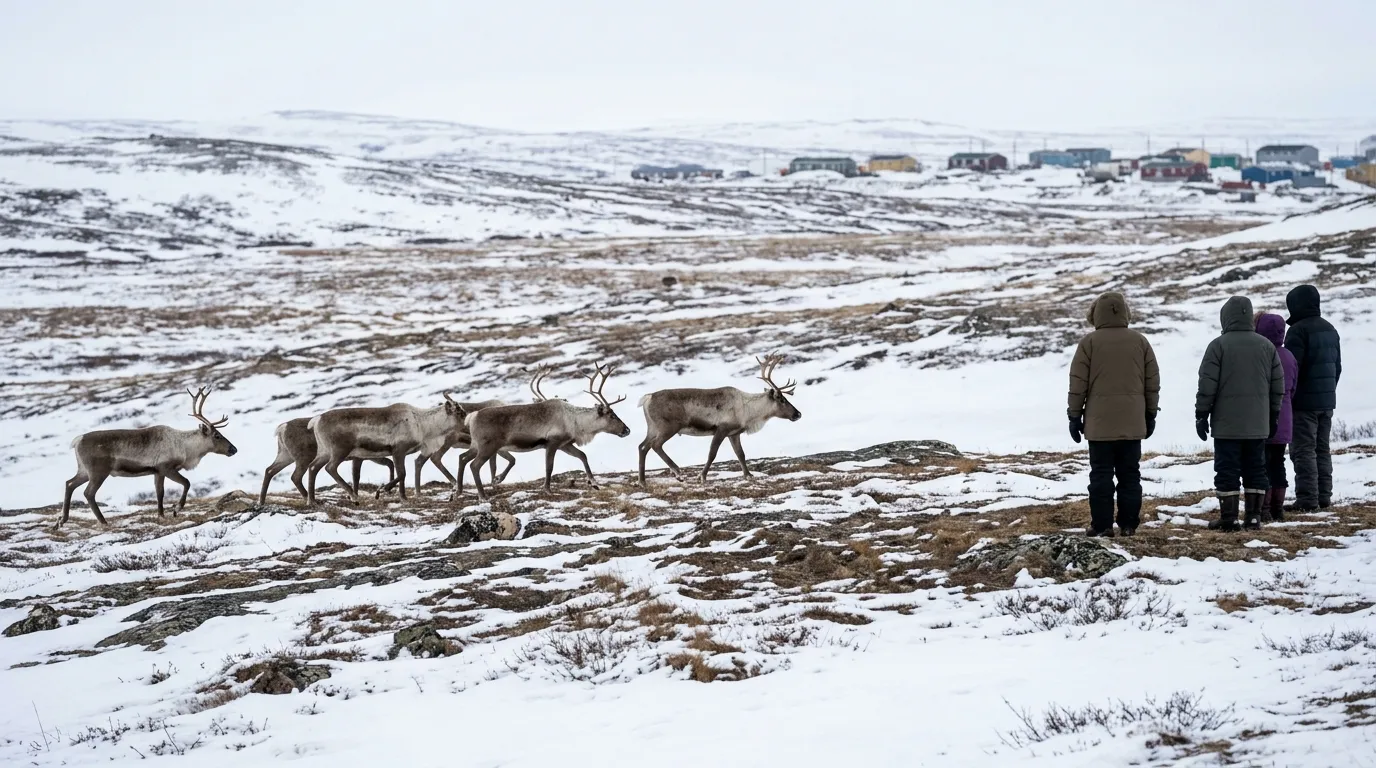
New survey results indicate positive trends for caribou herds vital to the region, as the Beverly and Qamanirjuaq Caribou Management Board reports population growth in the Beverly herd and stabilization in the Qamanirjuaq herd. These findings, shared in the board’s February 2026 update, offer a measure of hope after decades of population decline across the North.
According to survey data provided by the Government of Nunavut, the Beverly herd has increased from approximately 103,400 animals in 2018 to between 152,000 and 153,000 in 2023. Meanwhile, the Qamanirjuaq herd, which dropped from a peak of nearly 500,000 in 1994 to about 252,900 in 2022, is showing signs of stabilization. These herds migrate across Manitoba, Saskatchewan, the Northwest Territories, and Nunavut, and were the primary focus of the board’s 98th meeting held in Rankin Inlet in May 2025.
Despite the encouraging population news, the board highlighted ongoing challenges for local wildlife. Concerns remain regarding development pressures, such as the proposed expansion of the Meliadine gold mine near Rankin Inlet, which residents worry could disrupt migration patterns through noise, dust, and infrastructure. Additionally, hunters are being cautioned about the prevalence of setaria—thread-like worms—which have been increasingly found in harvested caribou since 2023. Further, the board continues to address reports of disrespectful harvesting, specifically the wastage of at least 48 caribou discovered along the Tibbitt to Contwoyto Winter Road in 2025.
The management board is also undergoing internal changes. Longtime Communications Specialist Lynne Bereza retired in May 2025, with Fiona Rettie taking over the position. The board also welcomed new member Johnny Clipping, who represents the Ghotelnene K’odtįneh Dene of Manitoba.
The management board remains a central organization for coordinating conservation efforts across the North. Established in 1982, it continues to work with Indigenous communities and various levels of government to manage the health of the barren-ground caribou herds that are essential to the region.